
Trauma Aware Guide: Understanding and Supporting in 2026 | NC, SC, PA
In 2026, being trauma aware is no longer just a personal choice, but a necessity for building strong, supportive communities and workplaces. The world is recognizing trauma’s prevalence and the profound effects it has on daily life.
New research and best practices are emerging, reshaping how we understand and address trauma. This guide offers a clear, up-to-date roadmap for anyone seeking to understand trauma, recognize its impact, and provide meaningful support.
Explore the latest definitions, learn the difference between trauma aware and trauma informed, discover practical steps for action, and access innovative resources for healing. By embracing trauma aware strategies, you can help transform lives, relationships, and organizations for the better.
The Evolving Definition of Trauma Awareness in 2026
Understanding what it means to be trauma aware has changed dramatically in recent years. In 2026, the field recognizes that trauma is not just a personal struggle, but a complex, layered experience shaped by society, technology, and history.
The scope of trauma awareness now goes far beyond the original focus on Adverse Childhood Experiences (ACEs). While early research centered on events like abuse or neglect in childhood, today's trauma aware practitioners acknowledge the impact of complex trauma, which may arise from repeated or prolonged exposure to stress. The conversation also includes intergenerational trauma, where the effects of trauma are passed down through families, and collective trauma, which can affect entire communities or populations.
Recent statistics highlight the urgency of this shift. According to the CDC in 2024, over 60 percent of adults have experienced at least one traumatic event in their lives. This number reflects not only personal hardships, but also the influence of global crises. Events such as the COVID-19 pandemic, climate anxiety, and ongoing social unrest have created new layers of trauma that are recognized within the trauma aware community.
Digital environments have become another important factor in understanding trauma. Online harassment, cyberbullying, and social media exposure can all act as trauma triggers. For example, a workplace microaggression or a hostile comment online can activate past trauma responses, reinforcing the need for digital literacy within trauma aware support.
Intersectionality is now at the center of trauma aware work. Trauma does not affect everyone in the same way. Cultural, racial, gender, and socioeconomic factors all shape how individuals experience and process trauma. A trauma aware approach in 2026 must be culturally competent, recognizing these differences and adapting support accordingly.
The language of trauma awareness has also evolved. Experts now describe a continuum that includes being trauma aware, trauma informed, and trauma qualified. Here is a summary:
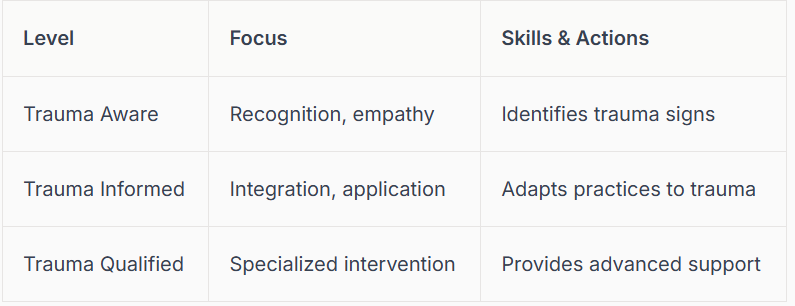
Language of Trauma Awareness Table
Being trauma aware means more than just knowing about trauma. It requires understanding how trauma can manifest in modern settings. Examples include heightened anxiety after viewing distressing news online, or withdrawal in response to subtle discrimination at work.
As research on generational trauma deepens, body-based approaches are gaining traction. For those interested in practical strategies, exploring somatic tools for generational trauma can provide insight into how physical practices support healing across generations.
In 2026, a trauma aware approach demands nuance and flexibility. Professionals and organizations are called to create environments that prioritize safety, trust, and cultural awareness. The definition of trauma awareness will continue to broaden, ensuring that support remains relevant in an ever-changing world.

The Evolving Definition of Trauma Awareness in 2026
Trauma Aware vs. Trauma Informed: Key Differences and Why They Matter
Understanding the distinction between trauma aware and trauma informed has never been more critical. In 2026, as knowledge about trauma expands, so does the need for clarity. Many individuals and organizations consider themselves trauma aware, but true transformation requires moving further along the continuum.
At its core, being trauma aware means recognizing that trauma exists and acknowledging its impact on people’s lives. A trauma aware person can identify when trauma might be a factor and responds with empathy, but may not have the tools or frameworks to intervene safely or effectively. This foundational level is crucial, but it is only the beginning.
Trauma informed, on the other hand, is an active, intentional approach. It involves integrating trauma knowledge into daily practices, policies, and relationships. Trauma informed individuals and organizations are equipped to create environments that prioritize safety, trust, and empowerment. They adjust their responses, procedures, and language to avoid causing harm and to support healing.
The differences are best illustrated in the following table:
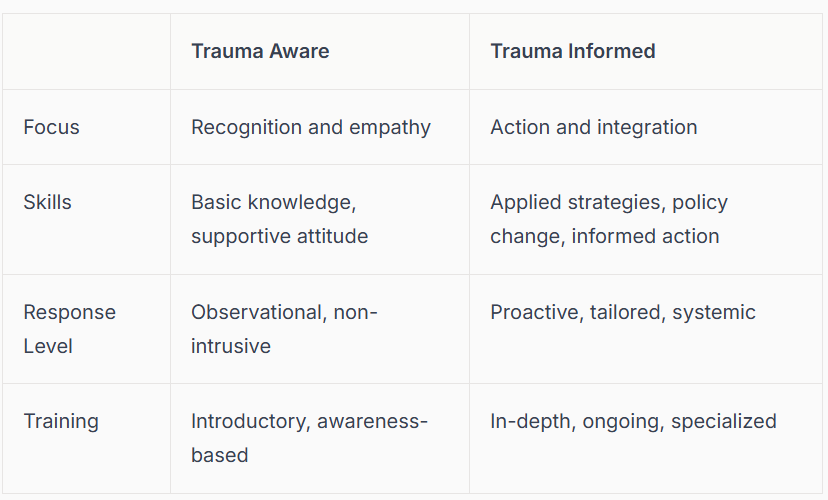
Trauma Aware vs. Trauma Informed Table
A trauma aware approach often covers thinking and talking about trauma. For example, staff may know to avoid judgmental language or notice signs of distress. However, trauma informed practice means using that knowledge to adapt the environment, offer choices, and ensure emotional safety. According to Lawrence Ellyard (2023), trauma aware education is a critical step, but it is through trauma informed practice that real change occurs.
Consider two scenarios. In a counseling session, a trauma aware professional might recognize a client’s discomfort and respond with gentle empathy. A trauma informed professional, however, would not only notice the discomfort but also provide options, explain processes transparently, and check in regularly to ensure the client feels safe.
In the workplace, trauma aware managers may offer understanding when an employee shows signs of burnout. Trauma informed managers, however, review organizational policies, offer flexible accommodations, and foster a culture where employees can safely speak up about their needs.
The risk of remaining only trauma aware is real. Well-intentioned support can inadvertently cause harm, such as when “toxic positivity” minimizes a person’s struggle or pushes for premature optimism. Without informed frameworks, efforts can feel invalidating or even retraumatizing.
Moving beyond trauma aware to trauma informed is essential for safe, effective support. Trauma informed care is grounded in principles of safety, trustworthiness, collaboration, and cultural humility. For those seeking clear guidance, SAMHSA's Trauma-Informed Care Principles offer comprehensive definitions and strategies for implementation.
Ultimately, trauma aware is a vital first step, but it is trauma informed practice that enables individuals and organizations to foster genuine healing and resilience.

Trauma Aware vs. Trauma Informed: Key Differences and Why They Matter
Recognizing Signs of Trauma: What to Look for in 2026
Understanding the signs of trauma is a cornerstone for anyone striving to be truly trauma aware in 2026. With experiences of trauma becoming more visible in diverse settings, being able to spot subtle and overt indicators is essential for supportive action. Trauma aware individuals and organizations are now expected to recognize emotional, physical, and social manifestations, considering both individual and collective experiences.

Recognizing Signs of Trauma: What to look for in 2026
Emotional and Behavioral Indicators
A trauma aware approach begins with observing emotional and behavioral changes that might otherwise be overlooked. Common emotional signs include persistent anxiety, irritability, emotional numbness, shame, and hypervigilance. Individuals may also exhibit:
Intense or unpredictable mood swings
Overwhelming guilt or self-blame
Sudden bursts of anger or sadness
Behavioral patterns often reflect internal struggles. Look for withdrawal from social interactions, increased aggression, perfectionism, or risky behaviors. For example, some people may have strong emotional reactions during ACE screenings, highlighting the importance of a trauma aware lens in sensitive settings.
Recent data shows that more than 60% of adults report at least one traumatic event, and high ACE scores are directly linked to increased emotional reactivity. Recognizing these patterns is crucial, as trauma aware environments can help reduce distress and foster resilience.
Physical and Somatic Manifestations
Trauma does not only affect emotions. A trauma aware perspective also considers physical and somatic symptoms, which are often overlooked. Many individuals experience chronic health issues such as headaches, fatigue, or gastrointestinal discomfort. Somatic symptoms may include:
Muscle tension or unexplained body pain
Dissociation or feeling disconnected from the body
“Body memories” where past trauma is felt physically
New research highlights the vital role of the nervous system in these responses. The Polyvagal Theory and somatic psychology show that trauma can trigger automatic, body-based reactions. For a deeper understanding of how trauma shapes both the mind and body, see How trauma impacts the brain.
A trauma aware practitioner will notice these subtle cues, ensuring that support addresses both psychological and physical needs.
Social and Relational Red Flags
Trauma aware professionals also pay close attention to changes in social and relational patterns. Difficulty trusting others, boundary issues, and disruptions in attachment are common. In workplaces or families, trauma can manifest as absenteeism, frequent conflict, or social isolation.
For example, a trauma survivor might interpret neutral feedback as threatening, leading to misunderstandings or withdrawal. Recognizing these relational signs is vital for creating safe spaces and preventing further harm.
By remaining trauma aware, you can help individuals feel seen and supported, laying the groundwork for healing relationships and resilient communities.
Principles of Trauma Aware Support: Building Safety and Trust
Trauma aware support is foundational for healthy relationships and resilient organizations in 2026. As more individuals encounter trauma directly or indirectly, these principles are crucial for building trust and safety across all environments.
Creating trauma aware spaces is not just about recognizing trauma, but actively shaping environments that foster healing and empowerment. Let us explore the essential components that make trauma aware support both effective and sustainable.

Principles of Trauma Aware Support: Building Safety and Trust
Core Principles for Trauma Aware Environments
At the heart of trauma aware support are several guiding principles that shape every interaction and policy. These include:
Safety: Both physical and emotional safety are prioritized. This means creating predictable routines and spaces where individuals feel protected.
Trustworthiness: Consistency, honesty, and transparency build trust. Clear communication and reliable follow-through are essential.
Collaboration: In trauma aware settings, individuals are included in decisions about their care or participation. This fosters shared power and mutual respect.
Empowerment: Recognizing and amplifying strengths supports resilience. Trauma aware support encourages autonomy and self-advocacy.
Cultural humility: Being sensitive to cultural, racial, gender, and socioeconomic factors prevents bias and enhances inclusivity.
For a deeper dive into how organizations can apply these values, SAMHSA’s Trauma-Informed Approaches and Programs outline real-world strategies that embody these trauma aware principles.
A trauma aware environment recognizes that healing happens when people feel seen and valued. It is not a one-size-fits-all approach, but an ongoing commitment to growth, learning, and respectful engagement.
Avoiding Re-Traumatization and Harmful Practices
Trauma aware support also means recognizing the risks of unintentional harm. Re-traumatization can occur if environments or interactions echo past traumatic experiences, making safety and sensitivity paramount.
Common triggers include:
Invasive questioning or pressuring someone to share their story
Dismissing emotions or using toxic positivity, such as “just think positive”
Ignoring boundaries or failing to respect autonomy
To avoid these pitfalls, trauma aware practitioners focus on:
Listening without judgment or interruption
Validating feelings and experiences, even when they differ from your own
Allowing individuals to set the pace and depth of disclosure
Remember, trauma aware support is a balance of compassion and caution. The goal is to offer presence, not pressure, and to respond with empathy rather than advice.
Practical Examples of Trauma Aware Responses
Applying trauma aware principles in daily life requires both awareness and action. Here are some practical ways to embody this approach:
Use supportive phrases like, “I see you,” or “You are not alone.” These validate and normalize the trauma experience.
Reframe behaviors, such as withdrawal or perfectionism, as possible trauma responses instead of personal failings.
When a colleague seems distressed, offer a calm presence and ask, “How can I support you?” rather than giving unsolicited solutions.
Research shows that patients with higher ACE scores experience better outcomes when offered trauma aware, non-intrusive support. This highlights the power of small, intentional actions in fostering trust and promoting healing.
Ultimately, trauma aware support is not about fixing others, but about creating spaces where safety, trust, and empowerment allow individuals to thrive.
Steps to Becoming Trauma Aware: A Chronological Guide for Individuals and Organizations
Becoming trauma aware is not a single achievement but an ongoing journey for both individuals and organizations. Each step builds a stronger foundation of understanding, empathy, and effective support. Here is a clear, chronological guide to help you create a trauma aware environment in your life or workplace.
Step 1: Educate Yourself and Your Team
The first step to becoming trauma aware is seeking out current, reputable education. This means learning about trauma’s effects, the language used, and the importance of a supportive approach. Explore resources like ACEs Aware and SAMHSA for foundational training.
Recommended books include The Deepest Well and Childhood Disrupted. Online courses and webinars can help you stay updated. For a clear overview of what trauma therapy involves, see What is trauma therapy, which gives essential background for anyone starting their trauma aware journey.
Make learning a continuous process. Encourage your team to share insights and reflect on new research regularly.
Step 2: Reflect on Personal and Organizational Practices
Next, pause to examine your current attitudes, language, and workplace or community policies. Ask yourself: Does our environment support a trauma aware mindset? Are there practices that might unintentionally cause harm?
Review materials like intake forms, onboarding guides, or communication templates for triggering language. Identify areas where trauma aware adjustments could make a difference, such as offering more choices or reducing pressure during stressful conversations.
Self-reflection helps uncover blind spots. This process is essential for building a truly trauma aware culture.
Step 3: Integrate Trauma Awareness into Daily Interactions
Bring trauma aware strategies into every interaction. This starts with modeling empathy, patience, and active listening in both personal and professional relationships. Use trauma aware communication, such as validating feelings and avoiding judgment.
Set and respect clear boundaries, both for yourself and others. Consistency is key, people feel safer when expectations are predictable.
Small changes, like pausing before offering advice or checking in on a colleague’s comfort, can have a big impact. Over time, these trauma aware habits become second nature.
Step 4: Create Safe, Supportive Spaces
A trauma aware space goes beyond physical comfort. Consider lighting, noise, and privacy, but also focus on emotional safety. Predictability, respect, and honoring autonomy are central to trauma aware environments.
Review policies to ensure they are transparent and fair. Offer flexible accommodations for those who may need them. Create clear procedures for voicing concerns or requesting support.
By attending to both physical and emotional needs, you signal that trauma aware values are embedded at every level of your organization.
Step 5: Commit to Growth and Accountability
Finally, make trauma aware growth an ongoing priority. Regularly review and update your policies and practices. Solicit feedback from people with lived experience to ensure your approach remains relevant and effective.
Engage in supervision or peer consultation for complex cases. Many organizations now use trauma aware checklists and metrics to track their progress.
Accountability ensures that trauma aware principles are not just ideas, but daily realities for everyone involved.
Innovative Tools and Resources for Trauma Awareness in 2026
Staying trauma aware in 2026 means leveraging the latest tools and resources to support healing and resilience. As technology evolves and awareness deepens, individuals and organizations have access to innovative strategies that make trauma aware support more accessible, effective, and inclusive.
Digital Tools and Screening Innovations
Digital innovations have transformed how trauma aware screening and support are delivered. New tools, like the PEARLS and digital ACEs assessments, offer accessible ways to identify trauma history in both clinical and community settings.
Remote screening platforms make it possible for individuals to complete assessments privately, which can reduce stigma and increase honesty. However, trauma aware practitioners must balance convenience with safety by ensuring privacy and providing follow-up support for those at risk.
Many healthcare systems now use structured EHR fields to document trauma data securely. These advancements help teams coordinate trauma aware care and track outcomes over time. As digital tools become more sophisticated, trauma aware professionals must stay updated to ensure ethical and effective use.
Training and Education Platforms
Online learning has made trauma aware training more accessible than ever. Numerous platforms offer courses, webinars, and certifications that introduce trauma aware principles and practical skills. Community-based programs and peer networks also provide essential education and support.
Short courses can equip individuals with foundational trauma aware knowledge in as little as two days. For those seeking deeper expertise, longer programs are available to achieve trauma informed or trauma qualified status. The Trauma-Informed Care in Behavioral Health Services manual is a valuable resource for understanding best practices and core competencies.
Ongoing education ensures that trauma aware strategies evolve alongside new research and emerging needs. Peer consultation groups and professional supervision further enhance skill development and accountability.
Books, Research, and Self-Help Materials
A growing body of literature supports trauma aware practice. Influential books like “The Deepest Well” by Nadine Burke-Harris, “Scared Sick” by Robin Karr-Morse, and “Childhood Disrupted” by Donna Jackson Nakazawa offer clear explanations of how trauma impacts health and development.
Recent research highlights the connection between trauma and chronic illness, emphasizing the need for trauma aware approaches in healthcare and beyond. Self-help materials, including workbooks and guided journals, empower individuals to process experiences and build resilience.
Staying informed through evidence-based materials strengthens trauma aware practice for both professionals and those with lived experience.
Community and Professional Support Networks
Community and professional networks are vital for sustaining trauma aware cultures. Organizations such as IICT and national trauma awareness campaigns provide resources, advocacy, and opportunities for collaboration.
Peer support groups, both in-person and online, create safe spaces for sharing experiences and building resilience. Professional bodies offer guidelines, continuing education, and forums for consultation.
Resources like the 6 Guiding Principles to a Trauma-Informed Approach infographic help organizations align their practices with the latest trauma aware standards. Together, these networks ensure that trauma aware support remains dynamic, inclusive, and responsive to evolving challenges.
The Future of Trauma Awareness: Trends and Predictions for 2026 and Beyond
The landscape of trauma aware practice is evolving rapidly in 2026. Growing recognition of trauma's impact is prompting a shift toward broader, more inclusive strategies across all sectors of society.
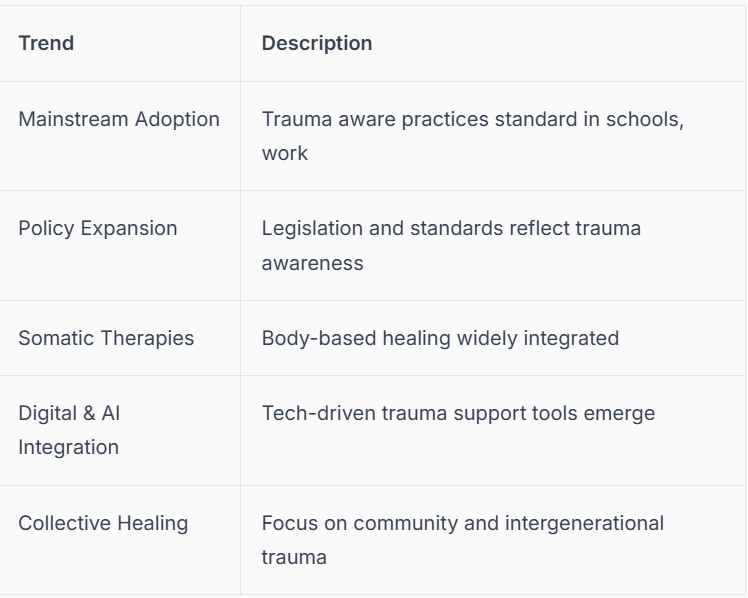
Table: Key Trends in Trauma Aware Practice for 2026 and Beyond
In recent years, trauma aware practices have become foundational in education, healthcare, and workplaces. Schools are embedding trauma aware training into daily routines, while healthcare systems prioritize safe, compassionate care. Policymakers are translating this momentum into concrete standards and regulations, ensuring trauma awareness is not just a trend, but a core requirement for organizational success.
Somatic and body-based therapies are gaining traction, reflecting a shift toward holistic healing. Modalities such as movement, breathwork, and Polyvagal-informed approaches are increasingly accessible. These practices honor the body's wisdom, supporting individuals in processing trauma beyond traditional talk therapy. As research grows, trauma aware professionals are encouraged to integrate somatic methods into their toolkit.
The digital revolution is transforming trauma aware support. AI-powered mental health tools, virtual peer networks, and digital wellness platforms are now part of the healing landscape. These technologies increase access and personalization, but require careful attention to privacy and ethics. Collective and intergenerational trauma are also moving to the forefront, with communities embracing group healing and cultural resilience.
Organizations are seeing measurable benefits from trauma aware cultures. Higher employee retention, improved morale, and reduced burnout are becoming the norm. For those seeking to address workplace fatigue, understanding steps for burnout recovery after trauma is now considered an essential component of a trauma aware environment. Ultimately, the future calls on all individuals and institutions to move from surviving to thriving, making trauma awareness a shared responsibility for a healthier, more resilient world.
Local Support |
PA, NC & SC

Trauma therapist in Raleigh, Pittsburgh, Greenville |
Mariah J. Zur, LPC
I offer focused therapy intensives for adults who are still functioning but feel worn down by constant pressure, anxiety, or patterns that no longer work. This work is designed for people who want depth, clarity, and relief without labels or long-term weekly therapy. If you’re in North Carolina, South Carolina, or Pennsylvania and curious whether an intensive format could be supportive, you’re welcome to learn more.


Join me on Facebook, Instagram, Pinterest, Google orTikTok for more educational tips, trauma recovery insights, and updates on therapy intensives in Pennsylvania, North Carolina, and South Carolina.
Disclaimer
The content shared here is for educational and informational purposes only. It is not a substitute for psychotherapy, medical care, or individualized mental health treatment. Reading this blog or engaging with my content does not establish a therapeutic relationship.
If you are experiencing significant distress or feel you need personalized support, I encourage you to seek care from a licensed mental health professional in your state. Therapy is deeply personal, and the right support should be tailored to your specific needs, pace, and circumstances.
For adults located in North Carolina, South Carolina, or Pennsylvania who are seeking focused, confidential support, I offer customized therapy intensives designed to address chronic stress, internal pressure, and patterns that no longer work. Information about these services can be found throughout this site.
About the Author
Mariah Zur, LPC is a licensed therapist who works with high-achieving adults navigating chronic stress, internal pressure, and the quiet unraveling that can happen beneath outward success. Her work is especially suited for individuals who are highly functional, deeply self-aware, and exhausted from holding everything together.
Mariah offers therapy intensives for adults seeking focused, contained support without labels, long-term weekly therapy, or unnecessary exposure. Her approach is grounded, relational, and nervous-system informed, helping clients slow the internal spiral, regain a sense of control, and move forward with clarity and steadiness.
She provides intensive therapy services online across North Carolina, South Carolina, and Pennsylvania, with in-person options available in Raleigh, NC.
Credentials
Mariah J. Zur, MS, LPC
Licensed Professional Counselor
Doctoral Student, Counselor Education and Supervision
