
7 Powerful Ways to Make the Most of Therapy Weekly in 2026
Are you dedicating valuable time and effort to therapy weekly but still questioning how to achieve the most lasting change? Many individuals wonder if they are truly optimizing each session for real growth and progress.
This article uncovers seven powerful, research-backed strategies designed to help you make every therapy weekly session count in 2026. You will find actionable techniques to deepen your progress, keep your momentum strong, and address common barriers.
Whether you are just beginning or have years of experience, these proven methods will give you the tools and confidence to transform your therapeutic journey. Start implementing them now and witness the difference in your results.
The Evolving Landscape of Weekly Therapy in 2026
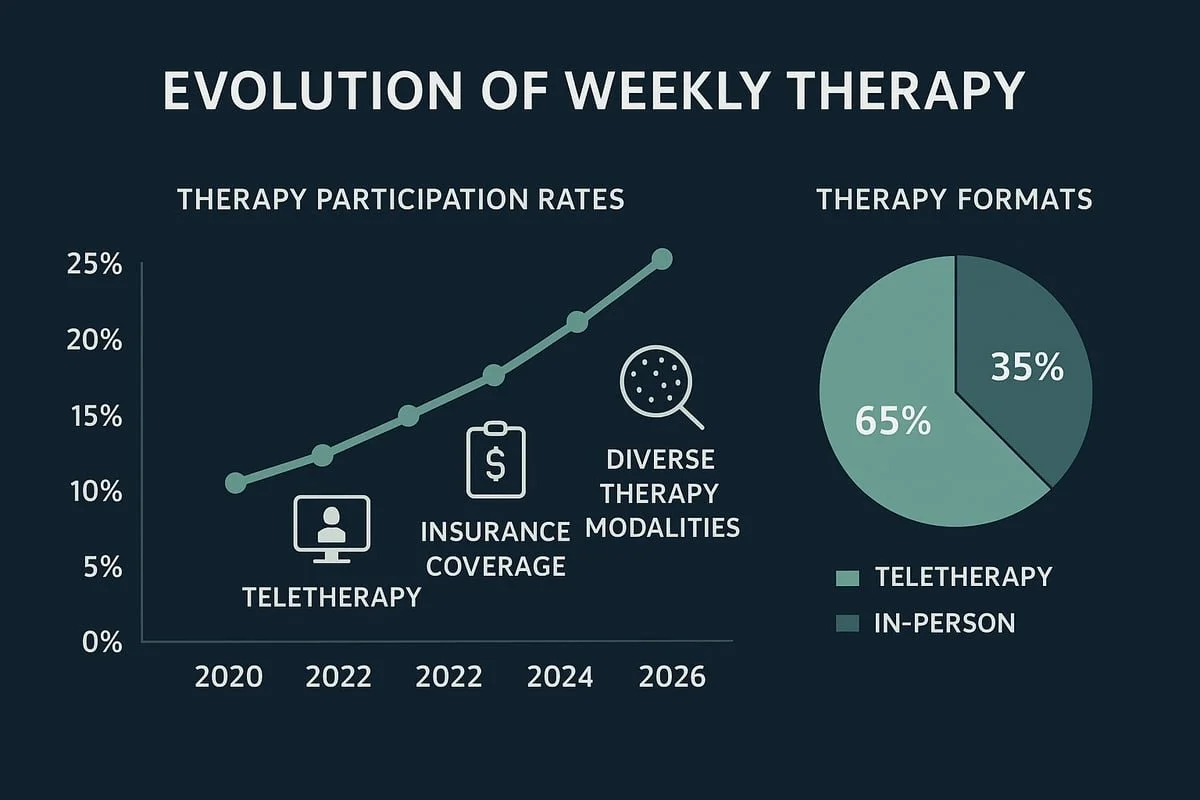
The world of therapy weekly has transformed dramatically by 2026. Increased mental health awareness, advances in technology, and shifting societal needs have made therapy weekly more accessible and effective than ever before.
The Evolving Landscape of Weekly Therapy in 2026
The Growing Popularity and Accessibility of Therapy
Over the past few years, demand for therapy weekly has soared. More people are prioritizing mental health, especially in the wake of the pandemic. Teletherapy and digital mental health platforms have become mainstream, breaking down barriers for those who once struggled to access care.
Today, over 40 percent of adults in the U.S. living with a mental illness receive some form of treatment, including online options. Insurance companies and employers now recognize the importance of regular mental health care, expanding coverage for therapy weekly and reducing financial barriers.
A wider range of therapy modalities is available, allowing clients to tailor their therapy weekly experience to their unique needs. Whether you prefer cognitive behavioral therapy, mindfulness-based approaches, or solution-focused sessions, personalization is easier than ever. This shift ensures that therapy weekly is not only more accessible but also more effective for diverse populations.
Why Weekly Therapy Frequency Matters
Research consistently shows that therapy weekly yields faster, more sustainable results than less frequent sessions. Clients who attend weekly sessions experience a steeper recovery curve and greater improvements in well-being. A notable study comparing once weekly and twice weekly sessions found that consistent weekly engagement supports symptom reduction and long-term improvement, especially for depression.
Building trust and rapport with your therapist is easier with regular, predictable meetings. This relationship is a key factor in therapy success. Weekly frequency also allows for timely intervention, reducing the risk of issues escalating between sessions. For both individuals and couples, therapy weekly helps maintain momentum and drives significant breakthroughs.
Common Challenges in Making the Most of Weekly Therapy
Despite its benefits, therapy weekly presents challenges. Time constraints, financial limitations, and emotional fatigue can affect your ability to engage fully. Many people experience periods of stagnation or feel “stuck” if their sessions lack clear focus or follow-through.
Avoiding difficult topics or feeling overwhelmed by the therapy process can slow progress. Proactive engagement and preparation are essential for overcoming these hurdles. By staying committed and making therapy weekly a priority, you can navigate obstacles and maximize each session’s impact.
7 Powerful Ways to Make the Most of Therapy Weekly in 2026
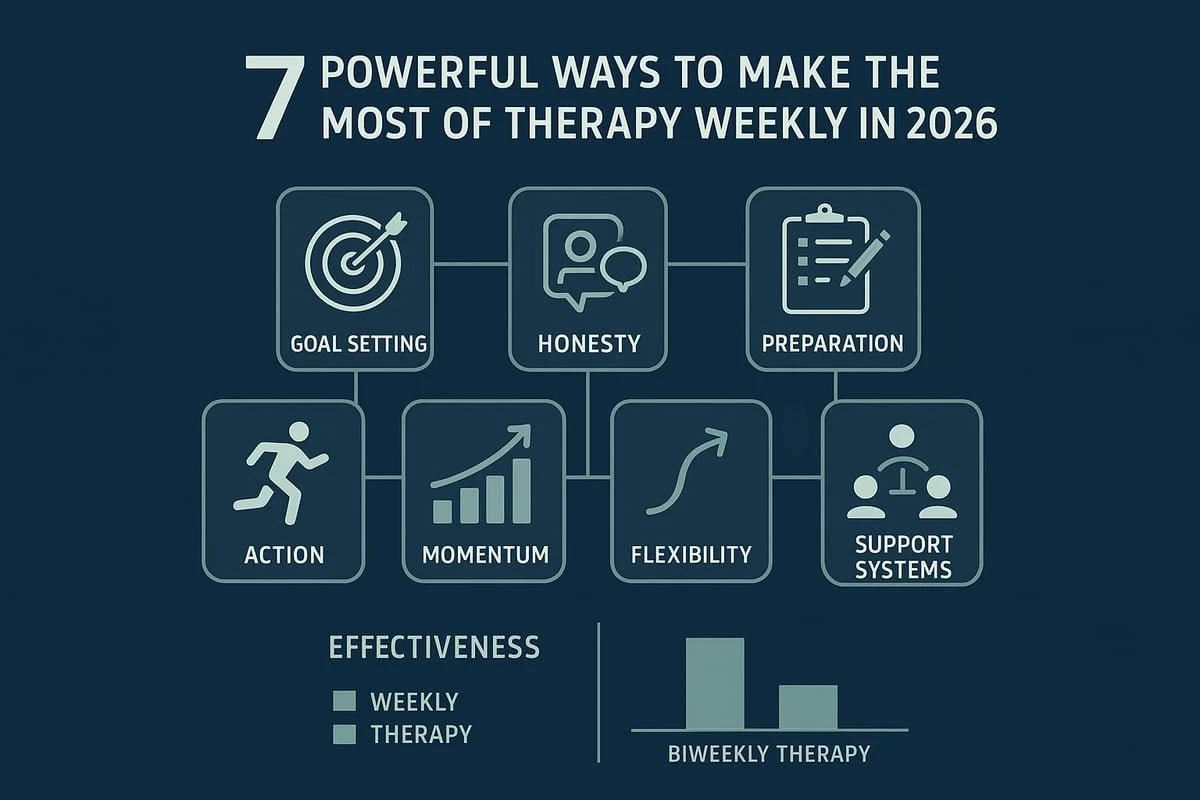
Maximizing your therapy weekly experience in 2026 is about more than just showing up. It requires intention, preparation, and active engagement. Whether you’re new to therapy weekly or a seasoned participant, these seven research-backed strategies will help you deepen your progress, break through plateaus, and build lasting change.
7 Powerful Ways to Make the Most of Therapy Weekly in 2026 | NC, SC, PA
1. Set Clear, Evolving Goals for Each Session
Setting clear, evolving goals is the foundation for making therapy weekly productive and transformative. At the start of your therapy journey, work collaboratively with your therapist to define both short-term and long-term objectives. These should be specific, measurable, and relevant to your unique needs.
Regularly revisit and refine your goals as therapy weekly progresses. Life circumstances change, and so do your challenges and aspirations. Using frameworks like SMART (Specific, Measurable, Achievable, Relevant, Time-bound) goals can help track your growth and keep sessions focused.
For example, a client focusing on anxiety might set a weekly micro-goal such as practicing a new coping technique or challenging a specific fear. Reviewing the outcome of these goals at each session provides structure and accountability within therapy weekly.
Research consistently shows that goal-oriented therapy weekly is linked to higher client satisfaction and more rapid symptom reduction. Clients who actively participate in goal setting experience a steeper recovery curve, especially when attending sessions weekly rather than less frequently. A recent study found that therapy weekly fosters more consistent and sustainable progress compared to biweekly approaches.
Avoid vague intentions like “feel better” or “reduce stress.” Instead, strive for goals such as “practice deep breathing for five minutes daily” or “initiate one difficult conversation this week.” Specificity fuels motivation and helps you and your therapist clearly measure progress in therapy weekly.
2. Practice Radical Honesty and Vulnerability
Therapy weekly is most effective when you bring your authentic self into the room. Radical honesty and vulnerability are essential for building the trust and rapport that drive meaningful change. Holding back your true thoughts, feelings, or experiences can limit how much you gain from therapy weekly.
Challenge yourself to share openly, even when discussing topics that feel uncomfortable or off-limits. This might include setbacks, relapses, or emotions you worry are “too much.” Your therapist is trained to hold space without judgment, so addressing fears of criticism can unlock new levels of growth in therapy weekly.
Research has shown that strong therapist-client trust is a major predictor of positive outcomes. For instance, clients who disclose their struggles honestly receive more targeted support and deeper insights. If you find it difficult to bring up certain subjects, jot them down between sessions or use a therapy journal as a cue for your next therapy weekly appointment.
Remember, vulnerability in therapy weekly accelerates breakthroughs and deepens your self-awareness. Each time you practice honesty, you strengthen the therapeutic alliance, paving the way for lasting change.
3. Prepare Between Sessions and Reflect Afterwards
Treating therapy weekly as an active process rather than a passive hour is crucial for progress. Preparation and reflection help you get the most out of every session. Before each therapy weekly appointment, review insights from previous sessions, jot down new developments, and note any questions or concerns that have emerged.
Many clients find it helpful to keep a “therapy journal” where they track progress, challenges, and emotional shifts between sessions. This simple practice creates a bridge between therapy weekly meetings and real life, making it easier to spot patterns and identify areas for growth.
After each session, take a few minutes to reflect on key takeaways and outline actionable steps for the week ahead. Research indicates that clients who regularly reflect and engage in between-session work achieve their therapy weekly goals more quickly.
Share your reflections and any “homework” with your therapist at your next therapy weekly meeting. This collaborative approach enhances problem-solving and ensures continuity from week to week. By treating therapy weekly as a continuous journey, you maintain momentum and maximize your investment.
4. Follow Through on Action Steps and Homework
Insight alone is not enough to create change. The real power of therapy weekly comes when you translate new understandings into action. This often means embracing and completing any “homework” or action steps you and your therapist agree upon during sessions.
Examples of therapy weekly homework include practicing communication skills, completing mindfulness exercises, or trying exposure tasks for anxiety. Consistently following through with these assignments helps reinforce new habits and skills between therapy weekly appointments.
Data shows that clients who regularly practice what they learn outside of therapy weekly experience greater improvements in anxiety, depression, and relationship issues. Discuss any obstacles to follow-through openly with your therapist. They can help you problem-solve, adjust assignments, or introduce accountability tools to support your efforts.
Consider using reminders, checklists, or involving a trusted friend to help you stay on track with therapy weekly tasks. Remember, consistent action bridges the gap between insight and transformation, turning therapy weekly insights into real-world progress.
5. Build Momentum and Accountability
One of the greatest advantages of therapy weekly is the steady, ongoing momentum it creates. Weekly sessions keep your goals top of mind and make it easier to monitor progress and address setbacks promptly. Use each therapy weekly session to review successes, identify resistance, and brainstorm new strategies.
A skilled therapist will help you spot patterns where progress may have stalled and work with you to overcome obstacles. Research highlights that continuous momentum in therapy weekly leads to more cohesive and efficient journeys toward your goals.
Ask your therapist to help hold you accountable for intentions set in previous sessions. Reviewing your commitments together each week in therapy weekly builds motivation and encourages long-term commitment.
Celebrate small wins and milestones as they occur. Acknowledging progress, even if it feels minor, reinforces positive change and keeps you invested in the therapy weekly process. Accountability, paired with regular reflection, ensures you stay on course toward lasting transformation.
6. Embrace Flexibility and Adapt to Life’s Highs and Lows
Therapy weekly should evolve alongside your needs and life circumstances. Flexibility is key to making sure each session remains relevant and impactful. Be open to shifting the focus of therapy weekly as new challenges or opportunities arise.
For example, use “good weeks” to explore deeper issues, personal strengths, or long-term goals, rather than only addressing crises. Research shows that delving into core themes during stable periods of therapy weekly can lead to more lasting transformation.
Maintain open communication with your therapist about what feels most pressing each week. This collaborative approach ensures that therapy weekly sessions address both immediate concerns and underlying patterns.
Adapting your session agenda prevents stagnation and keeps therapy weekly dynamic. By embracing flexibility, you support holistic growth and maximize the relevance of every session.
7. Leverage Support Systems and Resources Beyond the Session
Therapy weekly is most powerful when integrated with support outside the session. Identify friends, family, or peer groups who can encourage your growth between therapy weekly appointments. These connections provide accountability, perspective, and motivation.
Utilize digital tools, apps, or community resources recommended by your therapist. For example, joining a support group or using guided mindfulness apps can reinforce skills developed during therapy weekly.
Research demonstrates that consistent support beyond therapy weekly enhances resilience and reduces relapse rates. Bring insights from outside experiences into your sessions to enrich the therapeutic process.
Building a robust support network accelerates progress and sustains healing. By engaging with resources and relationships outside of therapy weekly, you extend the benefits of each session into your everyday life.
Signs You’re Getting the Most (or Not) Out of Weekly Therapy
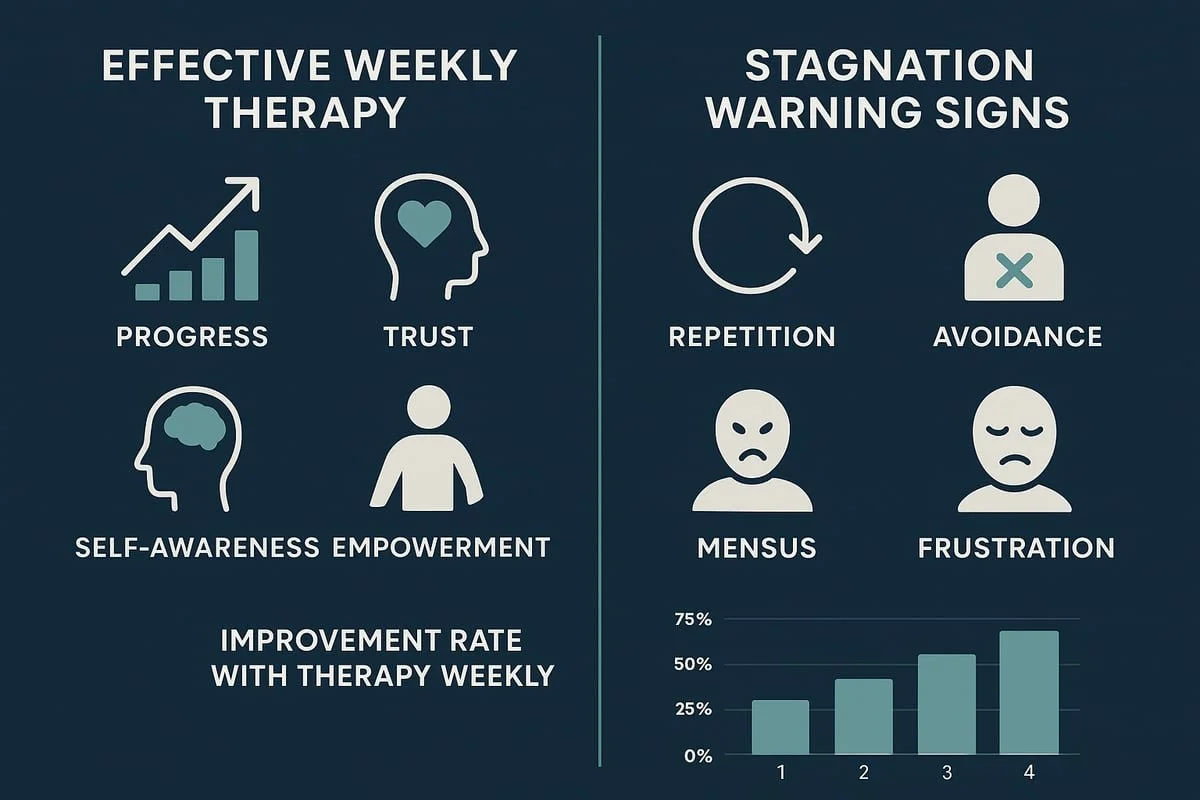
Recognizing whether your therapy weekly is moving you forward is essential for meaningful growth. Understanding the signs of effective progress, as well as the warning signals of stagnation, can help you make informed decisions about your mental health journey. Let’s break down what to look for each week.
Signs You’re Getting the Most (or Not) Out of Weekly Therapy
Indicators of Effective Weekly Therapy
When therapy weekly is working, you will notice tangible shifts in your life. Look for these positive indicators:
Measurable progress toward your therapy goals, such as reduced anxiety or improved relationships.
Growing self-awareness and a stronger ability to regulate your emotions.
A solid, trusting rapport with your therapist, making it easier to address difficult topics.
Willingness to accept feedback and confront uncomfortable issues.
Regular use of insights and skills from therapy weekly in your daily life.
Feeling increasingly empowered and resilient in the face of challenges.
These signs suggest your therapy weekly is providing real value. Progress might be gradual, but consistent improvement builds a foundation for lasting change.
Warning Signs of Stagnation or Ineffectiveness
Sometimes, therapy weekly can lose momentum. Watch for these warning signs:
Feeling “stuck” or noticing little to no change over several sessions.
Avoidance of core issues, or hesitancy to be open and honest during therapy weekly.
Sessions become repetitive, lack focus, or stray from your established goals.
Difficulty following through on agreed action steps or homework between sessions.
Persistent symptoms that do not improve, despite regular participation.
Research shows only 43 percent of adults with mental illness receive effective treatment, highlighting the importance of session frequency and a strong therapeutic relationship. For more on how frequency impacts outcomes, see The effectiveness of psychoanalytic psychotherapy: the role of treatment duration, frequency of sessions, and the therapeutic relationship.
If you notice these patterns in therapy weekly, it may be time to reevaluate your approach.
What to Do If You’re Not Progressing
If your therapy weekly feels stagnant, proactive steps can help you regain momentum:
Speak openly with your therapist about your concerns and experiences.
Collaborate to adjust your approach, session frequency, or even consider new modalities.
Seek feedback on what might be blocking progress and co-create new strategies.
Explore alternatives such as group therapy, intensives, or higher levels of care if needed.
For a more structured approach, consider incorporating Feedback informed treatment to track your outcomes and guide adjustments.
Your therapy weekly should evolve with your needs. Honest communication and a willingness to adapt can transform stuck points into powerful opportunities for growth.
When to Consider Alternatives: Intensives, Groups, or Higher Levels of Care
Recognizing when therapy weekly might not be enough is crucial for ongoing growth and safety. While steady progress is common, some situations and symptoms call for a different approach. Being proactive about your mental health means knowing when to explore alternatives and how to make the transition smoothly.
When to Consider Alternatives: Intensives, Groups, or Higher Levels of Care
Understanding When Weekly Therapy Isn’t Enough
Therapy weekly is effective for many, but it is not a universal solution. Some challenges, such as persistent trauma, severe depression, or substance use, may require more intensive interventions. Signs that therapy weekly may not suffice include ongoing crises, minimal progress despite consistent attendance, or worsening symptoms.
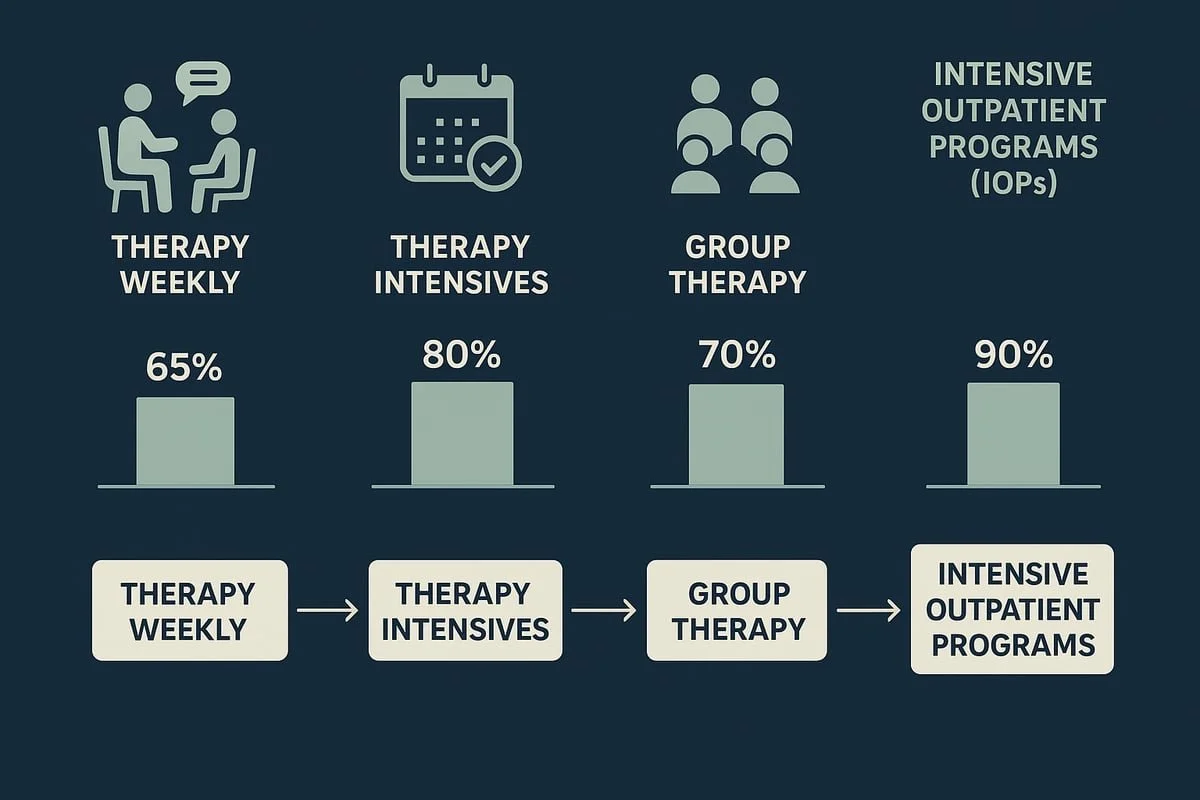
Research highlights that virtual Intensive Outpatient Programs (IOPs) and therapy intensives offer additional structure and support for complex scenarios. For example, individuals experiencing repeated relapses often benefit from group therapy or intensives. Insurance coverage is expanding, and many plans now support higher levels of care for qualifying needs.
If you notice therapy weekly is not producing desired results, consider discussing these concerns openly with your therapist. Together, you can assess whether a shift to a more intensive format is appropriate.
Exploring Therapy Alternatives in 2026
When therapy weekly falls short, several alternatives can provide the depth or structure needed for meaningful progress. Intensive therapy offers multi-hour or multi-day sessions aimed at rapid breakthroughs. Group therapy brings community support and shared learning, while virtual IOPs deliver daily engagement and accountability.
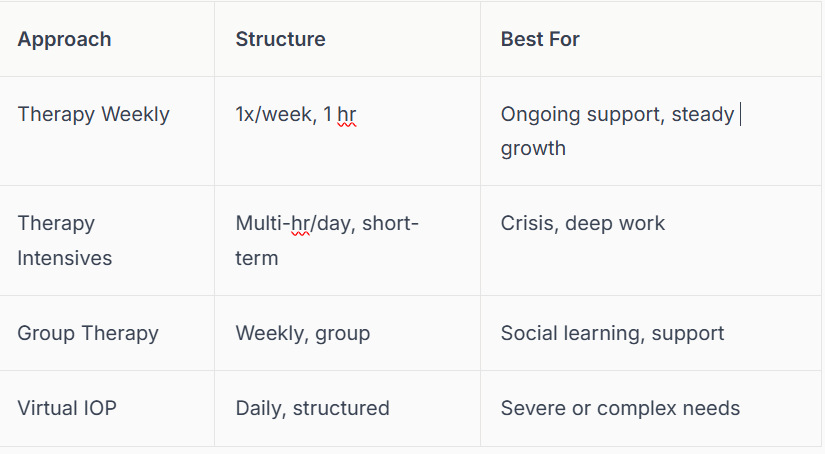
The following table summarizes key differences:
For a deeper comparison, read Therapy intensives vs weekly therapy. Collaborate with your therapist to evaluate which option best aligns with your goals and clinical needs.
How to Transition Effectively
Transitioning from therapy weekly to a higher level of care involves careful planning and open communication. Start by setting clear intentions for the new therapy format and discussing expectations with your therapist. This collaborative approach ensures continuity and reduces anxiety about the change.
It is helpful to integrate skills and insights gained from intensives or groups back into your ongoing therapy weekly sessions, if you return. Maintain self-care routines and engage support systems during this transition period.
Remember, adapting your care is a sign of strength and commitment to your well-being. With the right support, you can continue moving toward your goals, even if the format of therapy weekly changes.
Local Support |
PA, NC & SC

Mariah J. Zur | Therapy Intensives in Raleigh, Pittsburgh and across NC, SC, PA
I offer focused therapy intensives for adults who are still functioning but feel worn down by constant pressure, anxiety, or patterns that no longer work. This work is designed for people who want depth, clarity, and relief without labels or long-term weekly therapy. If you’re in North Carolina, South Carolina, or Pennsylvania and curious whether an intensive format could be supportive, you’re welcome to learn more.



Join me on Facebook, Instagram, Pinterest, Google orTikTok for more educational tips, trauma recovery insights, and updates on therapy intensives in Pennsylvania, North Carolina, and South Carolina.
Disclaimer
The content shared here is for educational and informational purposes only. It is not a substitute for psychotherapy, medical care, or individualized mental health treatment. Reading this blog or engaging with my content does not establish a therapeutic relationship.
If you are experiencing significant distress or feel you need personalized support, I encourage you to seek care from a licensed mental health professional in your state. Therapy is deeply personal, and the right support should be tailored to your specific needs, pace, and circumstances.
For adults located in North Carolina, South Carolina, or Pennsylvania who are seeking focused, confidential support, I offer customized therapy intensives designed to address chronic stress, internal pressure, and patterns that no longer work. Information about these services can be found throughout this site.
About the Author
Mariah Zur, LPC is a licensed therapist who works with high-achieving adults navigating chronic stress, internal pressure, and the quiet unraveling that can happen beneath outward success. Her work is especially suited for individuals who are highly functional, deeply self-aware, and exhausted from holding everything together.
Mariah offers therapy intensives for adults seeking focused, contained support without labels, long-term weekly therapy, or unnecessary exposure. Her approach is grounded, relational, and nervous-system informed, helping clients slow the internal spiral, regain a sense of control, and move forward with clarity and steadiness.
She provides intensive therapy services online across North Carolina, South Carolina, and Pennsylvania, with in-person options available in Raleigh, NC.
Credentials
Mariah J. Zur, MS, LPC
Licensed Professional Counselor
Doctoral Student, Counselor Education and Supervision
