
All Of You Therapy Guide: Your Path to Healing in 2026
In today’s fast-moving, digital world, finding genuine healing can feel out of reach. Many people struggle to connect with themselves and others, even as they long for relief from pain and disconnection.
As we approach 2026, more individuals are seeking holistic, tailored solutions for mental health challenges. There is a clear shift toward therapy methods that address the whole person, not just surface symptoms.
This guide introduces all of you therapy, a trauma-informed approach that honors your unique story. Here, you will discover its guiding philosophy, core methods, and practical steps to support your journey to authentic healing.
Ready to explore a transformative path? Read on for a comprehensive roadmap to healing and growth.
What is All Of You Therapy?
All of you therapy is a trauma-informed, relational approach to mental health that recognizes healing must engage both the mind and the body. Unlike traditional one-size-fits-all models, all of you therapy tailors every aspect of care to the unique needs, backgrounds, and strengths of each client.
At its core, all of you therapy believes that true healing requires addressing not just symptoms, but the deeper, often hidden parts of ourselves. These are the parts you might try to ignore or hide—the parts carrying pain, shame, or old patterns. By creating a safe, non-judgmental space, all of you therapy invites clients to bring their full selves forward, fostering real vulnerability and transformation.
This approach serves a wide range of individuals and communities. Whether you are a child who appears fine at school but unravels at home, an adult feeling stuck in old cycles, a parent hoping to break generational patterns, or someone navigating identity and belonging, all of you therapy is designed for you. The practice welcomes children, adults, couples, families, and LGBTQ+ individuals, with a strong commitment to inclusivity. Support is available for Queer Allied and Russian-speaking clients, ensuring that diverse cultural and language needs are honored.
Accessibility is a core value of all of you therapy. Clients can choose between in-person sessions in Philadelphia, PA, or secure online therapy available across Pennsylvania and New Jersey. This flexible model ensures that support is within reach, regardless of where you live or your schedule demands.
Consider these real-world scenarios: a child who keeps it together at school but melts down at home, an adult repeating painful relationship patterns, or parents determined to raise resilient children despite their own trauma histories. All of you therapy meets clients where they are, offering specialized support for each unique journey.
The practice stands on a strong foundation of trauma-informed care, with clinicians deeply trained in advanced modalities like Internal Family Systems (IFS), Eye Movement Desensitization and Reprocessing (EMDR), art therapy, and dance/movement therapy. This commitment to ongoing education ensures that each client receives evidence-based, compassionate care. For those interested in a deeper dive into trauma-informed modalities, Trauma therapy approaches explained offers further insight into the diverse methods that inform all of you therapy.
In summary, all of you therapy provides a personalized, inclusive, and expertly delivered path to healing. By honoring every aspect of your experience—the visible and the hidden—it empowers you to move forward with greater self-understanding, resilience, and hope.
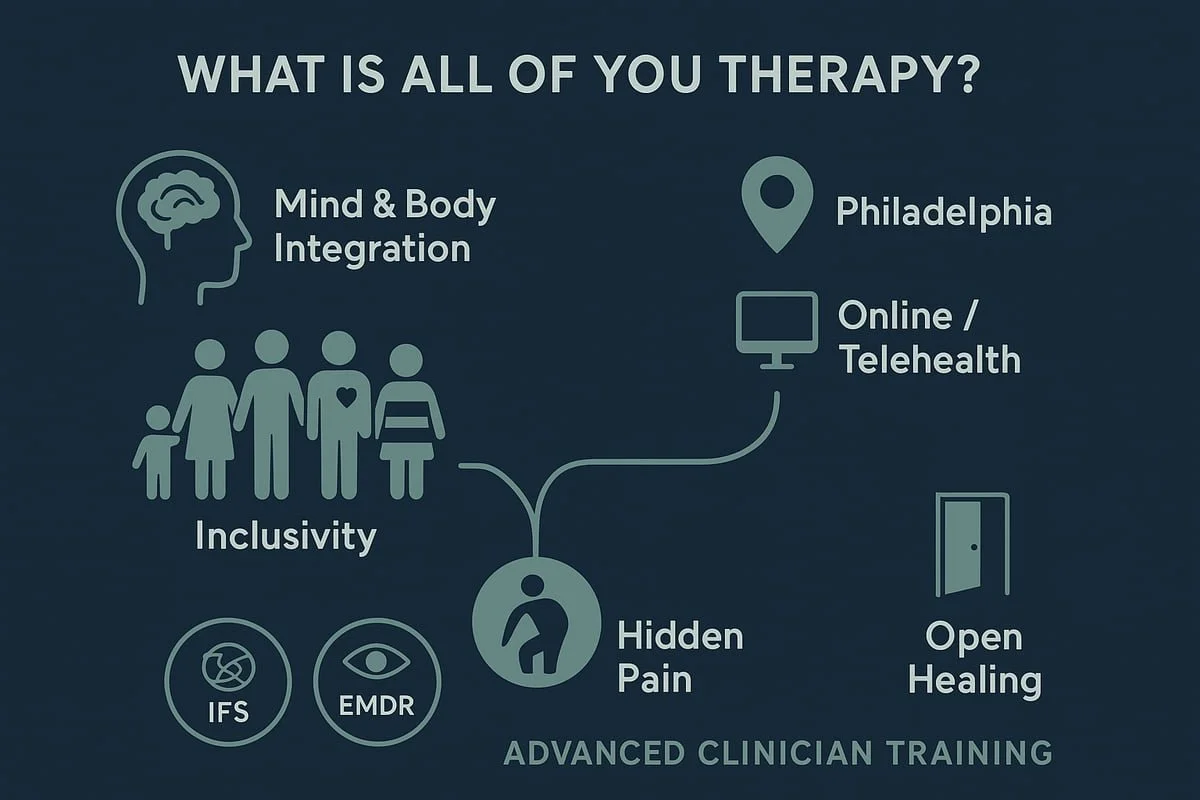
What is All Of You Therapy?
Core Modalities and Methods Used in All Of You Therapy
In today’s complex world, healing is not a single-path journey. That is why all of you therapy offers a diverse toolbox of evidence-based modalities, each thoughtfully chosen to meet the unique needs of every client. This approach recognizes that true transformation happens when therapy is personalized, compassionate, and responsive to both mind and body.
At the heart of all of you therapy is a trauma-informed care philosophy. This means every method and interaction is guided by safety, trust, and deep understanding of how trauma impacts the nervous system. For those interested in the foundational principles, Trauma-Informed Approaches and Programs offers a comprehensive look at these essential practices.
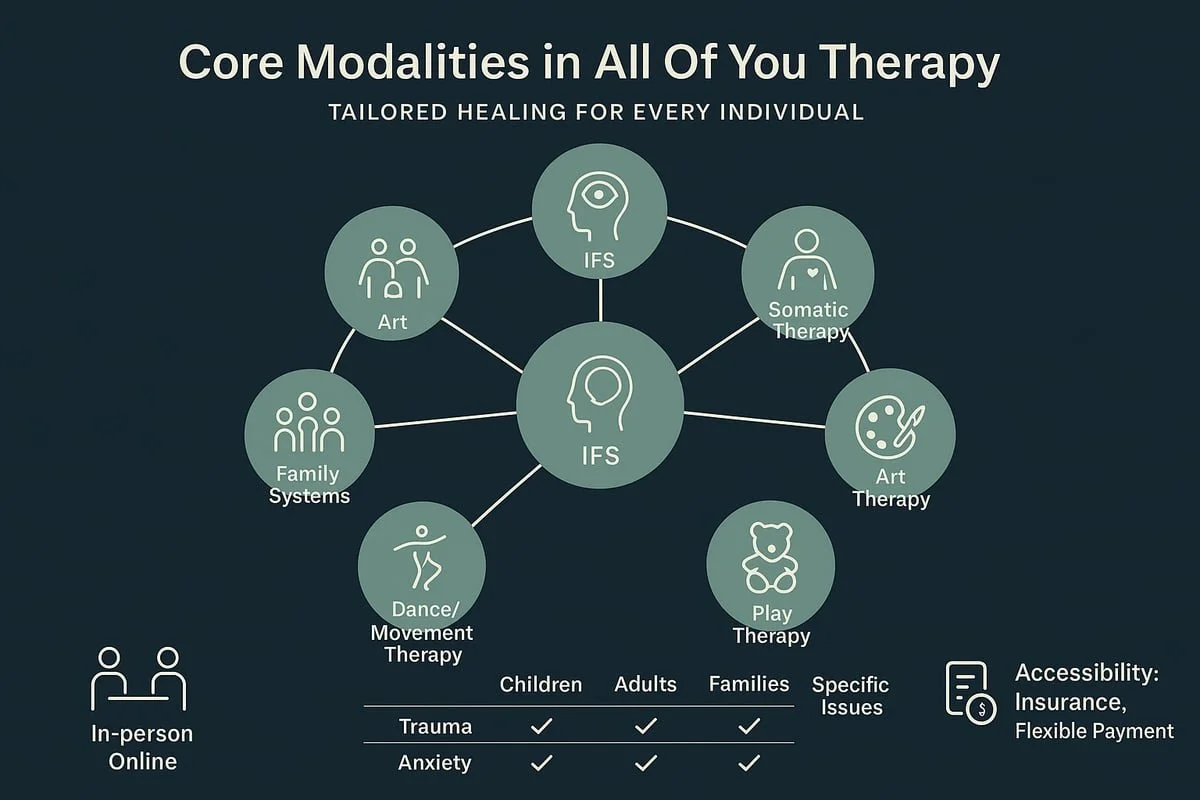
Core Modalities and Methods Used in All Of You Therapy
A Multimodal Approach for Individualized Healing
All of you therapy integrates a range of methods, including:
Internal Family Systems (IFS)
Eye Movement Desensitization and Reprocessing (EMDR)
Somatic Therapy
Art Therapy
Play Therapy
Dance/Movement Therapy
Family Systems Therapy
Each modality has unique strengths. Rather than a one-size-fits-all plan, therapists assess which combination best supports the client’s story, symptoms, and goals. This blending of approaches ensures that care is not only evidence-based but also deeply attuned to each person’s lived experience.
Matching Modalities to Client Needs
The adaptability of all of you therapy is especially important for diverse populations. For example, children who struggle to express themselves verbally may benefit from play therapy, art therapy, or sand tray work. These creative modalities allow young clients to process emotions through movement, drawing, or storytelling.
Adults dealing with trauma or anxiety may find talk therapy and somatic techniques more helpful. Somatic therapy focuses on the body’s role in storing and releasing stress, while EMDR helps reprocess traumatic memories in a safe, controlled way. Family systems therapy can address relationship dynamics, making it effective for couples or families seeking better communication.
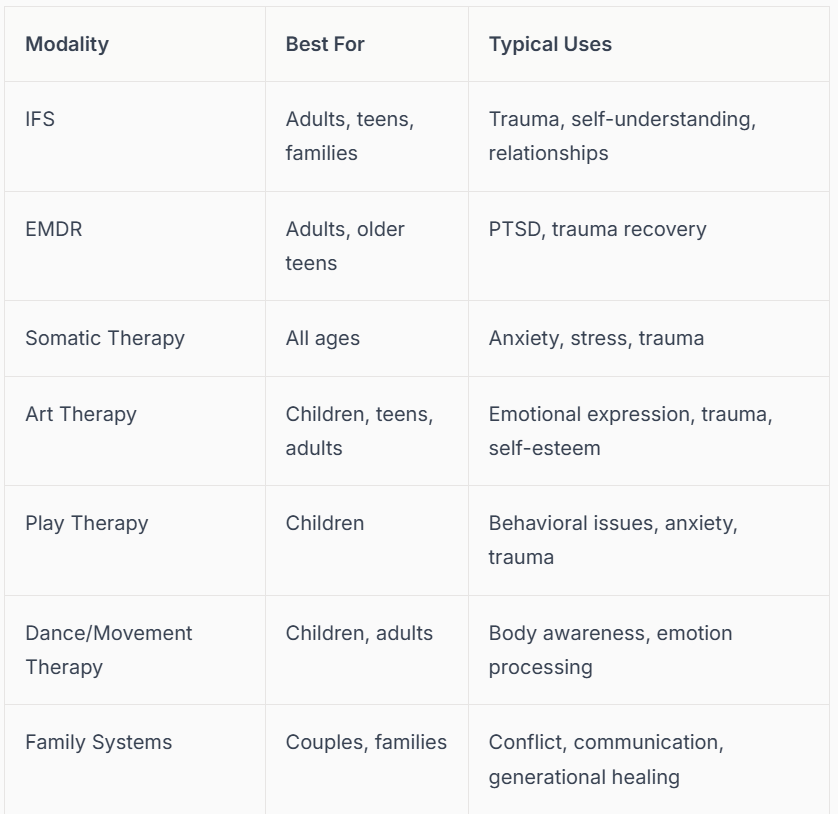
Summary Table: Modalities and Their Applications
Creative and Evidence-Based Methods
All of you therapy values creativity as much as scientific rigor. Children often engage in puppet play, drawing, or movement to safely access feelings. Adults might use art or journaling alongside traditional talk therapy, or practice grounding exercises to calm their nervous system.
Sessions are available in-person in Philadelphia, PA, or online across Pennsylvania and New Jersey. Fees are $175 for individuals and $185 for couples, with insurance options like VCAP and superbills for reimbursement. This flexibility ensures all of you therapy remains accessible to those who need it most.
A Responsive, Inclusive Practice
Clients are never asked to fit a mold. Whether addressing generational trauma in a family, helping a child navigate school stress, or supporting an LGBTQ+ individual through identity exploration, all of you therapy adapts methods to client needs. Therapists hold advanced training in IFS, EMDR, art therapy, and more, ensuring a high standard of care.
Ultimately, the strength of all of you therapy lies in its ability to blend the best of multiple modalities, always with the client’s healing and empowerment at the center.
The All Of You Therapy Healing Journey: Step-by-Step
Embarking on the all of you therapy healing journey means engaging in a thoughtful, personalized process. Each step is designed to meet you where you are, ensuring safety, trust, and genuine progress. Let’s explore how this path unfolds, from your first contact to long-term growth.
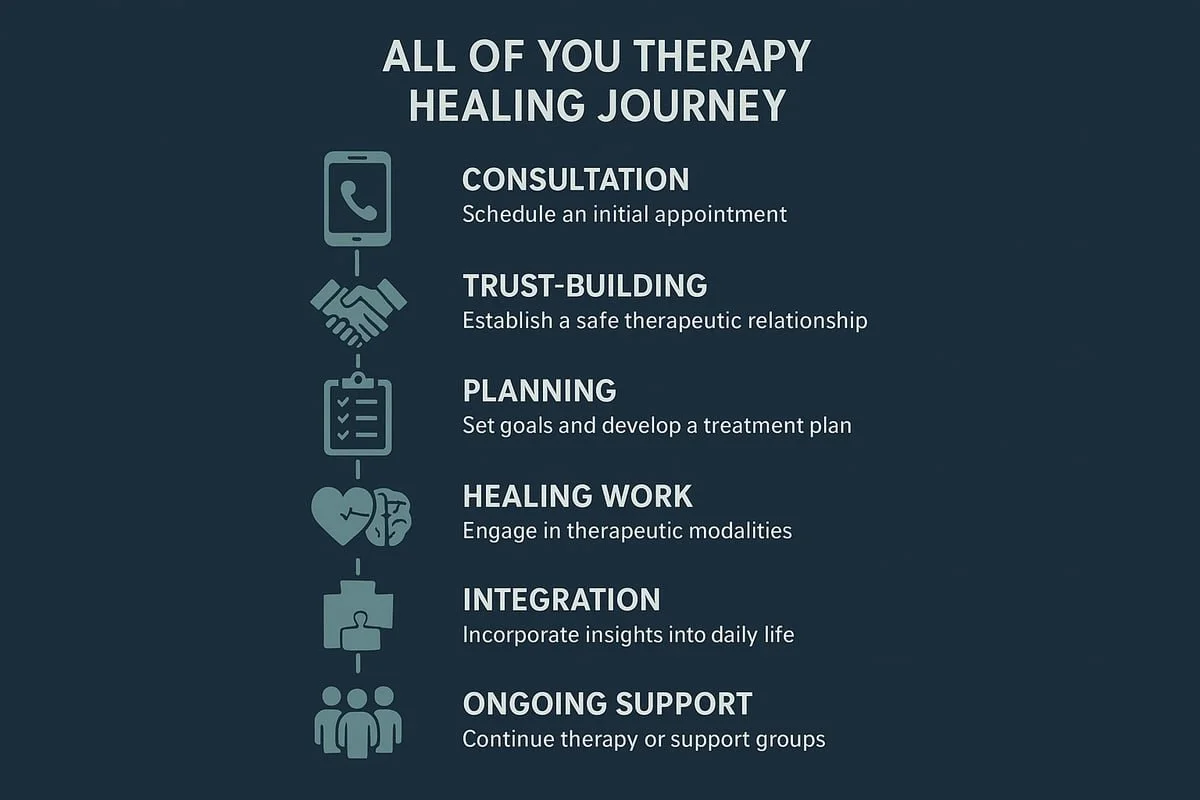
The All Of You Therapy Healing Journey: Step-by-Step
Step 1: Initial Consultation and Assessment
The journey with all of you therapy begins with a free 15-minute consultation. This first step is about understanding your needs, answering questions, and matching you with the right therapist. During intake, you’ll complete forms that outline your symptoms, goals, and history.
Therapists may ask, “What brings you here?” or “How have you tried to cope so far?” The focus is on creating a clear picture of your unique story. This collaborative assessment ensures all of you therapy is tailored from the very start.
Step 2: Building Safety and Trust
Safety and trust are the foundation of all of you therapy. In early sessions, therapists create a non-judgmental space where you can share openly. Confidentiality and respect are emphasized, allowing you to express even the parts you might usually keep hidden.
Therapists listen for what’s beneath “I’m fine,” gently inviting deeper sharing. This step is crucial for nervous system regulation and emotional safety, helping clients feel truly seen and supported.
Step 3: Collaborative Treatment Planning
Once trust is established, all of you therapy shifts to collaborative planning. Here, you and your therapist co-create a treatment plan that fits your story, strengths, and challenges. Together, you identify goals and select modalities that align with your needs.
For example, a child might benefit from play therapy, while an adult healing from trauma could integrate EMDR or IFS. The pace and structure are always individualized, ensuring the process never feels rushed or generic.
Step 4: Active Healing Work
The heart of all of you therapy is the active healing phase. Sessions involve processing emotions, learning coping skills, and engaging in creative or somatic work. Children might use sand trays, puppets, or art to explore feelings, while adults work with talk therapy, movement, or mindfulness.
Modalities like EMDR support trauma recovery, helping clients safely process painful memories. For more on how EMDR can support your journey, see EMDR therapy for trauma recovery. Therapists adapt techniques to each person’s age, background, and preferences, ensuring meaningful progress.
Step 5: Integration and Skill Building
After active healing, all of you therapy focuses on integration. Clients practice new skills in daily life, from emotional regulation to improved communication. Therapists provide tools for handling setbacks and reinforcing positive changes.
For instance, a parent might use Circle of Security principles at home, while an adult journals or practices grounding exercises. The goal is to make healing sustainable beyond the therapy room.
Step 6: Transitioning and Ongoing Support
The final step in all of you therapy is transitioning to maintenance or concluding therapy. This may involve periodic check-ins, group sessions, or joining programs like Circle of Security Parenting for continued growth.
Therapists ensure you have resources and support as you move forward, so the benefits of all of you therapy extend into every aspect of life.
Choosing the Right All Of You Therapist for You
Finding the right therapist is a crucial step in making the most of your all of you therapy journey. A strong therapeutic match can mean the difference between temporary relief and lasting transformation. With so many options available, how do you ensure you’re choosing someone who truly understands your unique needs and supports your path to healing?
Selecting an all of you therapy provider starts with reviewing their credentials and specialties. Look for therapists who are not only licensed but also have advanced training in trauma-informed care. Many leading clinicians hold qualifications such as LCSW (Licensed Clinical Social Worker), Board Certified Art Therapist, or credentials in Dance Movement Therapy. These designations signal deep expertise in both evidence-based and creative modalities.
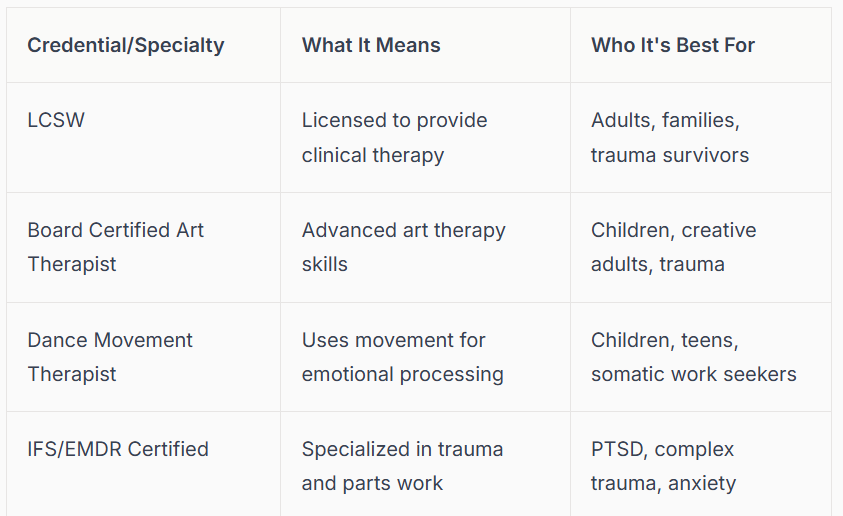
Choosing the Right All Of You Therapist for You
When interviewing a potential all of you therapy provider, it’s wise to prepare thoughtful questions. Some you might consider include:
What is your experience working with my specific concerns or background?
Which therapeutic modalities do you use, and why?
How do you tailor your approach for different ages or cultural backgrounds?
What is your philosophy on healing and change?
How do you create a safe, non-judgmental space for clients?
Can you share examples of successful outcomes with clients like me?
A hallmark of all of you therapy is the integration of multiple approaches to suit client needs. For example, a therapist skilled in Internal Family Systems therapy basics can help clients explore their inner world through "parts work," while someone with EMDR certification can guide trauma processing with evidence-based protocols. This diversity of modalities ensures that support is as dynamic as your healing journey.
Endorsements and testimonials from other professionals are also key indicators of a therapist’s reputation. Seek out practitioners who are recommended for their warmth, attunement, and ability to foster genuine connection. These qualities, combined with clinical skill, create an environment where you can feel safe, seen, and empowered.
To identify the right all of you therapy provider for your goals, reflect on your values and what you hope to achieve. Are you seeking to break family patterns, heal from trauma, or support your child’s emotional growth? Match your intentions with a therapist’s expertise. For example, someone specializing in adult trauma may use talk and somatic therapies, while a play therapist will engage children through art, movement, and play.
Choosing all of you therapy is a personal investment in your future. Take the time to ask questions, compare specialties, and trust your instincts. The right therapeutic relationship can open the door to profound self-discovery and sustainable healing.
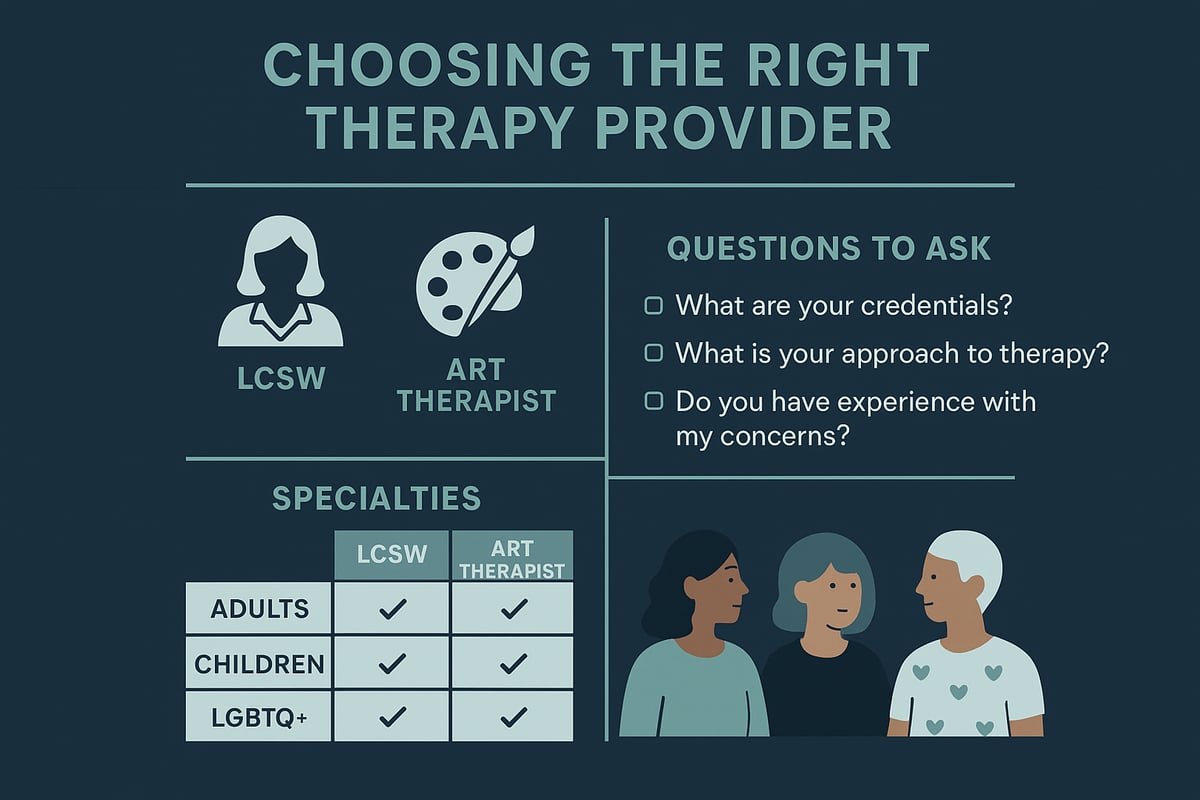
Choosing the Right All Of You Therapist for You
Integrating Therapy Into Daily Life: Beyond the Session
Healing does not stop at the therapy office. For many, the real transformation with all of you therapy begins when you apply new insights and coping skills in the everyday moments that matter most. This ongoing integration is essential for lasting change, helping you move from insight to action and from emotional survival to genuine resilience.
Strategies for Daily Integration
Applying what you learn in all of you therapy means practicing emotional regulation, healthy boundaries, and self-awareness outside of session. Try setting aside time for mindfulness exercises, journaling, or grounding routines that reinforce your therapeutic progress. Parents can use Circle of Security principles to foster secure attachment and responsive communication with their children, while adults may benefit from daily self-check-ins or relaxation techniques. For more practical strategies, resources like Trauma-Informed Therapy Explained (& 9 Techniques) can offer actionable tools to support your journey.
Real-Life Examples and Group Support
Many clients find that integrating all of you therapy into family and community life accelerates growth. For example, parents report using Circle of Security Parenting tools to navigate tough moments with greater empathy and calm. Adults often incorporate mindfulness or expressive arts into their routines, enhancing self-understanding. Children and teens benefit from play-based activities at home, echoing therapeutic themes. Group programs such as the Group for Siblings of PDAers provide a supportive environment where shared experiences build confidence and connection.
Overcoming Common Challenges
It is normal to face setbacks or resistance when trying to maintain progress outside of therapy. All of you therapy emphasizes a compassionate, flexible approach, encouraging clients to view challenges as opportunities for learning. If you notice old patterns resurfacing, revisit your coping skills or reach out to your therapist for a check-in. Family and group sessions can also help reinforce new habits, especially during times of stress or transition. Specialized support, including childhood trauma therapy options, is available for children and families needing extra guidance.
Data Highlights on Outcomes
Integrating all of you therapy tools into daily routines leads to measurable improvements. Clients frequently report greater emotional safety, more satisfying relationships, and increased resilience when they consistently use skills learned in therapy. Whether through regular self-reflection, participation in group offerings, or open family conversations, ongoing practice is the key to sustainable healing. The journey may have ups and downs, but with continued commitment, transformation is within reach for every individual and family.
Specialized Programs and Group Offerings
Finding authentic connection and support is essential for lasting healing, which is why all of you therapy offers a range of specialized group programs. These offerings are designed to meet the unique needs of families, parents, and siblings navigating complex emotional landscapes. By participating in these targeted groups, individuals can access community, guidance, and evidence-based strategies that reinforce healing beyond the individual session.
Circle of Security Parenting Program
The Circle of Security Parenting Program at all of you therapy equips parents with tools to nurture secure attachments and emotional resilience in their children. This group, facilitated by licensed clinicians such as Katie Fries, LCSW, provides a supportive environment where parents learn to recognize and respond to their child’s emotional needs. Through structured discussions, practical exercises, and real-life scenarios, parents gain confidence in fostering stronger, healthier family connections.
Participants can expect:
Weekly group sessions focused on relationship-building
Guidance on managing challenging behaviors with empathy
Strategies for breaking intergenerational cycles
Parents leave the program feeling more attuned and connected to their children, often reporting positive shifts in family dynamics.
Group for Siblings of PDAers
The Group for Siblings of PDAers addresses the unique challenges faced by siblings of children with Pathological Demand Avoidance (PDA). In this specialized group, all of you therapy clinicians create a safe, compassionate space for siblings to share experiences, build self-advocacy skills, and develop a deeper understanding of neurodiversity. Activities include art, storytelling, and cooperative games, all designed to foster emotional expression and peer connection.
Key features of this group:
Age-appropriate discussions about PDA and neurodiversity
Tools for managing stress and communication at home
Support for developing friendships and self-confidence
Siblings often emerge with improved self-esteem and a greater sense of belonging within their families.
Group Therapy: Compassion, Community, and Safety
Group therapy at all of you therapy centers on compassion, fairness, and nervous system safety for every participant. These programs are grounded in trauma-informed principles, ensuring that every member feels seen and respected. By integrating the Trauma-Informed Therapy: Principles and Practical Approaches philosophy, facilitators create environments where vulnerability and growth are encouraged.
Community is a cornerstone of these offerings. Participants benefit from shared experiences, mutual support, and collective wisdom. Group settings help normalize challenges and provide a space to practice new skills in real time.
Outcomes and Expertise
The impact of all of you therapy’s group offerings is both measurable and meaningful. Parents consistently report feeling more connected and empowered, while siblings gain valuable social and emotional skills. Programs are led by experts with advanced training in trauma, child development, and group facilitation, ensuring high standards of care.
Competitor analysis shows that few practices provide such a comprehensive, inclusive approach to group therapy. By centering compassion and safety, all of you therapy builds communities where healing is possible for every member.
Local Support |
PA, NC & SC

Mariah J. Zur | Therapy Intensives in Raleigh, Pittsburgh and across NC, SC, PA
I offer focused therapy intensives for adults who are still functioning but feel worn down by constant pressure, anxiety, or patterns that no longer work. This work is designed for people who want depth, clarity, and relief without labels or long-term weekly therapy. If you’re in North Carolina, South Carolina, or Pennsylvania and curious whether an intensive format could be supportive, you’re welcome to learn more.

Join me on Facebook, Instagram, Pinterest, Google orTikTok for more educational tips, trauma recovery insights, and updates on therapy intensives in Pennsylvania, North Carolina, and South Carolina.
Disclaimer
The content shared here is for educational and informational purposes only. It is not a substitute for psychotherapy, medical care, or individualized mental health treatment. Reading this blog or engaging with my content does not establish a therapeutic relationship.
If you are experiencing significant distress or feel you need personalized support, I encourage you to seek care from a licensed mental health professional in your state. Therapy is deeply personal, and the right support should be tailored to your specific needs, pace, and circumstances.
For adults located in North Carolina, South Carolina, or Pennsylvania who are seeking focused, confidential support, I offer customized therapy intensives designed to address chronic stress, internal pressure, and patterns that no longer work. Information about these services can be found throughout this site.
About the Author
Mariah Zur, LPC is a licensed therapist who works with high-achieving adults navigating chronic stress, internal pressure, and the quiet unraveling that can happen beneath outward success. Her work is especially suited for individuals who are highly functional, deeply self-aware, and exhausted from holding everything together.
Mariah offers therapy intensives for adults seeking focused, contained support without labels, long-term weekly therapy, or unnecessary exposure. Her approach is grounded, relational, and nervous-system informed, helping clients slow the internal spiral, regain a sense of control, and move forward with clarity and steadiness.
She provides intensive therapy services online across North Carolina, South Carolina, and Pennsylvania, with in-person options available in Raleigh, NC.
Credentials
Mariah J. Zur, MS, LPC
Licensed Professional Counselor
Doctoral Student, Counselor Education and Supervision
