
Guide to Here and Now Therapy: Embracing Mindful Healing 2026
Imagine facing emotional struggles and, instead of getting stuck in the past or worrying about the future, you discover a new way to heal by truly focusing on what is happening right now. This shift in attention is at the heart of a growing movement in mental health.
Present-focused therapies are gaining traction as more people seek practical, science-backed solutions for anxiety, stress, and relationship challenges. Among these, here and now therapy stands out as a powerful, evidence-based approach for real, lasting change.
Why is this approach so effective? Here and now therapy helps people break free from old patterns, reduce anxiety, and build genuine connections. Both clinical research and client stories show its impact.
In this guide, you will learn what here and now therapy is, explore its core principles, step-by-step process, practical tools, client benefits, and expert insights for 2026. Embracing this method can unlock mindful healing and personal transformation.
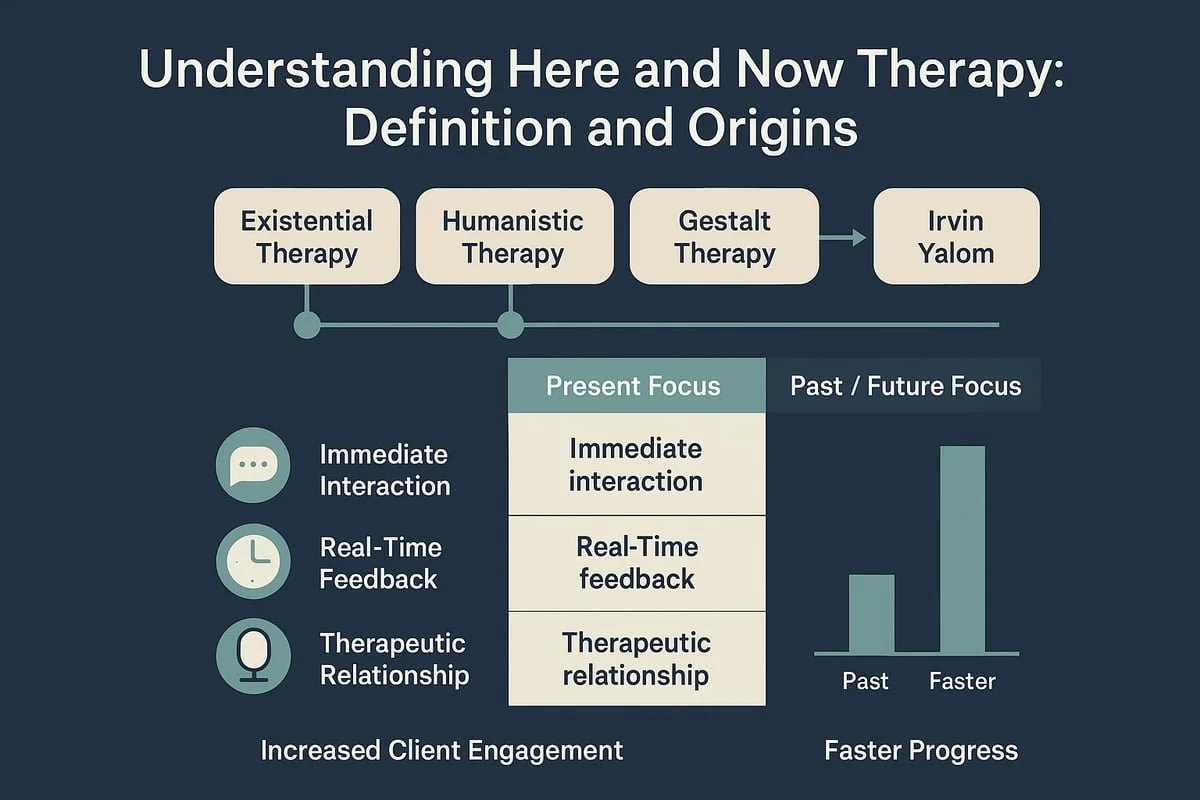
Understanding Here and Now Therapy: Definition and Origins
Here and now therapy is a present-focused therapeutic approach that emphasizes exploring real-time feelings, thoughts, and interactions. Unlike methods that dwell on the past or speculate about the future, this therapy invites clients to fully engage with what is unfolding in the moment. The aim is to create space for authentic connection and immediate insight.
The origins of here and now therapy can be traced back to existential and humanistic psychology, as well as Gestalt therapy. Irvin Yalom, a renowned psychiatrist, played a pivotal role in shaping this approach. He advocated for therapists to focus on the immediate dynamics within the therapeutic relationship, rather than relying solely on narrative or analysis. For a deeper dive into Yalom’s insights, see Yalom on the Here and Now.
A core principle of here and now therapy is the shift from analyzing past experiences or worrying about future scenarios to examining what is happening between client and therapist in real time. The present moment becomes both the subject and the tool for meaningful change. This approach recognizes that how we relate in the therapy room often mirrors our patterns outside it.
Let’s compare here and now therapy with more traditional approaches:
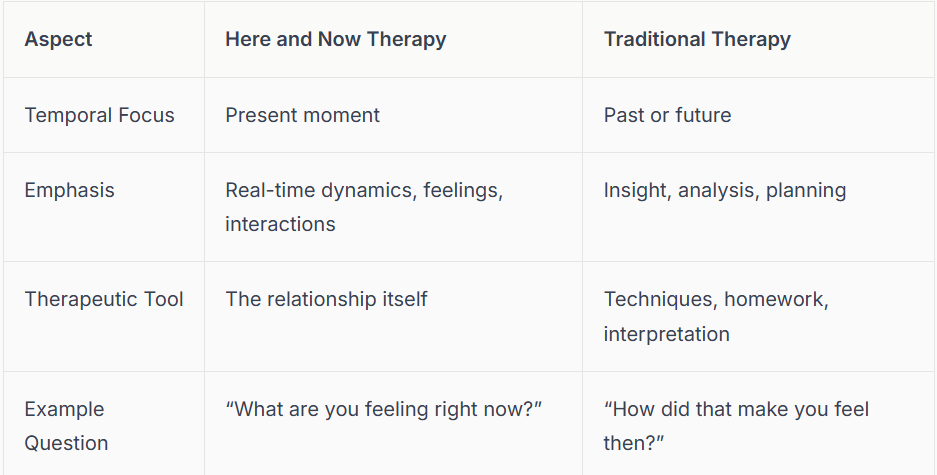
Traditional Therapy Approaches Table
In 2026, the demand for therapies that offer immediate, actionable results continues to rise. Clients increasingly seek approaches that align with the fast pace of modern life and deliver tangible benefits in the short term. Here and now therapy meets these needs by focusing on live experiences, fostering engagement, and promoting real change.
Consider a client who struggles with anxiety in social situations. During a session, the therapist notices the client avoiding eye contact and gently brings attention to it. As the client explores these feelings in the present, they gain powerful insights into their reactions, often sparking breakthroughs that conventional talk therapy might miss.
Recent research and expert consensus underscore the effectiveness of here and now therapy. Studies suggest that present-focused interventions can lead to higher client engagement and faster therapeutic progress compared to traditional models. This is especially true when the therapist skillfully brings awareness to subtle, in-session dynamics.
A useful analogy for here and now therapy is the idea of “the water we swim in.” Just as fish are unaware of the water surrounding them, people often overlook the patterns and emotions that shape their lives until these are brought into mindful awareness. By focusing on the present, this therapy helps clients notice and transform the invisible currents influencing their behavior.
In summary, here and now therapy is a dynamic, evidence-based approach that continues to gain momentum. Its roots in existential, humanistic, and Gestalt traditions, combined with modern research, make it an effective choice for those seeking meaningful, lasting change through mindful presence.
Understanding Here and Now Therapy: Definition and Origins
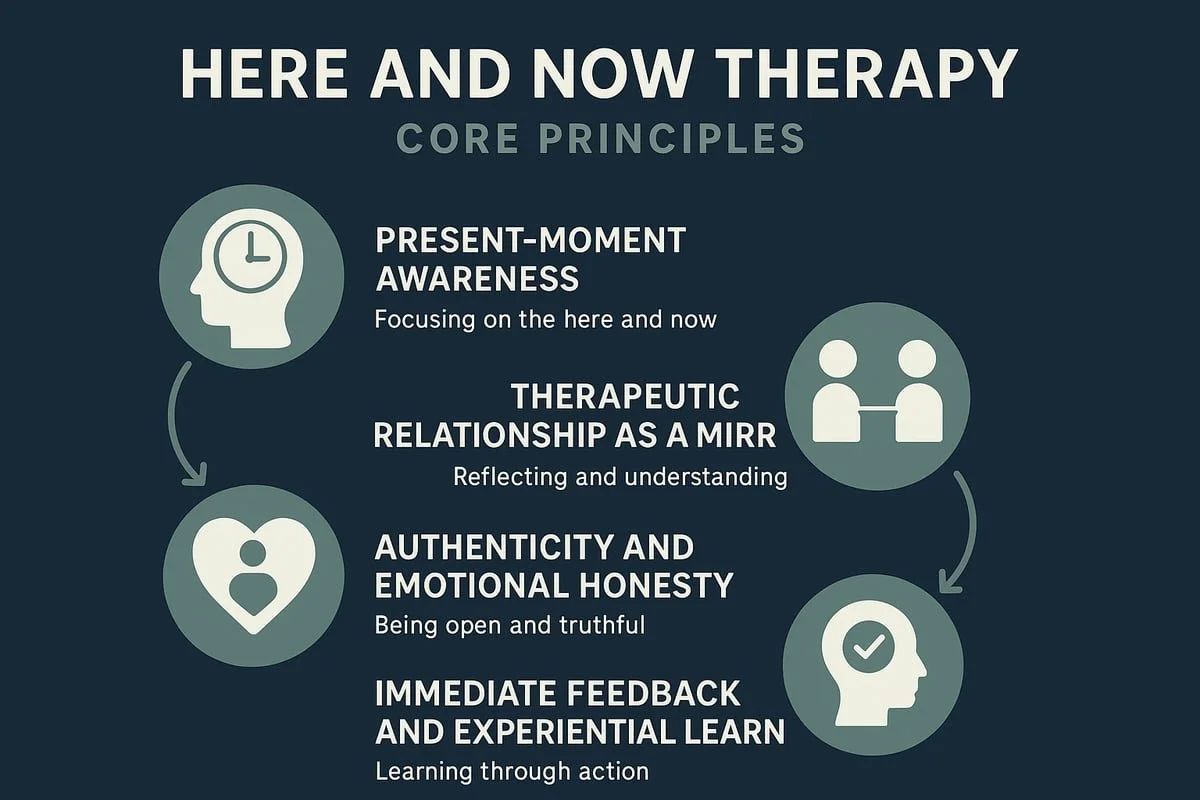
Core Principles of Here and Now Therapy
Understanding the foundational principles of here and now therapy is essential for anyone seeking transformative change. This approach centers on what unfolds in the present moment, both within the individual and the therapeutic relationship. By focusing on immediate experience, clients gain powerful insights, break patterns, and develop skills that extend far beyond the therapy room.
Core Principles of Here and Now Therapy
Focus on Present-Moment Awareness
At the heart of here and now therapy lies a deep commitment to present-moment awareness. Therapists guide clients to notice their feelings, thoughts, and bodily sensations as they arise within the session. This mindful focus on the "right now" interrupts habitual patterns and uncovers emotional truths that can otherwise remain hidden.
For example, a therapist might ask, "What are you feeling in this moment as we talk?" Such questions shift attention from analyzing past experiences or worrying about future outcomes to direct exploration of current experience. This real-time awareness is more than mindfulness; it is an active inquiry that helps clients recognize subtle emotions and reactions as they occur.
By cultivating this awareness, here and now therapy empowers clients to become observers of their inner world. This foundational principle sets the stage for deeper therapeutic work and lasting change.
The Therapeutic Relationship as a Mirror
Here and now therapy views the therapeutic relationship as a powerful mirror, reflecting clients' broader patterns and struggles. The dynamic between therapist and client is not just a backdrop but an active part of the healing process. Interpersonal issues, such as struggles with trust or boundaries, tend to surface naturally during sessions.
For instance, when a client feels uncomfortable with eye contact or hesitates to share openly, these reactions often mirror similar challenges in their relationships outside therapy. The therapist may notice and gently explore these moments, helping the client gain insight into their relational dynamics.
Irvin Yalom, a key figure in this field, emphasized that the issues clients face in life will almost inevitably arise in the therapy room. By working through these live experiences, here and now therapy enables clients to understand and ultimately shift long-standing patterns.
Authenticity and Emotional Honesty
A core tenet of here and now therapy is fostering authenticity and emotional honesty. This means creating a space where clients can name and explore unspoken feelings, even when they are difficult or uncomfortable. Addressing the "elephants in the room"—such as visible frustration, withdrawal, or even tension with the therapist—becomes a direct path to healing.
Therapists model vulnerability and encourage clients to share their true emotions as they emerge. For example, if a client appears withdrawn, the therapist might say, "I notice you seem distant right now. Can we talk about what’s happening for you?" This approach deepens trust and opens the door for genuine connection.
By prioritizing authenticity, here and now therapy accelerates the healing process. Clients learn that it is safe to be real, and this lesson often translates to their interactions outside of therapy.
Immediate Feedback and Experiential Learning
Immediate feedback is a distinguishing feature of here and now therapy. Instead of discussing issues in the abstract, therapists and group members share real-time reactions and observations. This experiential learning allows clients to practice new relational skills and receive instant, supportive feedback.
In group therapy, for example, a member might express feeling excluded, prompting open discussion and opportunities for growth. Research highlights that these immediate feedback loops not only accelerate learning but also enhance emotional growth. The Group Leader and Member Here-and-Now Focus and Therapeutic Factors Study underscores the effectiveness of this approach in facilitating meaningful change.
Experiencing and responding to feedback in the moment gives clients tools they can use in everyday life. Here and now therapy turns the session into a living laboratory for personal transformation.
The Step-by-Step Process of Here and Now Therapy
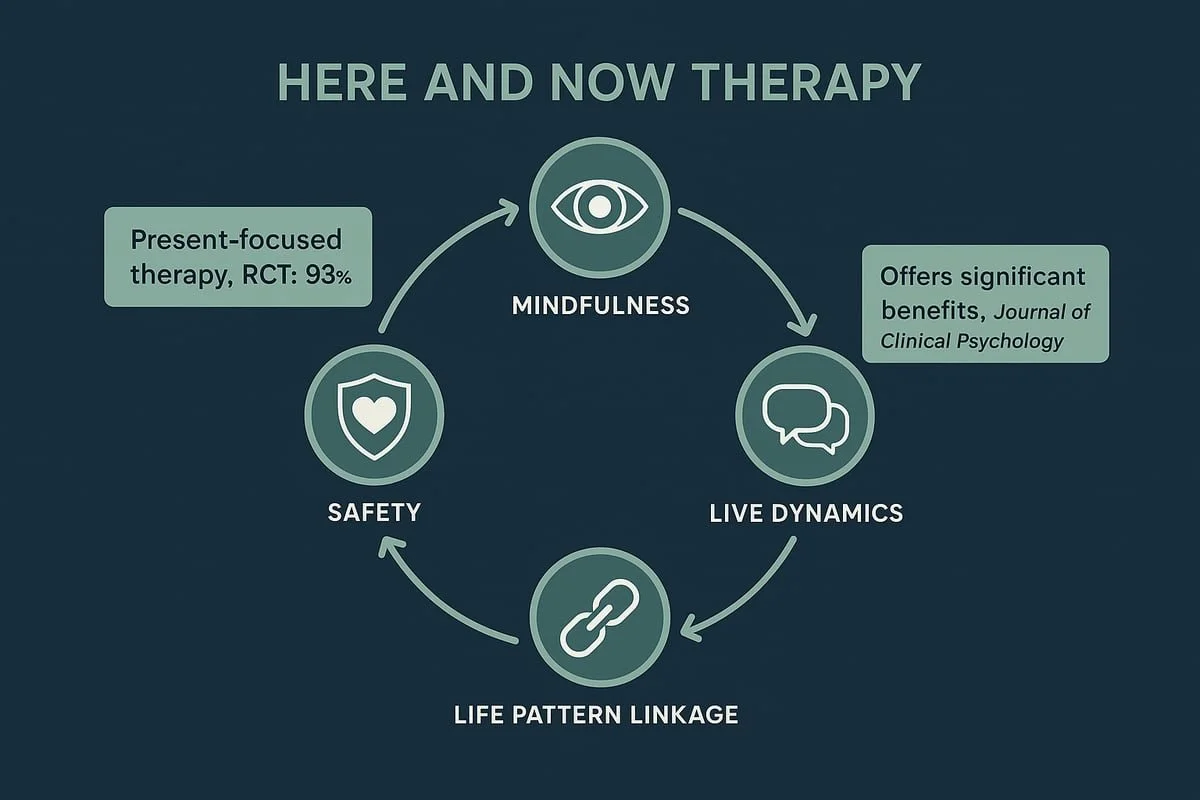
Embarking on the journey of here and now therapy involves a deliberate, structured process that guides clients toward real, lasting change. By focusing on immediate experience, each step builds on the last, helping individuals unlock insight and growth. Whether in individual or group settings, this approach creates a living laboratory for transformation.
The Step-by-Step Process of Here and Now Therapy
Step 1: Establishing Safety and Trust
The foundation of here and now therapy is a secure, welcoming environment. Before deep exploration, clients need to feel safe expressing themselves without judgment. Therapists actively foster this trust by validating emotions, clarifying boundaries, and modeling openness.
Key techniques include:
Consistently affirming that all emotions are acceptable.
Setting clear agreements about confidentiality.
Pacing sessions to match the client's readiness.
For example, a therapist might gently reassure a client, "Whatever you feel today, it's welcome here." This approach contrasts with traditional insight-oriented therapy, which may prioritize analyzing the past or planning for the future. For a deeper look at the differences between present-focused and conventional methods, see Trauma Therapy vs. Talk Therapy. Research consistently shows that a strong therapeutic alliance, built on trust, is a powerful predictor of positive outcomes in here and now therapy.
Step 2: Cultivating Present-Moment Awareness
Once safety is established, the therapist guides the client to tune into the present moment. Here and now therapy emphasizes noticing thoughts, emotions, and bodily sensations as they arise in real time.
Mindfulness exercises play a central role. For instance:
Guided breathing or grounding techniques.
Questions like, "What do you notice in your body right now?"
Gentle prompts to describe current feelings.
Heightened awareness sets the stage for deeper exploration. Clients often discover feelings or patterns that had been overlooked. This present-focused attention is a hallmark of here and now therapy, helping individuals recognize what is truly happening within themselves during the session.
Step 3: Exploring Live Dynamics in Session
In this step, the therapist and client examine their interactions as they unfold. Here and now therapy brings attention to subtle cues, tone, pauses, body language, that reveal underlying patterns.
Therapists may say, "I noticed you looked away when I mentioned that topic. What happened for you then?" These micro-moments frequently reflect broader themes in a client's life, such as difficulties with trust or communication.
Exploring live dynamics in the room allows clients to experience and reflect on their relational habits in real time. This experiential process is a core component of here and now therapy, offering immediate opportunities for insight and growth.
Step 4: Linking In-Session Experiences to Life Patterns
After bringing awareness to live interactions, the therapist helps the client connect these experiences to recurring struggles outside therapy. Here and now therapy leverages the present to illuminate the past and inform the future.
For example, a client who hesitates to speak up during a session may realize this mirrors a long-standing pattern of feeling unheard in relationships or at work. By making these links explicit, clients gain clarity about how in-session dynamics echo larger life themes.
This step empowers individuals to break free from self-defeating cycles. Understanding the connections between current experiences and ongoing challenges is a transformative aspect of here and now therapy.
Step 5: Practicing New Responses and Integration
The final step is about action and integration. Here and now therapy encourages clients to try new ways of relating, communicating, and setting boundaries, right in the session.
Therapists model healthy interactions and invite clients to experiment. For example:
Practicing assertively expressing needs.
Setting respectful limits with the therapist or group.
Receiving and responding to feedback.
Clients often report increased confidence and improved relationships as they transfer these new skills into daily life. In here and now therapy, the session itself becomes a rehearsal space for real-world change.
Practical Techniques and Interventions in Here and Now Therapy
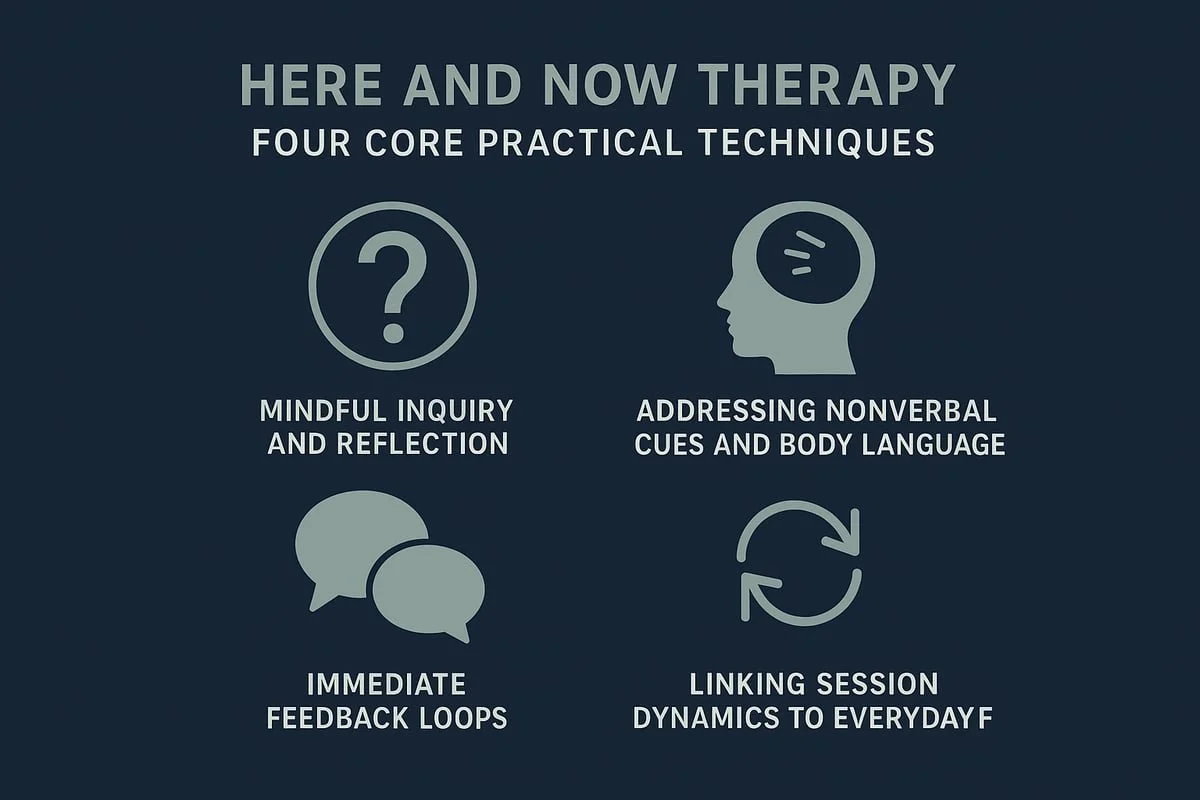
Effective here and now therapy relies on practical, evidence-based techniques that bring clients into direct contact with their present experience. These interventions help clients build awareness, process emotions, and transform relational patterns. Below, we explore four core strategies that make here and now therapy a powerful modality for mindful healing.
Practical Techniques and Interventions in Here and Now Therapy
Mindful Inquiry and Reflection
A cornerstone of here and now therapy is the use of mindful inquiry. Therapists invite clients to notice and articulate their immediate feelings and thoughts. For example, a therapist might ask, “What are you noticing between us right now?” This question draws attention to the present, encouraging clients to observe their experience as it unfolds.
This approach fosters self-awareness and emotional clarity. By focusing on the here and now, clients discover patterns that may have previously operated beneath their conscious awareness. Mindful inquiry is especially effective when paired with experiential practices. For those interested in deepening this skill, the guide How to Feel Your Feelings offers practical exercises to enhance emotional presence.
Therapists also use reflection, summarizing or mirroring what the client shares. This process validates the client’s experience and encourages further exploration in the safety of the therapeutic relationship.
Addressing Nonverbal Cues and Body Language
In here and now therapy, therapists pay close attention to nonverbal signals. Shifts in posture, facial expression, or energy often reveal unspoken feelings or internal conflicts. For instance, if a client’s arms are crossed or gaze is averted, the therapist might gently explore the meaning behind these actions.
Observing body language helps uncover emotional truths that words may not capture.
Discussing nonverbal cues invites clients to tune into their bodily sensations, a vital part of present-moment awareness.
Therapists model curiosity and acceptance, encouraging clients to notice how their bodies respond to different emotions.
This focus on the body bridges the gap between thought and feeling, making the therapeutic work more holistic and impactful.
Immediate Feedback Loops
Immediate feedback is a dynamic technique in here and now therapy. Whether in individual or group settings, real-time reactions are shared and processed. For example, a group member might voice feeling excluded, prompting open discussion among participants.
This approach accelerates learning by:
Allowing clients to receive constructive feedback as experiences unfold.
Encouraging honest dialogue and mutual understanding.
Providing opportunities to practice new relational skills within the safety of the therapeutic environment.
Immediate feedback helps clients break habitual patterns and build resilience, supporting growth both inside and outside the therapy room.
Linking Session Dynamics to Everyday Life
A key goal of here and now therapy is to help clients recognize how in-session experiences mirror their lives. Therapists guide clients to connect what happens during therapy to familiar patterns outside it. For example, noticing a tendency to withdraw in session may highlight similar avoidance in personal relationships.
This technique empowers clients by:
Increasing awareness of recurring behaviors and emotional responses.
Providing tools to interrupt self-defeating cycles.
Supporting the transfer of new skills to daily interactions.
By drawing these connections, clients gain insight and confidence to create meaningful change beyond the therapy setting.
Benefits and Outcomes of Here and Now Therapy
Experiencing the advantages of here and now therapy is transformative for many clients. This approach offers concrete, lasting changes in emotional health, communication, resilience, and self-understanding. By focusing on the present, clients unlock new possibilities for healing and growth that extend far beyond the therapy room.
Emotional Awareness and Regulation
Here and now therapy empowers clients to recognize and process emotions as they arise. This real-time awareness is crucial for emotional regulation. Clients learn to name feelings, notice bodily cues, and respond intentionally instead of reacting impulsively. For example, a client might notice rising anxiety during a session and, with the therapist’s guidance, practice mindful breathing to reduce its intensity.
Research demonstrates that present-focused approaches, such as Mindfulness-Oriented Recovery Enhancement, are effective in lowering anxiety and depression symptoms. By prioritizing the present, here and now therapy provides practical tools for managing emotions, both in and out of the therapy setting.
Improved Communication and Relationships
A core benefit of here and now therapy is the development of healthier communication patterns. Clients practice authentic self-expression and assertive boundary-setting in the safety of the therapeutic alliance. For instance, someone who struggles to voice their needs can rehearse direct communication during sessions, receiving immediate feedback and support.
These skills transfer to daily life, leading to more satisfying and respectful relationships. For those navigating challenges with family, resources like Boundaries with Emotionally Immature Parents provide actionable strategies that complement here and now therapy’s focus. Practicing these skills in real time fosters lasting change in how clients relate to others.
Breaking Old Patterns and Building Resilience
Here and now therapy is particularly effective in helping clients break free from self-defeating cycles. By addressing issues as they unfold, clients become aware of habitual responses—such as avoidance or defensiveness—and are encouraged to try new ways of relating. For example, a client who habitually avoids conflict may practice direct communication in the moment, supported by the therapist’s guidance.
This process not only disrupts entrenched patterns but also builds resilience. Clients leave sessions with practical experience in managing difficult emotions and interactions, increasing their confidence to handle similar challenges outside therapy.
Enhanced Self-Compassion and Confidence
Mindful presence is a cornerstone of here and now therapy, fostering greater self-acceptance and compassion. Clients learn to approach their experiences with curiosity rather than judgment. For example, someone who tends to criticize themselves for mistakes is encouraged to observe these thoughts and respond with kindness.
This shift in perspective leads to increased self-confidence and emotional well-being. Research consistently shows that self-compassion is linked to improved mental health outcomes. Through here and now therapy, clients develop a more supportive inner dialogue and a greater sense of personal worth.
Evidence-Based Results and Client Testimonials
The effectiveness of here and now therapy is supported by a growing body of research and client feedback. Present-focused interventions are linked to improved engagement, faster progress, and sustained change. Studies highlight the benefits of mindfulness-based and experiential therapies for diverse populations.
Clients frequently describe feeling truly seen and understood, often sharing breakthroughs such as, “I finally feel present and connected—right here, right now.” These testimonials underscore the real-world impact of here and now therapy, making it a powerful choice for those seeking meaningful transformation.
Expert Perspectives and Future Trends in Here and Now Therapy (2026)
The landscape of here and now therapy is rapidly evolving as mental health professionals look to the future. Expert voices, technological advancements, and cultural shifts are shaping how this approach will continue to empower clients in 2026 and beyond.
Thought Leaders: Yalom and Beyond
Irvin Yalom, a pioneer in existential psychotherapy, laid the foundation for here and now therapy by emphasizing the power of present-moment awareness. His teachings continue to inspire clinicians, with his assertion that “the present is the only moment in which we live” resonating strongly today. Contemporary therapists are building on Yalom’s work, integrating new research and approaches to keep here and now therapy relevant for modern clients. For those interested in the roots and evolution of this approach, the book Existential Psychotherapy by Irvin D. Yalom offers deeper insights. As the field moves forward, collaboration between seasoned experts and emerging voices ensures that present-focused therapy remains dynamic and evidence-based.
Integration with Digital and Group Modalities
The expansion of digital platforms is transforming how here and now therapy is delivered. Telehealth and virtual group sessions now allow clients to access present-focused interventions from anywhere, making therapy more accessible and flexible. Therapists are adapting group formats to the online space, using real-time feedback and present-moment processing in virtual rooms. Recent studies suggest that clients experience similar benefits from digital sessions as they do from in-person work, particularly in terms of engagement and connection. As digital tools continue to develop, here and now therapy will likely leverage technology to reach broader populations while maintaining its core focus on immediacy and authentic interaction.
Cultural and Generational Adaptations
Here and now therapy is increasingly tailored to meet the needs of diverse populations. Therapists recognize that cultural context, generational identity, and lived experiences shape how clients engage in the present. For example, Gen Z clients often prefer collaborative, transparent approaches, while multicultural groups may need interventions that honor collective values and unique communication styles. The adaptability of here and now therapy helps bridge differences, ensuring relevance across backgrounds. By focusing on the present moment, therapists can address generational and cultural nuances organically, fostering inclusivity and resonance for a wide range of clients.
The Role of Here and Now Therapy in Trauma Recovery
In trauma recovery, here and now therapy offers a compassionate, flexible path for healing. Present-focused techniques help clients safely process triggers and regain a sense of agency in the moment. Therapists often incorporate somatic awareness, guiding clients to notice bodily sensations and emotional shifts as they arise. This approach aligns with practical interventions such as those described in Somatic Tools for Generational Trauma, which emphasize body-based, present-moment strategies. As trauma-informed care becomes more prevalent, here and now therapy’s emphasis on mindful presence and real-time support positions it as a leading method for addressing anxiety, chronic stress, and trauma in 2026.
Local Support |
PA, NC & SC

Mariah J. Zur | Therapy Intensives in Raleigh, Pittsburgh and across NC, SC, PA
I offer focused therapy intensives for adults who are still functioning but feel worn down by constant pressure, anxiety, or patterns that no longer work. This work is designed for people who want depth, clarity, and relief without labels or long-term weekly therapy. If you’re in North Carolina, South Carolina, or Pennsylvania and curious whether an intensive format could be supportive, you’re welcome to learn more.


Join me on Facebook, Instagram, Pinterest, Google orTikTok for more educational tips, trauma recovery insights, and updates on therapy intensives in Pennsylvania, North Carolina, and South Carolina.
Disclaimer
The content shared here is for educational and informational purposes only. It is not a substitute for psychotherapy, medical care, or individualized mental health treatment. Reading this blog or engaging with my content does not establish a therapeutic relationship.
If you are experiencing significant distress or feel you need personalized support, I encourage you to seek care from a licensed mental health professional in your state. Therapy is deeply personal, and the right support should be tailored to your specific needs, pace, and circumstances.
For adults located in North Carolina, South Carolina, or Pennsylvania who are seeking focused, confidential support, I offer customized therapy intensives designed to address chronic stress, internal pressure, and patterns that no longer work. Information about these services can be found throughout this site.
About the Author
Mariah Zur, LPC is a licensed therapist who works with high-achieving adults navigating chronic stress, internal pressure, and the quiet unraveling that can happen beneath outward success. Her work is especially suited for individuals who are highly functional, deeply self-aware, and exhausted from holding everything together.
Mariah offers therapy intensives for adults seeking focused, contained support without labels, long-term weekly therapy, or unnecessary exposure. Her approach is grounded, relational, and nervous-system informed, helping clients slow the internal spiral, regain a sense of control, and move forward with clarity and steadiness.
She provides intensive therapy services online across North Carolina, South Carolina, and Pennsylvania, with in-person options available in Raleigh, NC.
Credentials
Mariah J. Zur, MS, LPC
Licensed Professional Counselor
Doctoral Student, Counselor Education and Supervision
