Top 8 PTSD Books to Read for Healing and Insight in 2026
As the world becomes more aware of trauma and mental health, the need for effective recovery tools is greater than ever. Approaching 2026, conversations about healing are front and center.
This guide is designed to help you navigate the best ptsd books available today. Whether you are seeking understanding, practical exercises, or stories of hope, there is a resource here for you.
You will find a carefully curated selection of memoirs, workbooks, and evidence-based guides. Each book offers unique insights and strategies to support your journey, no matter your background or experience.
With PTSD affecting millions worldwide, the right book can be a powerful step toward healing. Explore our top recommendations and discover resources that can truly make a difference.
Understanding PTSD and the Role of Books in Healing
What is PTSD?
Post-traumatic stress disorder, or PTSD, is a mental health condition triggered by experiencing or witnessing a traumatic event. Common symptoms include nightmares, flashbacks, emotional numbness, and persistent anxiety. These symptoms can disrupt daily life and relationships.
PTSD affects millions worldwide. In the United States alone, about 6% of the population will experience PTSD at some point, according to PTSD prevalence statistics in the U.S.. Causes range from combat and abuse to accidents and sudden loss.
Complex PTSD (CPTSD) arises from prolonged or repeated trauma, often in childhood, and involves more severe emotional and relational difficulties. Despite growing awareness, stigma and barriers to seeking help remain significant. Understanding these challenges is vital when considering ptsd books as a healing resource.
Why Books Can Be Powerful Tools for Recovery
Books offer more than just information. They provide education about trauma, validate personal experiences, and introduce practical self-help strategies. Reading memoirs can help survivors realize they are not alone, reducing feelings of isolation.
Workbooks, a popular type of ptsd books, guide readers through structured exercises that support emotional processing and growth. Evidence-based guides can supplement therapy or even serve as a gentle introduction for those not ready to seek professional help.
Books are accessible, affordable, and private. They can be revisited at any pace, making them invaluable for people at different stages of recovery.
How to Choose the Right PTSD Book for You
Selecting the most helpful ptsd books starts with understanding your unique needs. Are you looking for a personal story, a workbook, a clinical guide, or a spiritual perspective? Consider the following:
Seek titles grounded in research or lived experience.
Check readability: Is the language and format approachable?
Get recommendations from therapists or trusted support groups.
Always review content warnings for potential triggers.
Choosing the right book can set the stage for meaningful self-guided healing and growth.
The Evolving Landscape of PTSD Literature in 2026
The world of ptsd books is rapidly evolving. Trauma-informed publishing is expanding, bringing forward new voices and stories from diverse backgrounds. Readers can now find books that reflect a wide range of identities, cultures, and trauma types.
Recent titles blend neuroscience, psychology, and practical self-help, encouraging holistic healing for mind, body, and relationships. Looking ahead to 2026, expect to see more digital and interactive formats, making resources even more accessible and engaging. This ongoing evolution ensures that everyone can find guidance and hope on their path to recovery.
Top 8 PTSD Books to Read for Healing and Insight in 2026
Choosing the right PTSD books can be a transformative step on the path to recovery. The following list features nine carefully selected titles, each offering unique perspectives, tools, and hope for those navigating trauma. Whether you are seeking scientific insight, personal stories, or actionable exercises, these PTSD books provide practical guidance for a wide range of readers.
1. The Body Keeps the Score by Bessel van der Kolk, M.D.
Among all PTSD books, this title remains a cornerstone for understanding trauma’s impact on both mind and body. Dr. van der Kolk blends neuroscience, therapy case studies, and practical techniques, making complex science accessible to general readers.
The book details how trauma reshapes neural pathways, influences behavior, and manifests physically. It provides a foundation for anyone beginning to explore PTSD books or seeking to deepen their understanding of trauma’s effects. Readers will find practical exercises and insights that are widely used in therapy and support groups.
A notable advantage of this book is its evidence-based approach to somatic therapies. If you are interested in exploring more about body-based healing, the guide Somatic Tools for Trauma Recovery offers additional strategies aligned with this book’s teachings.
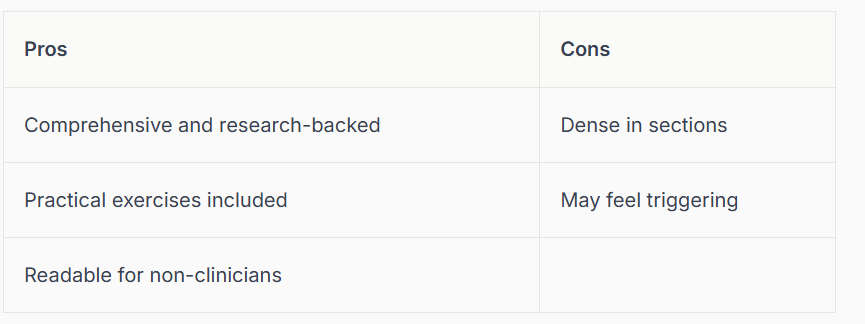
Therapists often recommend this PTSD book as an essential resource, and it is frequently discussed in trauma-informed communities.
2. Complex PTSD: From Surviving to Thriving by Pete Walker
This standout among PTSD books focuses on complex trauma, especially stemming from childhood abuse or neglect. Pete Walker, a survivor and therapist, writes in clear, compassionate language, offering strategies for managing emotional flashbacks and building self-compassion.
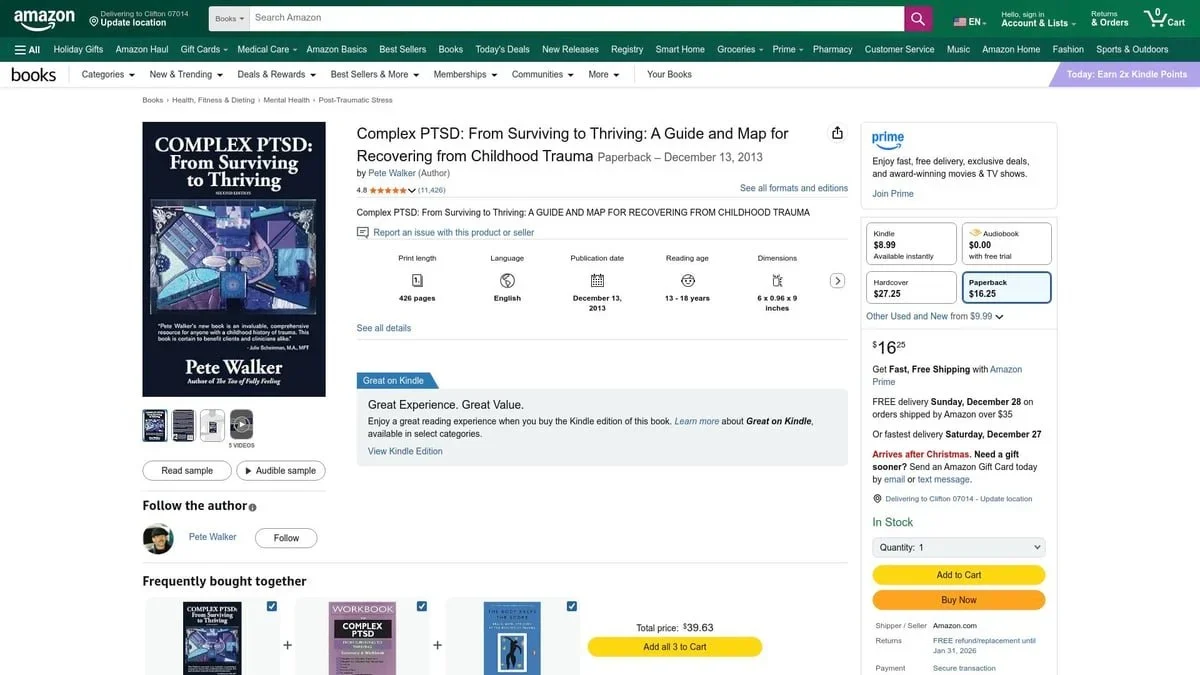
Readers will find this PTSD book full of actionable advice tailored for adults with CPTSD. It covers topics like emotional regulation, healthy boundaries, and practical recovery tools. The informal tone makes challenging concepts accessible for those new to trauma literature.
Key Features:
Focus on CPTSD and childhood trauma.
Written from lived experience.
Coping tools and step-by-step strategies.
Pros:
Empathetic and practical.
Highly relatable for survivors.
Regularly cited in online PTSD books communities.
Cons:
Less clinical for those seeking more scientific detail.
Online support groups and forums frequently recommend this book for its validating approach and actionable content.
3. What My Bones Know: A Memoir of Healing from Complex Trauma by Stephanie Foo
Memoirs like this one hold a special place among PTSD books. Stephanie Foo’s candid storytelling bridges personal experience and scientific exploration, making the journey of recovery relatable and hopeful.
This PTSD book weaves together Foo’s struggles with CPTSD, her pursuit of answers, and her navigation of cultural and family dynamics. The narrative is honest and moving, offering both validation and encouragement to readers who may feel isolated by their experiences.
Highlights:
Blends memoir with trauma science.
Addresses cultural identity and family.
Available in audiobook format for accessibility.
Pros:
Deeply relatable.
Compassionate and validating.
Widely praised by trauma survivors.
Cons:
Focuses on individual experience, less on step-by-step recovery.
This memoir is often cited in PTSD books discussions for its emotional resonance and ability to foster hope.
4. The Complex PTSD Workbook by Dr. Arielle Schwartz
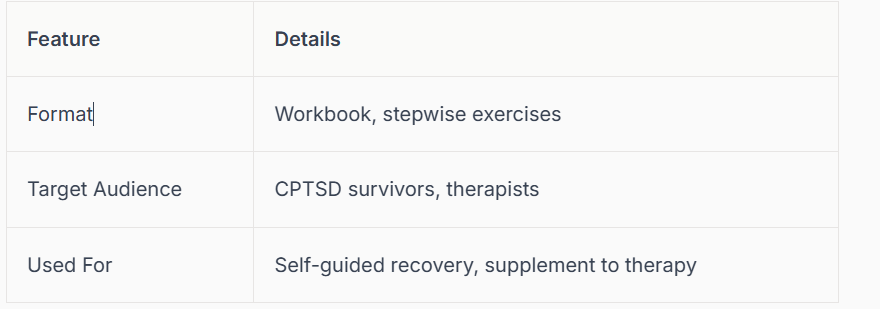
Workbooks are invaluable PTSD books for those seeking interactive, self-guided healing. Dr. Arielle Schwartz’s workbook stands out for its step-by-step exercises, psychoeducation, and mindfulness practices.
Each chapter guides readers through practical tools for processing trauma, emotional regulation, and building resilience. This PTSD book is designed for use alone or alongside therapy, making it versatile for different stages of recovery.
Pros:
Practical and evidence-based.
Thorough in scope.
Recommended by clinicians.
Cons:
Can be overwhelming for beginners.
Best used with therapist support.
Many therapists suggest this PTSD book to clients for structured, hands-on recovery.
5. No Bad Parts: Healing Trauma and Restoring Wholeness with the Internal Family Systems Model by Dr. Richard Schwartz
Innovative among PTSD books, "No Bad Parts" introduces the Internal Family Systems (IFS) model. Dr. Schwartz explains how different “parts” of the self can be understood, integrated, and healed, empowering readers to approach trauma with curiosity rather than judgment.
This PTSD book includes exercises to help readers identify protective parts, wounded exiles, and develop self-compassion. It is accessible to both therapists and lay readers, making complex psychological concepts understandable.
Key Features:
Introduction to IFS therapy.
Practical, hands-on exercises.
Suitable for self-exploration or clinical use.
Pros:
Accessible and innovative.
Encourages self-integration.
Popular in trauma therapy circles.
Cons:
Requires openness to new therapeutic models.
This book is frequently referenced in PTSD books communities interested in alternative healing modalities.
6. Adult Children of Emotionally Immature Parents by Lindsay C. Gibson, PsyD
Not all PTSD books focus on dramatic trauma; some, like this title, address the subtle but profound effects of emotionally immature parenting. Dr. Gibson helps readers identify unhealthy family patterns, set boundaries, and begin the healing process.
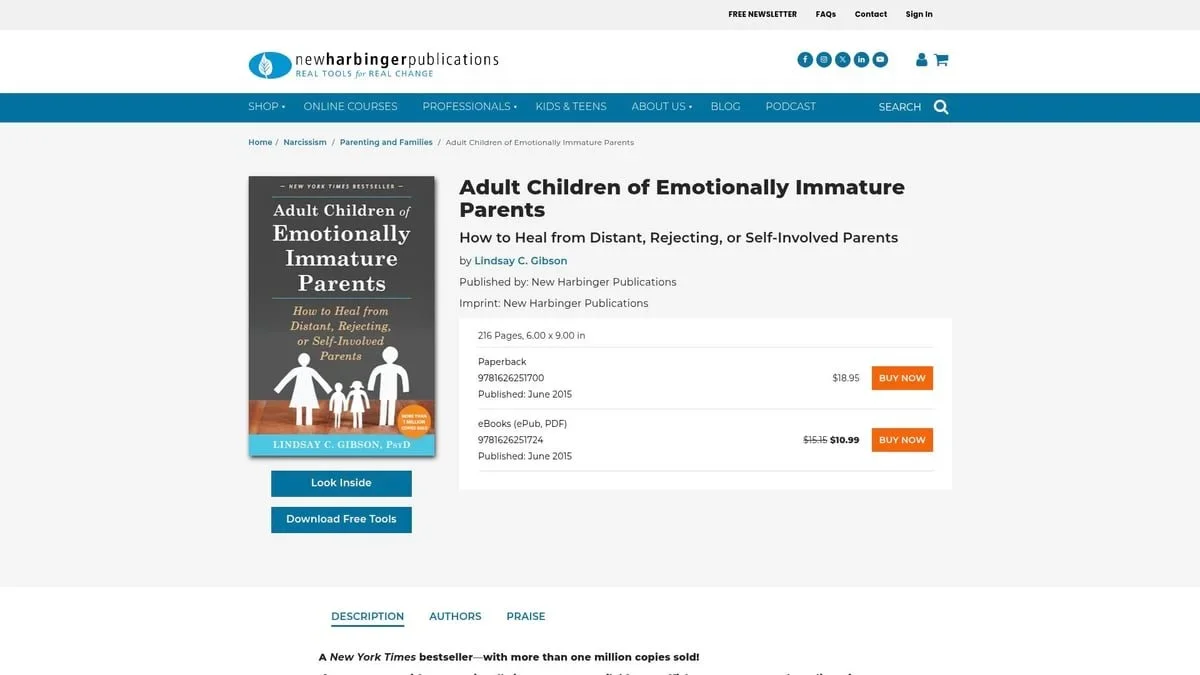
This PTSD book is practical and easy to read, making complex relational dynamics understandable. Many readers find its validation and clarity life-changing, especially those struggling with family-of-origin issues.
Pros:
Practical and validating.
Clear, concise language.
Widely endorsed by support communities.
Cons:
Focused on a specific trauma source.
Example: Regularly cited in PTSD books discussions on Reddit and forums for its transformative impact.
7. The Deepest Well: Healing the Long-Term Effects of Childhood Adversity by Nadine Burke Harris, M.D.
This unique entry among PTSD books blends personal memoir, scientific research, and practical advice. Dr. Harris explores how Adverse Childhood Experiences (ACEs) affect lifelong health, shining a light on the physical consequences of trauma.
The book is engaging and hopeful, making complex science approachable. It is especially valuable for survivors of childhood trauma, parents, and educators seeking to understand the long-term effects of adversity.
Table: Overview
Core Feature
Details
Focus
ACEs, physical and emotional health
Target Audience
Survivors, parents, educators
Used In
Trauma-informed education and healthcare
Pros:
Informative and uplifting.
Raises awareness of trauma’s impact.
Practical guidance included.
Cons:
Less focus on adult trauma.
This PTSD book is often used as a resource in trauma-informed care training.
8. Transforming the Living Legacy of Trauma by Janina Fisher, PhD
A newer staple in PTSD books, Janina Fisher’s workbook integrates neuroscience, mindfulness, and somatic practices. It provides interactive exercises for managing triggers, flashbacks, and dissociation.
This PTSD book is experiential, offering tools for both self-study and use in therapy or group settings. Its step-by-step approach makes it accessible while addressing the intensity of trauma recovery.
Key Features:
Workbook format with guided exercises.
Integrates latest neuroscience.
Focus on practical, everyday tools.
Pros:
Up-to-date and experiential.
Accessible for various readers.
Therapist-recommended.
Cons:
Can feel intense for those new to trauma work.
Therapists and group facilitators often turn to this PTSD book for structured healing activities.
Key Themes and Insights from Leading PTSD Books
The most influential ptsd books share several core themes and insights, shaping how readers understand and approach trauma recovery. By exploring therapeutic models, personal stories, practical tools, and the importance of support, these books offer a roadmap for healing.
Common Healing Approaches and Therapeutic Models
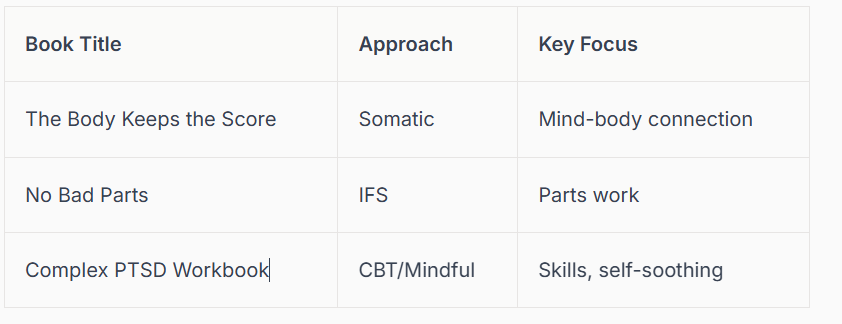
Many top ptsd books introduce evidence-based approaches for trauma recovery. Cognitive Behavioral Therapy (CBT), Internal Family Systems (IFS), somatic therapies, and mindfulness are commonly featured, each offering unique tools for healing.
For example, "No Bad Parts" explores IFS and parts work, empowering readers to understand and integrate different aspects of themselves. "The Body Keeps the Score" highlights somatic therapies, explaining how trauma is stored in the body. These books often blend neuroscience with practical exercises, making complex concepts accessible. For a deeper dive into these modalities, see Understanding Trauma Therapy Approaches.
The Power of Personal Narratives and Memoirs
Memoirs are a powerful component of many ptsd books, providing readers with real-life stories that foster connection and reduce stigma. By sharing personal journeys, authors help normalize the healing process and offer hope to others facing similar struggles.
Books like "What My Bones Know" and "The Deepest Well" use narrative to validate lived experiences. Reading these stories can make readers feel seen and less alone, which is vital in trauma recovery. Memoirs often inspire courage, showing that healing is possible even after profound adversity.
Reduce isolation and shame
Offer relatable examples of recovery
Inspire resilience and self-acceptance
These elements make memoirs an essential part of the ptsd books landscape.
Workbooks and Practical Tools for Everyday Recovery
Workbooks stand out among ptsd books for their actionable exercises and structured guidance. Titles like "The Complex PTSD Workbook" and "Transforming the Living Legacy of Trauma" provide step-by-step activities that readers can use at their own pace.
Interactive exercises help individuals process emotions, identify triggers, and develop coping skills. Many workbooks are designed to supplement therapy or serve as a starting point for self-guided healing. They often include worksheets, journaling prompts, and mindfulness practices to support daily progress.
Structured tools found in these ptsd books make recovery more manageable, breaking down complex challenges into achievable steps.
The Importance of Community and Professional Support
While ptsd books are invaluable, they are most effective when paired with support from professionals or peers. Many books encourage readers to seek therapy, join support groups, or participate in group workbooks for a sense of community.
Books can act as a bridge, helping individuals prepare for therapy or understand their experiences before reaching out. Online communities and group programs, such as those inspired by "Seeking Safety," further enhance recovery. For some, accessing care in non-traditional settings is crucial, as explored in PTSD treatment in primary care settings.
Ultimately, ptsd books remind readers that healing is not a solitary journey, and connecting with others can accelerate progress.
How to Integrate PTSD Books into Your Healing Journey
Integrating PTSD books into your healing journey can be transformative when approached with intention and care. The right strategy ensures these resources offer support, insight, and practical tools without overwhelming you. Below are four essential steps to help you get the most out of your reading experience.
Setting Realistic Expectations for Self-Help
PTSD books can be powerful allies, but it is important to remember they are supplements to professional help, not substitutes. Approach your reading with patience and self-compassion. Progress may be gradual, and some material could stir strong emotions.
Set small, achievable goals, such as reading a chapter per week or completing one exercise at a time. If you notice that certain topics feel overwhelming, give yourself permission to pause and seek support. Recognize that while PTSD books can offer valuable insights, therapy remains crucial for deep, personalized healing.
Building a Supportive Environment for Reading and Reflection
Creating a safe, nurturing space is essential when engaging with PTSD books. Choose a quiet, comfortable spot where you feel emotionally secure. Keep supportive resources nearby, such as a journal for note-taking or a calming activity for breaks.
Consider inviting a trusted friend, therapist, or support group to join your healing process. Discussing your thoughts or challenges can make the journey less isolating. For readers addressing family dynamics, the guide on setting boundaries with emotionally immature parents offers practical advice that complements many ptsd books.
Combining Books with Other Healing Modalities
Maximize the impact of PTSD books by pairing them with other healing practices. Many readers find value in integrating their reading with therapy sessions, mindfulness exercises, or body-based approaches like yoga.
Workbooks can be especially effective when used alongside counseling or peer support. If you are exploring methods like Internal Family Systems, this introduction to parts work can deepen your understanding and enhance your experience with related ptsd books.
Monitoring Progress and Adjusting Your Approach
Regularly check in with yourself as you work through PTSD books. Notice any changes in your mood, outlook, or coping skills. Track your progress by reflecting on what you have learned and how you have applied new strategies to daily life.
Stay open to adjusting your approach if a particular book or activity does not resonate. Celebrate small victories, such as completing a section or finding a new perspective. Remember, healing is a journey, and exploring different ptsd books can reveal new pathways to growth.

I offer focused therapy intensives for adults who are still functioning but feel worn down by constant pressure, anxiety, or patterns that no longer work. This work is designed for people who want depth, clarity, and relief without labels or long-term weekly therapy. If you’re in North Carolina, South Carolina, or Pennsylvania and curious whether an intensive format could be supportive, you’re welcome to learn more.
Join me on Instagram, Pinterest and TikTok for more educational tips, trauma recovery insights, and updates on therapy intensives in Pennsylvania, North Carolina, and South Carolina.
Disclaimer
The content shared here is for educational and informational purposes only. It is not a substitute for psychotherapy, medical care, or individualized mental health treatment. Reading this blog or engaging with my content does not establish a therapeutic relationship.
If you are experiencing significant distress or feel you need personalized support, I encourage you to seek care from a licensed mental health professional in your state. Therapy is deeply personal, and the right support should be tailored to your specific needs, pace, and circumstances.
For adults located in North Carolina, South Carolina, or Pennsylvania who are seeking focused, confidential support, I offer customized therapy intensives designed to address chronic stress, internal pressure, and patterns that no longer work. Information about these services can be found throughout this site.
About the Author
Mariah Zur, LPC is a licensed therapist who works with high-achieving adults navigating chronic stress, internal pressure, and the quiet unraveling that can happen beneath outward success. Her work is especially suited for individuals who are highly functional, deeply self-aware, and exhausted from holding everything together.
Mariah offers therapy intensives for adults seeking focused, contained support without labels, long-term weekly therapy, or unnecessary exposure. Her approach is grounded, relational, and nervous-system informed, helping clients slow the internal spiral, regain a sense of control, and move forward with clarity and steadiness.
She provides intensive therapy services online across North Carolina, South Carolina, and Pennsylvania, with in-person options available in Raleigh, NC.
Credentials
Mariah J. Zur, MS, LPC
Licensed Professional Counselor
Doctoral Student, Counselor Education and Supervision
