You might be the person everyone counts on. You show up, follow through, and handle what needs to get done. From the outside, your life looks pretty good.
But maybe you've noticed how hard it is to rest without feeling guilty. Or how quickly you take responsibility when someone seems upset. Maybe you're tired of overthinking every conversation, pushing yourself to do more, or wondering why certain relationship patterns keep showing up.
Sometimes, understanding where these patterns began means looking at experiences you had long before adulthood.
Childhood trauma books can offer language for things you've felt but haven't quite known how to explain. They can help you consider how early relationships, emotional experiences, and family expectations may still influence the way you relate to yourself and others.
You don't need to identify with every experience described in these books for something to resonate. And you don't need to have a particular label for your childhood to be curious about its impact.
Below are seven childhood trauma books worth exploring in 2026, whether you're just beginning to ask questions about your past or you've been doing this work for a while.
How Childhood Experiences Can Follow Us Into Adulthood
When people hear the words childhood trauma, they often think of a specific event or an obviously unsafe environment.
Those experiences matter. But childhood adversity can also involve ongoing emotional neglect, unpredictable relationships, or growing up in an environment where there wasn't much room for your feelings.
Maybe you learned to stay quiet to avoid conflict. Maybe being helpful or successful brought you attention and approval. Or perhaps you became very good at noticing everyone else's moods because you never knew what kind of day you were walking into.
These experiences don't affect everyone in the same way. Still, for some adults, early patterns can show up later as anxiety, perfectionism, people-pleasing, difficulty trusting others, or feeling responsible for keeping everything together.
That doesn't mean every difficult habit comes from childhood trauma. It means your history may offer useful context for understanding how you learned to move through the world.
Why Reading About Childhood Trauma Can Help
Sometimes the most meaningful part of reading a book is recognizing an experience you've never been able to put into words.
You might read a description of emotional neglect and think, I didn't realize that counted.
Or you might come across a chapter about family roles and recognize how early you became the responsible one.
The best childhood trauma books offer different ways to understand these experiences. Some explain research on stress and development. Others explore family dynamics, relationships, the body, or the internal parts of ourselves that developed protective roles.
Reading can support reflection and self-understanding. It isn't a substitute for individualized therapy, and some material may bring up difficult emotions. You can take your time, skip sections, or put a book down if it doesn't feel helpful.
7 Powerful Childhood Trauma Books to Explore in 2026
Navigating the world of childhood trauma books can feel overwhelming, given the abundance of titles and approaches available. To simplify your search, we have curated a list of seven influential reads that stand out for their insight, research, and practical value. Whether you are a survivor, a support person, or a professional, these childhood trauma books offer diverse perspectives and actionable guidance for your healing journey.
1. The Body Keeps the Score by Bessel van der Kolk, M.D.
Best for: Understanding the relationship between trauma, the brain, and the body.
If you've ever wondered why you can logically understand that you're safe but still feel tense, on edge, or easily overwhelmed, The Body Keeps the Score may give you a useful starting point.
Bessel van der Kolk explores how traumatic experiences can affect the nervous system, memory, and our responses to stress. The book brings together research, clinical examples, and discussions of different approaches to trauma recovery.
For high-achieving women, it may offer context for experiences like staying constantly alert, struggling to relax, or feeling disconnected from what your body needs.
Something to know before reading: This book includes detailed descriptions of traumatic experiences and clinical cases. Some readers find those sections intense. You don't have to read every chapter to take something meaningful from it.
2. What Happened to You? Conversations on Trauma, Resilience, and Healing by Bruce D. Perry, M.D., Ph.D. & Oprah Winfrey
Best for: A compassionate introduction to how early experiences shape us.
What Happened to You? invites readers to consider how their experiences have influenced the ways they think, feel, and respond to the world.
Written as a conversation between Bruce Perry and Oprah Winfrey, the book combines accessible explanations of brain development with personal stories and reflections on resilience.
I appreciate the question at the center of this book because it encourages curiosity about someone's history rather than judgment about their behavior.
For a woman who has spent years criticizing herself for being too sensitive, too anxious, or unable to let things go, that shift in perspective may feel especially meaningful.
Something to consider: You may find yourself reflecting on experiences you previously dismissed because they seemed normal in your family.
3. What My Bones Know: A Memoir of Healing from Complex Trauma by Stephanie Foo
Best for: Readers who connect more easily with personal stories than traditional self-help books.
Stephanie Foo's What My Bones Know is a deeply personal memoir about childhood abuse, complex PTSD, identity, and her experiences seeking healing.
Rather than offering a straightforward set of steps, Foo shares the complicated reality of trying to understand and live with the effects of trauma.
One of the things that makes this memoir compelling is its willingness to explore how trauma can exist alongside professional accomplishment and an outwardly successful life.
You can be capable, ambitious, and accomplished while still struggling with the effects of painful experiences.
Something to know before reading: The memoir contains descriptions of abuse and emotionally difficult experiences. It may be helpful to read it slowly.
4. It Didn’t Start with You: How Inherited Family Trauma Shapes Who We Are and How to End the Cycle by Mark Wolynn
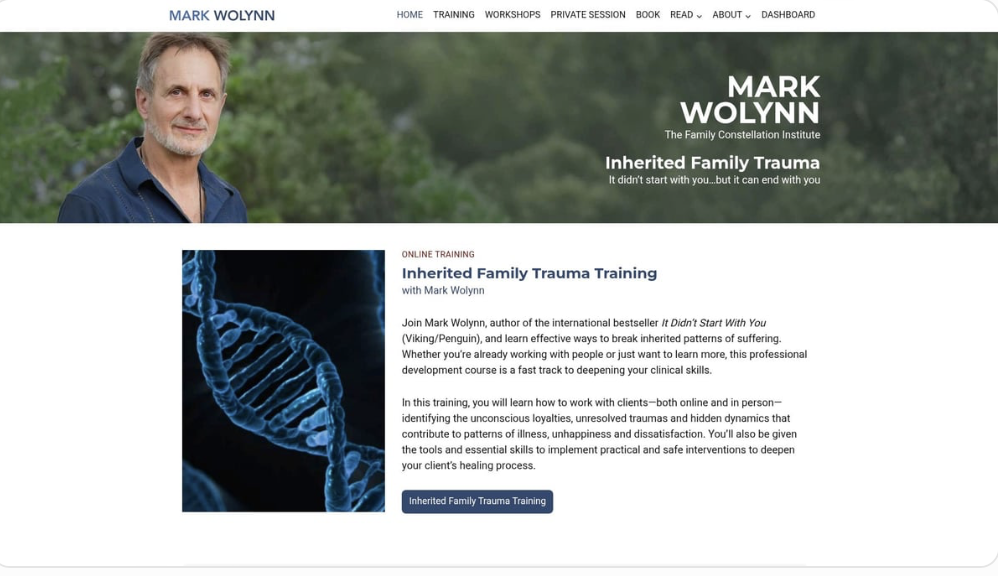
Best for: Exploring family patterns and questions about intergenerational trauma.
Have you ever noticed a pattern in your family that seems to repeat, even when nobody talks about it?
Maybe it's a tendency to avoid conflict, a strong pressure to achieve, or an expectation that certain family members will always take care of everyone else.
In It Didn't Start with You, Mark Wolynn explores how family experiences and unresolved pain may influence later generations. The book includes reflection exercises intended to help readers examine their family histories.
This can be an interesting read if you're curious about the beliefs, expectations, and emotional patterns you've inherited or learned.
An important distinction: Some of the book's claims about the biological inheritance of trauma go beyond what current research can firmly establish. I would approach it as an invitation to explore family patterns, rather than a definitive explanation for your experiences.
5. Adult Children of Emotionally Immature Parents: How to Heal from Distant, Rejecting, or Self-Involved Parents by Lindsay C. Gibson, PsyD
Best for: Understanding emotional neglect, people-pleasing, and relationship patterns.
This is one of the childhood trauma books I'd especially consider for women who grew up feeling responsible for other people's emotions.
Maybe your feelings were dismissed, or you learned that expressing your needs would create conflict. Perhaps you became the easy child, the helpful one, or the person who didn't ask for much.
In Adult Children of Emotionally Immature Parents, Lindsay Gibson explores how emotionally limited parenting can affect adult relationships, self-worth, and the ability to recognize your own needs.
The book may help you put words to experiences that were difficult to identify because there wasn't always an obvious crisis.
It can also encourage reflection on why setting boundaries feels uncomfortable or why you find yourself managing other people's reactions.
Something to consider: You can explore the impact of your upbringing without needing to decide that your parents were entirely good or entirely bad. Relationships are often more complicated than that.
6. No Bad Parts: Healing Trauma and Restoring Wholeness with the Internal Family Systems Model by Richard C. Schwartz, PhD
Best for: Understanding your inner critic, perfectionism, and conflicting feelings.
If you've ever thought, Part of me wants to slow down, but another part won't let me, this book may resonate.
Richard Schwartz introduces Internal Family Systems (IFS), a model that explores the different parts of our internal experience.
For example, you might recognize a part that pushes you to achieve, a part that worries about disappointing others, or a part that becomes critical when you make a mistake.
Rather than treating these responses as personal failures, IFS encourages curiosity about what those parts may be trying to protect.
This perspective can be especially meaningful for high-achieving women who are accustomed to pushing through discomfort and criticizing themselves when they struggle.
No Bad Parts includes exercises and reflections to help readers become more familiar with their internal experiences.
Something to know before reading: You don't need to force yourself into deep emotional work while reading. Some exercises may feel more appropriate to explore with a therapist.
If this approach interests you, you can also read my article on IFS parts and Internal Family Systems therapy.
7. Childhood Disrupted: How Your Biography Becomes Your Biology, and How You Can Heal by Donna Jackson Nakazawa
Best for: Learning about adverse childhood experiences and their possible connections to adult health.
Childhood Disrupted explores research on adverse childhood experiences, often called ACEs, and their associations with physical and emotional health later in life.
Donna Jackson Nakazawa combines research and personal stories to discuss how prolonged stress during childhood may influence stress responses and well-being.
For some readers, this book offers context for why their experiences deserve attention, even if they've spent years minimizing them.
It also encourages a broader conversation about how emotional and physical health can influence one another.
Something to keep in mind: Research on ACEs identifies patterns of risk across populations. Your childhood experiences don't determine your future health, and a book can't explain the cause of an individual's symptoms.
How to Choose the Right Childhood Trauma Book
You don't have to read all seven books, and there's no correct order.
The most useful book may depend on what you're hoping to understand right now.
If you're beginning to explore childhood trauma, What Happened to You? may feel approachable.
If you want to better understand emotional neglect or the pressure to take care of everyone else, Adult Children of Emotionally Immature Parents may resonate.
If your inner critic, perfectionism, or competing needs are what brought you here, No Bad Parts offers a different way to think about those experiences.
And if personal stories help you feel less alone, What My Bones Know may be a meaningful choice.
You can also ask yourself:
Am I looking for an explanation, a personal story, or practical reflection?
How much emotional material do I have the capacity to engage with right now?
Would I prefer to read independently or discuss what comes up with a therapist?
Choosing a book that feels manageable matters more than choosing the one someone else calls essential.
A quick comparison table may help:
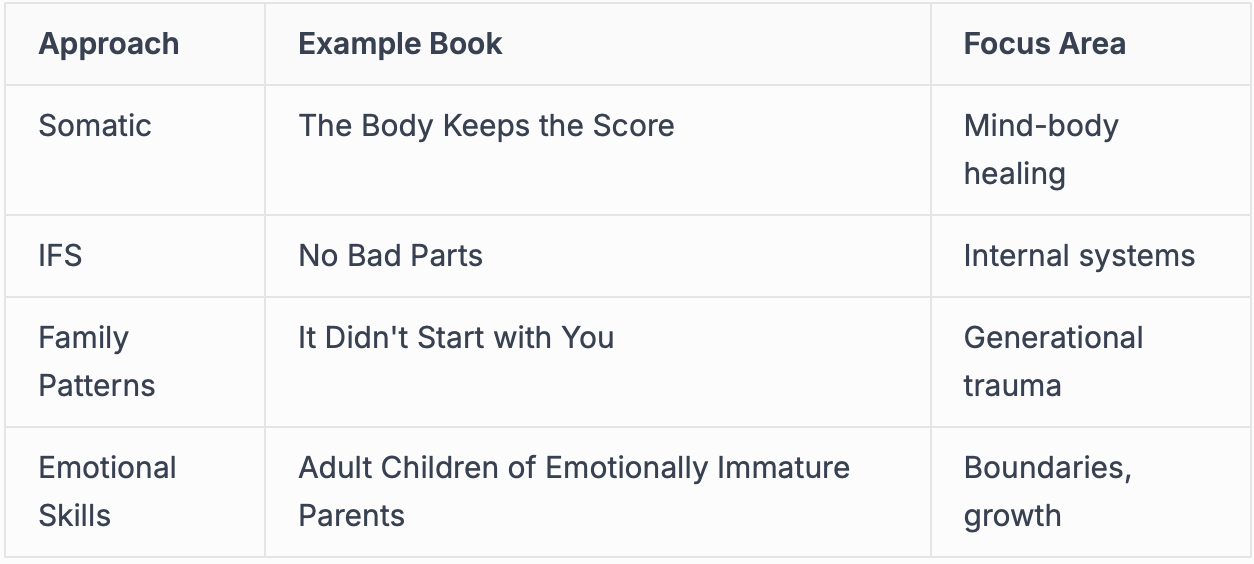
Choosing childhood trauma books with methods that align with your preferences can make the healing process more approachable and effective.
Reading Childhood Trauma Books Without Turning Healing Into Another Task
If you're someone who likes to do things well, it's easy to approach personal growth the same way you approach everything else.
You buy the books. You highlight the important passages. You make notes about what you need to work on.
Before long, understanding yourself becomes another project you feel pressure to complete.
But you don't have to approach this reading list that way.
You can read a chapter and sit with it. You can disagree with an author. You can notice that something resonates without needing to figure out why immediately.
And you can put a book aside if the material feels overwhelming.
A few gentle questions to consider as you read:
What feels familiar to me?
What am I noticing about the expectations I've carried?
Are there ways I've learned to protect myself that no longer feel helpful?
What would I like to understand with more compassion?
You don't need to answer every question. Sometimes noticing is enough for now.
When Reading Brings Up More Than You Expected
Childhood trauma books can open up questions about family relationships, identity, grief, anger, and experiences you've spent a long time trying to make sense of.
You might find yourself remembering something you haven't thought about in years. Or you may feel confused because parts of your childhood were loving and supportive while other parts were painful.
Those mixed feelings deserve room.
If reading brings up distress or you find yourself struggling to make sense of what you're noticing, talking with a qualified mental health professional may offer additional support.
You don't need to have everything figured out before reaching out.
Exploring Childhood Patterns in Online Therapy
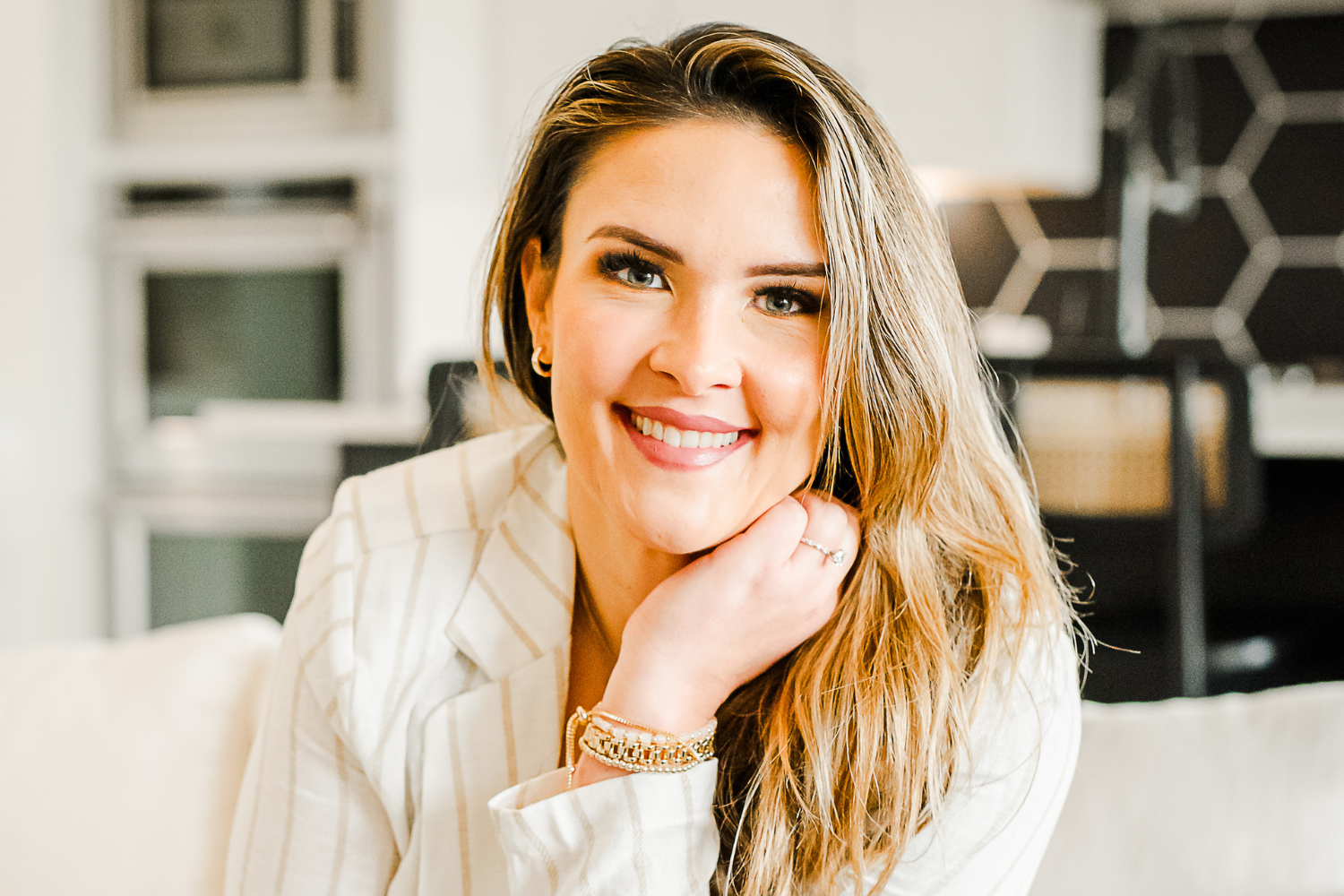
Mariah J. Zur, LPC, LCMHC
Online Therapy for Emotionally Exhausted Women in NC, SC & PA
For some women, reading about childhood experiences brings new understanding to patterns they've been noticing for years.
Maybe you recognize how often you put your needs aside to avoid disappointing someone. Or how hard you work to prevent mistakes because criticism feels especially uncomfortable.
At Zen with Zur, I work with high-achieving women who are navigating anxiety, burnout, perfectionism, overthinking, and people-pleasing.
My approach is relational, trauma-informed, and IFS-informed. Together, we can explore the patterns that feel important to you, how they may have developed, and what you want your relationship with yourself and others to look like moving forward.
I offer online individual therapy for eligible adults physically located in North Carolina, South Carolina, and Pennsylvania.
I also offer a separate structured virtual therapy intensive for those interested in exploring a more concentrated format. Whether ongoing sessions or an intensive is appropriate depends on your needs and circumstances.
You can learn more about my services and appointment options at Zen with Zur.
Frequently Asked Questions About Childhood Trauma Books
What are the best childhood trauma books for beginners?
What Happened to You? by Bruce Perry and Oprah Winfrey is a conversational introduction to trauma and development. Adult Children of Emotionally Immature Parents by Lindsay Gibson may be especially helpful if you're exploring emotional neglect and relationship patterns.
The best starting point depends on what you're curious about and what feels manageable to read.
Can childhood trauma affect you even if you had a good childhood?
People can have positive childhood memories and still have experienced relationships or events that were painful, stressful, or emotionally confusing.
A childhood doesn't have to fit a particular description for you to explore how it shaped you.
What childhood trauma books help with people-pleasing and perfectionism?
Adult Children of Emotionally Immature Parents explores how early relationships can influence adult patterns, including difficulty recognizing personal needs.
No Bad Parts offers an IFS perspective on internal experiences such as self-criticism and the pressure to achieve.
Are childhood trauma books a substitute for therapy?
No. Books can provide education, perspective, and opportunities for reflection, but they can't offer individualized assessment or support.
If you're experiencing significant distress, working with a qualified mental health professional may be helpful.
Can reading about childhood trauma be overwhelming?
Yes. Some books include detailed accounts of abuse, neglect, and other painful experiences.
It's okay to check content warnings, skip sections, take breaks, or decide a book isn't right for you at this time.
Do I have to remember everything from childhood to understand my patterns?
No. You can explore how you respond to situations and relationships in the present without needing to recover or reconstruct every childhood memory.
How do I know which childhood trauma book is right for me?
Start with the question that brought you here. If you're curious about family relationships, choose a book focused on emotional neglect or family patterns. If you're interested in your internal responses, consider an IFS-focused book. If you'd rather connect with someone's lived experience, a memoir may be a better fit.
A Final Thought
You may have spent years learning how to be dependable, successful, and attentive to everyone else's needs.
Reading about childhood trauma can offer an opportunity to get curious about where some of those patterns began and whether they still serve you.
You don't have to turn that curiosity into another thing to accomplish.
Start with the book that speaks to you. Read at your own pace. And if you'd like support exploring what comes up, Zen with Zur offers online therapy in North Carolina, South Carolina, and Pennsylvania.
For those seeking deep personalized progress beyond childhood trauma books, focused therapy intensives can be transformative. Zen with Zur specializes in short-term, high-impact trauma therapy for high-achieving adults facing burnout, anxiety, or the lingering effects of childhood adversity.
Their services include one-day trauma intensives, available virtually, making them accessible for busy professionals. These programs use evidence-based approaches like Internal Family Systems and somatic tools, providing personalized support for leaders, entrepreneurs, and anyone who feels unfulfilled despite outward success.
Combining intensives with ongoing therapy or book-based self-work can offer a comprehensive path to deeper healing.
Frequently Asked Questions About Childhood Trauma Books
Childhood trauma books can be powerful tools for healing, yet readers often have questions before diving in. Here are answers to the most common concerns.
What types of trauma do these books address?
Most childhood trauma books cover a wide range of experiences, including abuse, neglect, loss, and chronic stress. Some focus on specific issues like emotional neglect or intergenerational trauma.
Are childhood trauma books suitable for people without a therapist?
Many books are written for the general public and can be read independently. However, some topics may bring up strong emotions, so having support or access to a professional can help.
How do I know if a book will be triggering or helpful for me?
Check reviews and introductions for content warnings. Start slowly, and pause if you feel overwhelmed. If you have a history of trauma, consider seeking guidance from a mental health professional.
Can reading childhood trauma books replace professional therapy?
While these books offer insight and coping skills, they are not substitutes for therapy. Research shows bibliotherapy can help reduce symptoms of depression, but it is most effective when combined with other supports. You can learn more in this long-term effects of bibliotherapy in depression treatment review.
Are there books specifically for parents or partners of trauma survivors?
Yes, several childhood trauma books offer guidance for loved ones, helping them understand and support survivors more effectively.
What is the best pace for reading and processing difficult content?
Go at your own speed. Take breaks, reflect, and use journaling or discussion for support. Joining a trauma-informed book club can also provide encouragement and shared insight.
How can I find trauma-informed book clubs or discussion groups?
Look for local mental health organizations, online forums, or social media groups. Many communities offer both virtual and in-person book clubs centered around trauma recovery.
Each reader’s journey is unique. Choose the childhood trauma books that best fit your needs and remember, support is available every step of the way.
