
Therapy Not Working Guide: Solutions for a Better 2026
Feeling like therapy not working has left you frustrated, stuck, or even hopeless? You are not alone. Many people invest time, energy, and hope into therapy, only to feel let down when progress seems slow or nonexistent.
This guide is designed to help you understand why therapy not working is a common experience, and to provide you with clear, proven strategies to move forward. Whether you are facing stalled sessions, a lack of connection, or simply want more from your mental health journey, you will find actionable solutions here.
Ready to break through the barriers and finally achieve the change you deserve? Read on to discover expert insights, practical tips, and new approaches tailored for success in 2026.
Understanding Why Therapy Isn’t Working
Feeling frustrated by therapy not working can be disheartening. Understanding the reasons behind stalled progress is essential for making informed decisions about your mental health journey. Let’s explore the most common obstacles and what they mean for your growth.

Understanding Why Therapy Isn’t Working
Common Signs Therapy Isn’t Working
Recognizing when therapy not working is more than a passing slump is crucial. Here are signs to watch for:
Progress feels stagnant, or symptoms even worsen.
You feel misunderstood or unheard by your therapist.
There’s little trust or genuine rapport.
The same issues come up repeatedly without resolution.
You dread sessions or leave feeling drained.
Skipping or canceling appointments has become routine.
Sometimes, clients report no improvement after months of sessions. If you relate to these signs, it might be time to reassess your approach. Therapy not working is a common experience, and identifying these patterns is the first step toward change.
Factors Impacting Therapy Effectiveness
Multiple factors can influence why therapy not working becomes a reality. It’s often not a single issue but a combination of elements:
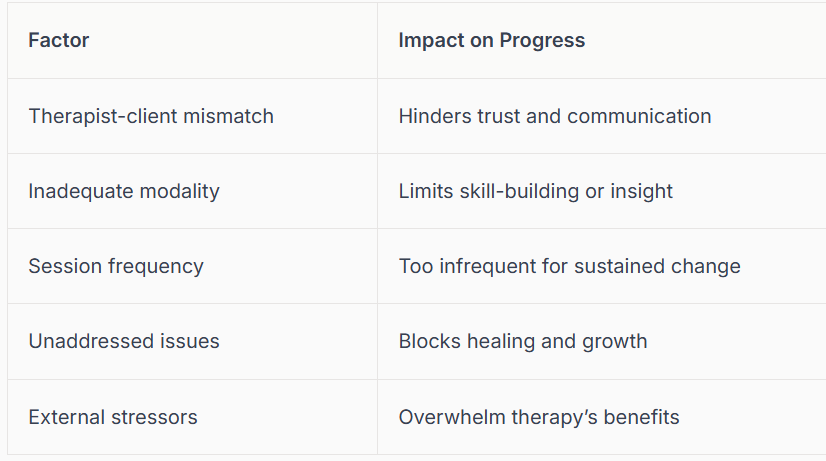
Factors Impacting Therapy Effectiveness
Research shows that 20-57% of clients drop out before seeing improvement. For more on why this happens, see Therapy dropout rates. If therapy not working persists, these factors may need to be addressed to unlock better results.
Client Engagement and Readiness
Your mindset is a key part of overcoming therapy not working. Motivation and openness to change are essential ingredients. Barriers like fear of vulnerability, ambivalence, or attending therapy under external pressure can all slow progress.
Unrealistic expectations can set you up for disappointment. Self-sabotage or resistance may appear as missed appointments or reluctance to try new strategies. For example, some clients attend sessions primarily for someone else’s benefit, which rarely leads to lasting change. Identifying these patterns is vital if therapy not working is your reality.
Systemic and Access Barriers
Sometimes, therapy not working has little to do with you or your therapist. Systemic barriers such as insurance limitations, session caps, or therapist burnout can interrupt care. Cultural, language, or identity mismatches may leave you feeling unseen.
Accessibility issues—like limited providers in your area or trouble accessing virtual sessions—can also play a role. Financial stress can disrupt therapy’s continuity. According to NAMI, one in five adults faces unmet mental health needs due to these barriers. When therapy not working is linked to access, seeking alternative support or advocacy may be necessary.
Step-by-Step Solutions When Therapy Isn’t Working
If you feel frustrated because therapy not working has become your reality, you are not alone. The good news is, there are practical steps you can take to get back on track. This section breaks down clear strategies you can implement, one step at a time, to troubleshoot and improve your mental health journey.

Step-by-Step Solutions When Therapy Isn’t Working
Step 1: Assess Your Needs and Goals
Start by reflecting on what brought you to therapy in the first place. If therapy not working is a pattern, it may be time to clarify your goals. Are you seeking symptom relief, deeper self-understanding, or support through a life transition?
Write down your short-term and long-term objectives. Use self-assessment tools or journaling to track your progress. Sometimes, your needs shift over time, and what you wanted at the beginning may no longer apply. For example, you might realize your focus has moved from managing anxiety to processing trauma.
Regularly revisiting your therapy goals helps ensure you and your therapist are working toward the same outcomes. This step can reveal whether therapy not working is due to unclear or outdated goals.
Step 2: Open Communication with Your Therapist
If you notice therapy not working, honest communication is crucial. Bring up your concerns during sessions, even if it feels uncomfortable. You might say, “I feel like I’m not making progress. Can we review what’s working and what isn’t?”
Ask your therapist for feedback and collaborate on adjusting your treatment plan. Discuss whether your sessions address your most pressing needs. Sometimes, the issue is a mismatch in expectations or lack of feedback.
Open dialogue can strengthen the therapeutic alliance and help you feel more empowered. Addressing problems directly often leads to renewed momentum if therapy not working has stalled your growth.
Step 3: Explore Different Therapy Modalities
When therapy not working continues despite your best efforts, it may be time to explore other therapeutic approaches. Not every modality fits every individual or concern. For instance, cognitive behavioral therapy (CBT), dialectical behavior therapy (DBT), Eye Movement Desensitization and Reprocessing (EMDR), and somatic therapies each have unique strengths.
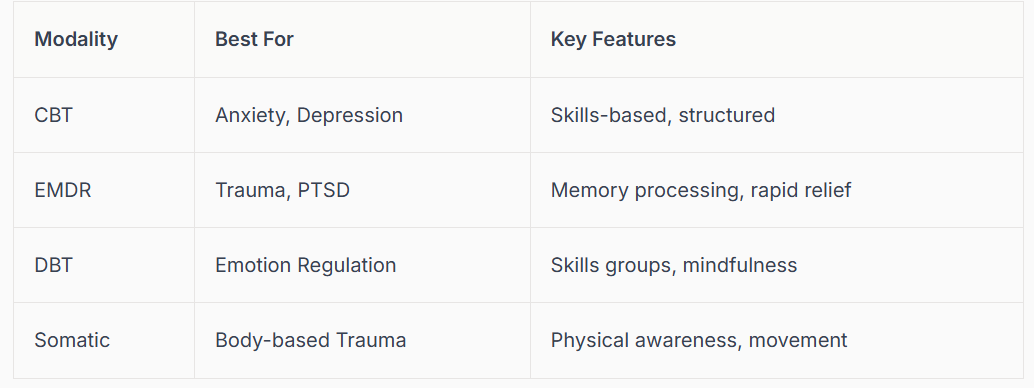
Explore Different Therapy Modalities
If you are unsure which approach fits, consider reading about Trauma therapy vs. talk therapy to understand why some methods might be more effective for your needs. Switching modalities can be a turning point if therapy not working is your experience.
Step 4: Consider a Therapist Change
Sometimes, therapy not working is about the therapeutic relationship itself. If you consistently feel misunderstood, unsupported, or uncomfortable, it might be time to consider a new therapist.
Look for professionals who specialize in your concerns and share your values or identity. Research credentials, read reviews, and request a consultation to gauge fit. Do not feel guilty for changing therapists; your mental health is the priority.
Plan a smooth transition by summarizing your history and goals for your new provider. Changing therapists can offer a fresh perspective when therapy not working has left you feeling stuck.
Step 5: Enhance Engagement Outside Sessions
Progress does not only happen in the therapy room. If therapy not working is a concern, increase your engagement between sessions. Complete any homework assigned by your therapist, practice new skills, or keep a journal of your thoughts and feelings.
Try mental health apps, guided meditations, or online support groups to reinforce what you learn. Build a support system by involving trusted friends or family members. Small daily actions can make a substantial difference when therapy not working is your reality.
Step 6: Address Systemic and Practical Barriers
Sometimes, therapy not working is not about the process itself, but about external barriers. Insurance limitations, high costs, or scheduling conflicts can disrupt continuity. If these issues arise, talk to your provider about sliding scale fees or teletherapy options.
Seek out culturally competent or identity-affirming therapists if cultural or language mismatches are present. Use community resources and advocacy organizations for additional support. Overcoming these practical barriers can help you regain momentum if therapy not working has become a persistent problem.
When to Try Alternative or Intensive Approaches
Sometimes, despite your best efforts, you may realize therapy not working is more than just a temporary setback. When progress stalls, it’s important to know there are alternative and intensive approaches designed to help you move forward. Exploring these options can unlock new pathways to healing and growth.

When to Try Alternative or Intensive Approaches
Recognizing When Traditional Therapy Isn’t Enough
If you find therapy not working after trying different therapists and modalities, it may be time to consider alternatives. Signs include chronic lack of progress, persistent or worsening symptoms, and feeling stuck even after months of sessions. For some, severe trauma, frequent relapses, or ongoing emotional numbness point to the need for a different approach.
Other warning signs are repeated crises that aren’t resolved in weekly therapy or feeling emotionally disconnected during sessions. These indicators suggest traditional therapy may not be sufficient for your needs and that exploring more intensive or novel options could be beneficial.
Intensive Therapy and Retreats
For those experiencing therapy not working through standard weekly appointments, intensive therapy or retreats offer a concentrated alternative. Therapy intensives typically involve multiple sessions over a few days, allowing for deeper exploration and faster breakthroughs. This structure can be especially helpful for complex trauma or stubborn symptoms.
Candidates for intensives often include individuals who feel stuck or who need a jumpstart for their recovery. Benefits include focused attention, supportive environments, and structured time away from daily stress. To learn more about these options, read about the signs you need therapy intensives and how they may help when therapy not working is your reality.
Group Therapy and Peer Support
When you notice therapy not working in individual sessions, group therapy and peer support can offer a different path. Group therapy provides a space to connect with others facing similar challenges, promoting social connection and accountability. There are both peer-led and professionally facilitated groups, such as DBT skills groups for emotional regulation.
Benefits include shared experiences, diverse perspectives, and learning new coping strategies in a supportive setting. For many, the sense of community and understanding found in group settings can reignite progress when individual therapy not working becomes a concern.
Integrative and Holistic Modalities
If you feel therapy not working with traditional talk therapy, integrative and holistic modalities may provide new avenues for healing. Somatic therapies, mindfulness practices, expressive arts, and body-based approaches like yoga or breathwork target both mind and body. These methods can help address trauma stored physically, not just cognitively.
Research shows mindfulness-based therapy reduces relapse rates for depression, and many find holistic approaches enhance self-awareness. Considering lifestyle factors like nutrition and sleep can also support your mental health journey when therapy not working persists.
Medication and Psychiatric Evaluation
Another consideration when therapy not working is persistent is the potential need for medication or psychiatric evaluation. For certain diagnoses, combining therapy with medication can significantly improve outcomes. Consulting a psychiatrist can clarify if biological factors are contributing to your symptoms.
Be aware of the risks and benefits, and do not hesitate to discuss concerns with your provider. Statistics show about 1 in 6 Americans use psychiatric medications, highlighting their role in comprehensive mental health care, especially when therapy not working alone is not enough.
Maximizing Therapy Results: Proactive Strategies for 2026
Achieving the best outcomes from therapy requires intentional effort, flexibility, and a willingness to adapt. If you find yourself thinking about therapy not working, it may be time to take a more proactive approach. The following strategies are designed to help you maximize your results and foster meaningful, lasting change in your mental health journey.

Maximizing Therapy Results: Proactive Strategies for 2026
Setting Realistic Expectations and Milestones
Understanding that therapy not working can sometimes stem from mismatched expectations is crucial. Therapy is a process, not an overnight fix. Start by setting achievable, measurable goals for your sessions. Use tools like symptom checklists or mood journals to monitor your progress over time.
Break down your objectives into short-term and long-term milestones. For example, you might aim to reduce anxiety symptoms in the next month, while working toward deeper trauma recovery over the year. Adjust your expectations if life circumstances change or if you hit setbacks. Remember, progress in therapy often unfolds in small, incremental steps.
Building a Strong Therapeutic Alliance
One of the most significant predictors of success, especially if you feel therapy not working, is the quality of your connection with your therapist. The therapeutic alliance is built on trust, open communication, and mutual respect. If you experience misunderstandings or ruptures, address them early and directly.
Research shows that elements like empathy, collaboration, and authenticity can dramatically improve outcomes. The Common factors in therapy outcomes highlight how alliance, shared goals, and therapist qualities drive results across modalities. Prioritize honest feedback and repair any relationship strains for stronger progress.
Leveraging Technology and Digital Tools
If you are experiencing therapy not working, technology can offer valuable support. Teletherapy provides flexibility and access, especially if location or scheduling are barriers. Consider using mental health apps for mood tracking, cognitive behavioral skills, or guided meditation.
AI-powered therapy companions and digital journaling tools can help you stay engaged between sessions. Leading platforms like Headspace and BetterHelp offer personalized resources. Explore what fits your needs, and discuss digital options with your therapist to enhance your therapeutic experience.
Incorporating Support Systems and Community
Relying solely on your therapist may limit your growth, especially if you notice therapy not working as expected. Building a network of support—including friends, family, or peer groups—can reinforce your progress. Social support is linked to higher therapy retention and better mental health outcomes.
Seek out online or in-person support groups tailored to your concerns. Engage loved ones in your recovery journey by sharing insights or practicing new skills together. Community resources and group activities can also provide motivation and accountability on challenging days.
Self-Advocacy and Empowerment
If you suspect therapy not working is tied to unmet needs, practicing self-advocacy is essential. Speak up about your goals, preferences, and concerns with your provider. Request changes in treatment plans or explore referrals if your current approach feels ineffective.
Empower yourself by learning about your rights within the mental health system. Take an active role in decision-making and ask for clarification whenever needed. Self-advocacy often leads to better outcomes by ensuring your voice shapes your care.
Preventing Burnout and Compassion Fatigue
Engaging intensively in therapy can sometimes lead to burnout, especially if you are worried about therapy not working. Watch for signs like emotional exhaustion, dread before sessions, or feeling overwhelmed by therapeutic work. Set boundaries around mental health tasks and allow time for rest.
Balance self-care with growth by integrating enjoyable, restorative activities into your routine. Pace yourself and celebrate small victories. Sustaining motivation over time requires recognizing your limits and prioritizing well-being alongside recovery.
Red Flags: When to Seek Immediate Help or Make Major Changes
When you realize therapy not working is more than just a rough patch, it’s crucial to recognize the warning signs that require urgent attention or a significant change. Ignoring these red flags can risk your mental health and safety.
Signs of Harmful or Unethical Therapy
Not all therapy is safe or ethical. If you notice any of the following, it’s a clear signal that therapy not working may be due to deeper issues:
Boundary violations, such as oversharing personal information or inviting dual relationships
Manipulation, gaslighting, or making you feel unsafe
Ignoring or dismissing your safety concerns
Therapy burnout can also occur, leaving you emotionally exhausted, especially after intensive trauma work. Learn more about burnout after trauma therapy and how it can signal when to seek immediate changes. If you feel uncomfortable or unsafe, trust your instincts and consider reporting unethical behavior.
Escalating Symptoms or Crisis Situations
Sometimes, therapy not working results in your symptoms getting worse, not better. If you experience:
Worsening depression or anxiety
Thoughts of self-harm or suicide
Escalation in substance use
These are major red flags. Do not wait for your next session if you are in crisis. Reach out to emergency services, a crisis hotline, or a trusted person immediately. Your safety is the priority, and a crisis plan can be life-saving when therapy not working becomes a risk to your wellbeing.
Navigating Systemic Failures and Access Issues
Systemic barriers can make therapy not working feel inevitable. You might face:
Long waitlists or insurance denials
Lack of providers who match your cultural or language needs
High out-of-pocket costs limiting your ability to continue
Advocacy is vital in these situations. Connect with organizations like NAMI or SAMHSA for support, and consider joining community or grassroots networks. These resources can help bridge the gap when systems fail, ensuring you do not feel alone if therapy not working is due to access issues.
Planning Next Steps for Safety and Recovery
When therapy not working leads to a crisis or unsafe situation, plan your next steps with care. Key actions include:
Creating a crisis plan with your therapist or support network
Identifying emergency contacts and local resources
Knowing when to pause or switch therapists if safety is a concern
Self-compassion is essential during setbacks. Remember, recognizing red flags is a sign of strength, not failure. Prioritize your recovery, and adjust your approach as needed to ensure your mental health remains protected.
The Future of Therapy: Innovations and Trends for 2026
The landscape of mental health care is evolving rapidly, offering hope and new solutions for anyone feeling therapy not working. As we look to 2026, several innovations and trends are reshaping how people access support, find effective treatment, and achieve lasting results. Let us explore what the future holds for therapy and mental health.
Personalized and Precision Mental Health
Personalized mental health care is transforming the way we address therapy not working. Advances in genetic testing, digital phenotyping, and data-driven assessments allow therapists to tailor interventions to each individual’s unique needs. Artificial intelligence and advanced analytics are helping match clients with therapists whose style and expertise are most compatible, reducing the risk of mismatches that can lead to stalled progress.
Recent research highlights the significant therapist effectiveness variability, showing that outcomes often hinge on finding the right provider. In the near future, precision therapy will use data to optimize interventions, though it is important to remember that technology complements but does not replace the human touch.
Expanding Access Through Technology
For many, therapy not working can be a result of barriers like location, cost, or stigma. Technology is breaking down these walls. Telehealth and virtual therapy platforms now connect clients with specialists worldwide, making it easier to find care that fits your schedule and identity.
Mental health apps, online support groups, and AI companions are expanding access further, offering tools for mood tracking, skill-building, and crisis support. These innovations help ensure that therapy is available when and where you need it, reducing gaps in care and empowering more people to seek help without fear or inconvenience.
Integrative, Trauma-Informed, and Culturally Responsive Care
The future of therapy recognizes that one size does not fit all, especially when therapy not working is linked to unaddressed trauma or cultural disconnection. There is a growing emphasis on trauma-informed approaches, as well as the integration of somatic, mind-body, and expressive therapies.
Clients are increasingly seeking practitioners who understand their cultural background and identity. For those interested in holistic and body-based modalities, resources like Exploring somatic therapy tools can introduce new strategies when traditional methods have not helped. This shift is creating more inclusive, effective, and affirming care for diverse communities.
Empowering Clients for Long-Term Success
Empowerment is a cornerstone of overcoming therapy not working. The future is moving toward client-led care, shared decision-making, and greater self-advocacy. Peer support networks, coaching, and educational resources are giving individuals more control and confidence in their mental health journey.
Trends in prevention, early intervention, and ongoing education are equipping people with skills to maintain well-being beyond the therapy room. By focusing on collaboration and empowerment, the next era of therapy aims to support lasting change and resilience for all.
Local Support |
PA, NC & SC

Mariah J. Zur | Therapy Intensives in Raleigh, Pittsburgh and across NC, SC, PA
I offer focused therapy intensives for adults who are still functioning but feel worn down by constant pressure, anxiety, or patterns that no longer work. This work is designed for people who want depth, clarity, and relief without labels or long-term weekly therapy. If you’re in North Carolina, South Carolina, or Pennsylvania and curious whether an intensive format could be supportive, you’re welcome to learn more.
Join me on Facebook, Instagram, Pinterest, Google orTikTok for more educational tips, trauma recovery insights, and updates on therapy intensives in Pennsylvania, North Carolina, and South Carolina.
Disclaimer
The content shared here is for educational and informational purposes only. It is not a substitute for psychotherapy, medical care, or individualized mental health treatment. Reading this blog or engaging with my content does not establish a therapeutic relationship.
If you are experiencing significant distress or feel you need personalized support, I encourage you to seek care from a licensed mental health professional in your state. Therapy is deeply personal, and the right support should be tailored to your specific needs, pace, and circumstances.
For adults located in North Carolina, South Carolina, or Pennsylvania who are seeking focused, confidential support, I offer customized therapy intensives designed to address chronic stress, internal pressure, and patterns that no longer work. Information about these services can be found throughout this site.
About the Author
Mariah Zur, LPC is a licensed therapist who works with high-achieving adults navigating chronic stress, internal pressure, and the quiet unraveling that can happen beneath outward success. Her work is especially suited for individuals who are highly functional, deeply self-aware, and exhausted from holding everything together.
Mariah offers therapy intensives for adults seeking focused, contained support without labels, long-term weekly therapy, or unnecessary exposure. Her approach is grounded, relational, and nervous-system informed, helping clients slow the internal spiral, regain a sense of control, and move forward with clarity and steadiness.
She provides intensive therapy services online across North Carolina, South Carolina, and Pennsylvania, with in-person options available in Raleigh, NC.
Credentials
Mariah J. Zur, MS, LPC
Licensed Professional Counselor
Doctoral Student, Counselor Education and Supervision
