You leave a conversation feeling hurt, but within minutes, you're questioning yourself.
Maybe I'm being too sensitive.
Maybe it wasn't that bad.
Maybe I'm making something out of nothing.
You replay what happened, searching for a reason to dismiss your reaction.
If this sounds familiar, learning how to stop gaslighting yourself may begin with recognizing how often you question your own experiences.
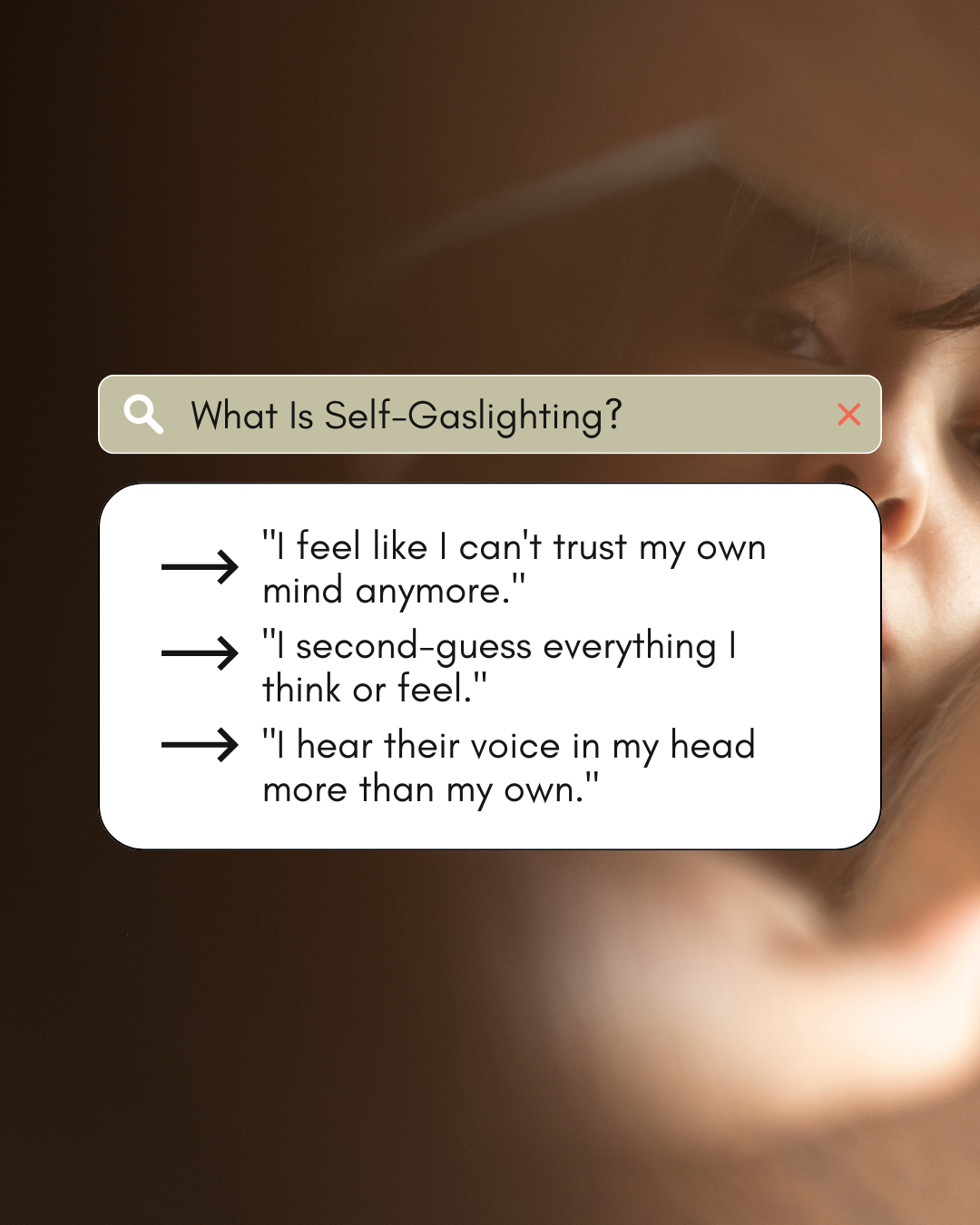
What Is Self-Gaslighting?
Self-gaslighting is an informal term for a pattern of repeatedly doubting, minimizing, or invalidating your own feelings and perceptions.
Unlike gaslighting by another person, which involves manipulation that undermines someone's trust in their reality, self-gaslighting describes the way someone may turn that doubt inward.
It's not a clinical diagnosis.
You might recognize it in thoughts like:
“Other people have it worse, so I shouldn't be upset.”
“I'm probably remembering it wrong.”
“I should be over this by now.”
Questioning yourself occasionally is normal. The concern is when self-doubt becomes so familiar that you struggle to take your feelings seriously.
Why Do You Keep Invalidating Your Own Feelings?
There isn't one explanation.
Perhaps your emotions were dismissed growing up. Maybe you've experienced relationships where expressing a concern led to criticism or conflict.
You might also be a high-achieving person who expects yourself to handle everything without needing support.
Over time, you may begin treating your feelings as problems to explain away.
Our article on feeling your feelings without overthinking explores how to make room for emotions without immediately analyzing them.
How to Stop Gaslighting Yourself: 5 Things to Practice
1. Notice When You Dismiss Your Feelings
Pay attention to phrases such as “I'm overreacting” or “I shouldn't feel this way.”
Instead of immediately arguing with yourself, try asking:
What am I feeling right now?
You don't have to prove that a feeling is reasonable before acknowledging it.
2. Separate Feelings From Conclusions
Your emotions offer information about your experience, but they don't always tell you everything about a situation.
You can feel rejected without knowing that someone intended to reject you.
Making that distinction allows you to take your feelings seriously while remaining curious about what happened.
3. Pay Attention to Repeated Relationship Patterns
If you frequently leave conversations feeling confused, ashamed, or responsible for someone else's reactions, notice that pattern.
Our article on navigating confusing relationships explores how uncertainty can affect emotional well-being.
The National Domestic Violence Hotline's emotional abuse resource also describes behaviors that may undermine someone's confidence in their experiences.
4. Practice Responding to Yourself With Compassion
Imagine a close friend describing the same situation.
Would you immediately tell them they're too sensitive?
You might try offering yourself a gentler response:
“That conversation was difficult for me.”
“I can take time to understand why.”
The NHS guide to raising low self-esteem discusses challenging negative beliefs about yourself.
5. Take Small Steps Toward Trusting Yourself Again
If you're wondering how to trust yourself again, start with manageable decisions.
Notice your preferences. Give yourself time before agreeing to requests. Allow your needs to matter alongside someone else's.
Our article on how to say no without guilt offers additional perspective on boundaries and people-pleasing.
The Mental Health Foundation's guidance on healthy relationships also emphasizes respect and communication.
Begin Healing With Zen with Zur

Mariah J. Zur, LPC, LCMHC
Online Therapy for Emotionally Exhausted Women in NC, SC & PA
If you're accustomed to questioning your feelings, you don't have to untangle those patterns alone.
Zen with Zur offers compassionate, trauma-informed virtual therapy for eligible adults in North Carolina, South Carolina, and Pennsylvania, with space to explore self-doubt, people-pleasing, and emotional self-trust.
Individual sessions are 50 minutes for $175 or 75 minutes for $275.
Explore our individual online therapy services to learn more or schedule an appointment.
