Functional Freeze vs. Burnout vs. Depression: Why You Feel Stuck (But Still Functioning)
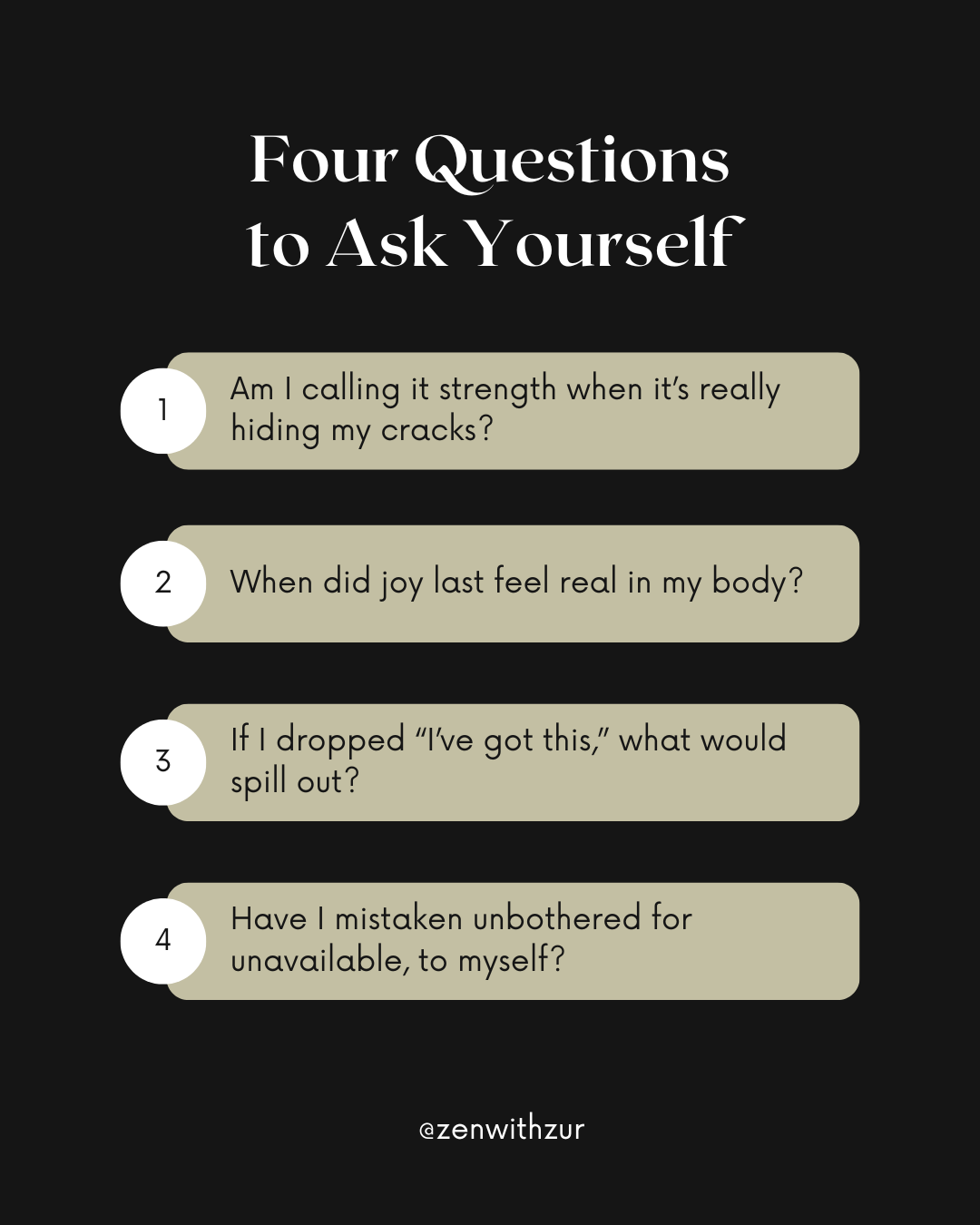
When “Strong” Feels Like Numb
You’re hitting deadlines, managing kids, answering texts. From the outside, you look like you’ve got it together. Inside, it’s a different story:
You feel flat, like life is muted.
Joy feels far away.
Rest doesn’t actually recharge you.
People call you “so strong.” But you know the truth: I don’t feel strong. I feel dead inside.
That’s not weakness. It’s not laziness. It’s not “just stress.” More often, it’s what I call functional freeze—a nervous system stuck in survival mode.
Let’s break down how functional freeze differs from burnout and depression, so you can stop gaslighting yourself and start healing.
What Is Functional Freeze?
Functional freeze is a trauma response, a nervous system survival state described in polyvagal theory as the dorsal vagal shutdown.
Think of it as a half-alive mode: your body is still moving, but your energy, presence, and joy have gone offline.
Signs of functional freeze:
Numbness or disconnection (“I can’t feel much of anything”).
Constant overthinking without action.
Exhaustion no amount of sleep fixes.
Going through the motions but not feeling alive.
Functional freeze is common in high-achieving women who grew up in homes where stillness, emotion, or rest weren’t safe.
Burnout vs. Functional Freeze
Burnout comes from chronic workplace or caregiving stress. It’s exhaustion after running too long on empty.
Freeze is different: it’s your nervous system slamming the brakes, saying “No more—we shut down now.”
Burnout feels like: drained energy, irritability, dread about tasks.
Freeze feels like: numb, blank, foggy—like someone unplugged you.
Burnout recovers with rest. Freeze often doesn’t.
Depression vs. Functional Freeze
Depression and freeze overlap—but they’re not identical.
Major Depression (MDD):
Persistent low mood for at least 2 weeks.
Loss of interest/pleasure.
Sleep, appetite, energy shifts.
Can affect every area of life.
Freeze:
May not include sadness—just numbness.
Can switch states quickly if safety is restored.
Feels more like “absent” than “hopeless.”
Key difference: Depression is a clinical disorder. Functional freeze is a state of the nervous system. You can have both, but knowing the difference changes how you heal.
Why Naming the Right State Matters
When you don’t know what’s happening, you call yourself lazy, broken, or unmotivated.
But freeze isn’t failure—it’s protection. It’s your body saying: “I don’t feel safe enough to show up fully.”
Naming the state lets you shift from self-blame → self-compassion.
Quick Tools to Shift From Freeze
Small steps, not huge leaps, are what tell your body it’s safe again:
Orienting: Slowly look around and name 5 colors. Your body remembers you’re here, not back there.
Wall push: Push against a wall for 60 seconds. It reactivates muscles, reminding your body you can move.
Humming or “vooo”: Vibrations stimulate the vagus nerve, easing shutdown.
Micro-rest: 2–5 minutes of non-productive stillness (yes, you’ll feel twitchy at first).
Personal Perspective
I know this state well. In my 30s, I looked like I had everything together—but I was running on empty inside. Rest felt unsafe. Boundaries felt selfish. Joy felt like a trap.
It wasn’t until I learned to spot freeze for what it was that healing began. Somatic tools gave me an entry point back into my body. IFS helped me meet the parts that were terrified of slowing down. Naming it changed everything.
Why It Matters for Generational Trauma
Freeze often isn’t just “your problem”—it’s an inherited pattern. If your family survived by working harder, staying silent, or shutting down emotions, your nervous system likely learned to do the same.
The cycle can stop with you. But it doesn’t stop by pushing harder. It stops by learning to feel safe enough to soften.
Research shows that trauma-related burnout impacts both the body and mind, driving emotional exhaustion, anxiety, depression, and even immune system dysfunction (Liang et al., 2023; Padmanabhanunni, 2025).
This is why no amount of naps or bubble baths make a difference. Burnout after trauma is your nervous system screaming: “We can’t keep living like this.”
What Clients Tell Me in Session
I hear these words over and over:
“I rest, but I wake up just as tired.”
“I thought leaving my toxic partner would help, but I’m still drained all the time.”
“It feels like my body has been carrying a weight for years—and I can’t put it down.”
These aren’t excuses. They’re trauma symptoms. And they show us why recovery takes more than surface-level self-care.
FAQs About Functional Freeze, Burnout, and Depression
What is functional freeze?
Functional freeze is a trauma response where your nervous system shuts down to survive. You can still function outwardly, but inside you feel numb, foggy, or detached.
How is burnout different from freeze?
Burnout comes from chronic stress and often improves with rest. Freeze is the body’s emergency shutdown and doesn’t resolve with simple rest—it needs nervous system support and safety cues.
How is functional freeze different from depression?
Depression is a diagnosable mental health condition with persistent sadness and loss of pleasure. Functional freeze is a nervous system state of numbness and shutdown. You can have both, but treatment approaches differ.
What causes functional freeze?
Freeze often develops from childhood trauma, neglect, or chronic stress. It can also be inherited as a survival pattern from previous generations.
How do you get out of functional freeze?
Small somatic practices help: orienting, wall pushes, humming, or micro-movements. Working with a trauma-informed therapist (IFS, somatic therapy) provides deeper, lasting healing.
If you’ve made it this far…
Functional freeze is common and reversible. Whether it’s worsened by trauma, ADHD, or seasonal shifts, you can thaw your nervous system with small, repeated, bottom-up actions supported by IFS and somatic therapy.
If your brain keeps calling you lazy, but your body feels like it’s moving through wet cement, that’s not a character flaw. It’s a nervous system doing its best to protect you.
I help high-functioning women in their 30s understand and work with their functional freeze symptoms using IFS, somatic tools, and nervous system mapping.
You don’t have to “push harder.” You just need a different way through. Schedule with me now to learn How to Get Out of Freeze Trauma Response.

I offer focused therapy intensives for adults who are still functioning but feel worn down by constant pressure, anxiety, or patterns that no longer work. This work is designed for people who want depth, clarity, and relief without labels or long-term weekly therapy. If you’re in North Carolina, South Carolina, or Pennsylvania and curious whether an intensive format could be supportive, you’re welcome to learn more.
Join me on Instagram, Pinterest and TikTok for more educational tips, trauma recovery insights, and updates on therapy intensives in Pennsylvania, North Carolina, and South Carolina.
Disclaimer
The content shared here is for educational and informational purposes only. It is not a substitute for psychotherapy, medical care, or individualized mental health treatment. Reading this blog or engaging with my content does not establish a therapeutic relationship.
If you are experiencing significant distress or feel you need personalized support, I encourage you to seek care from a licensed mental health professional in your state. Therapy is deeply personal, and the right support should be tailored to your specific needs, pace, and circumstances.
For adults located in North Carolina, South Carolina, or Pennsylvania who are seeking focused, confidential support, I offer customized therapy intensives designed to address chronic stress, internal pressure, and patterns that no longer work. Information about these services can be found throughout this site.
About the Author
Mariah Zur, LPC is a licensed therapist who works with high-achieving adults navigating chronic stress, internal pressure, and the quiet unraveling that can happen beneath outward success. Her work is especially suited for individuals who are highly functional, deeply self-aware, and exhausted from holding everything together.
Mariah offers therapy intensives for adults seeking focused, contained support without labels, long-term weekly therapy, or unnecessary exposure. Her approach is grounded, relational, and nervous-system informed, helping clients slow the internal spiral, regain a sense of control, and move forward with clarity and steadiness.
She provides intensive therapy services online across North Carolina, South Carolina, and Pennsylvania, with in-person options available in Raleigh, NC.
Credentials
Mariah J. Zur, MS, LPC
Licensed Professional Counselor
Doctoral Student, Counselor Education and Supervision
