Why Feeling Never Good Enough Can Ruin Your Relationship: Here’s How to Stop

Have you ever felt like you're putting your heart and soul into a relationship, and you end up feeling like you're still not enough? No matter how hard you try or how much love you give, there's a voice inside that whispers, “You’re not good enough.” If you’ve can relate, you’re not alone. Many of my clients share this thought with me in therapy, and it can negatively impact your relationships, whether with a romantic partner, family, or even friends.
In this blog, we’ll explore why feeling never good enough in relationships is so common, what keeps this belief alive, and, most importantly, how to stop feeling this way. As a trauma-informed therapist, I’ll also share real-life examples from my therapy sessions to help you understand how this belief shows up and how working with a therapist who specializes in these issues can help you make change in your life.
What Is the “I Am Not Enough” Belief?

This feeling of being inadequate is a deep-driven belief, “I am not enough.” It can show up in many different ways, maybe feeling like you’re not good enough as a partner, a parent, a friend, or even as a person. This negative core belief often is from early experiences, particularly in childhood (yep, complex trauma), that shape how we view ourselves in relation to others.
I recently worked with a 60-year-old mother who felt this belief was the reason she had an estranged relationship with her adult child. She shared with me that even though she was trying her best to connect, love, and support them throughout their lives, her child no longer communicated with her. She believed that somehow, despite all her efforts, she had failed them, and this belief made her feel that she was not worthy of their love, respect and that relationship.
As a trauma-informed therapist, I was able to point out to her that her feelings of inadequacy were connected to this belief. It was something heavy that she had carried for decades, and it affected not only her relationship with her child but also her past romantic relationships and friendships. This belief can negatively impact your relationships, leaving you feeling unworthy of love, support, or understanding.
How to Stop Feeling Never Good Enough in Relationships
If you can relate with any of the scenarios above, it’s time to take action and change the story you have been telling yourself. How to stop feeling never good enough in relationships requires more than just positive affirmations, TikTok videos or self-help advice, it requires deeper, trauma-informed therapy. I’m going to give you some steps on how to take small actionable steps in changing this, keep reading.
1. Identify the Root of the Belief
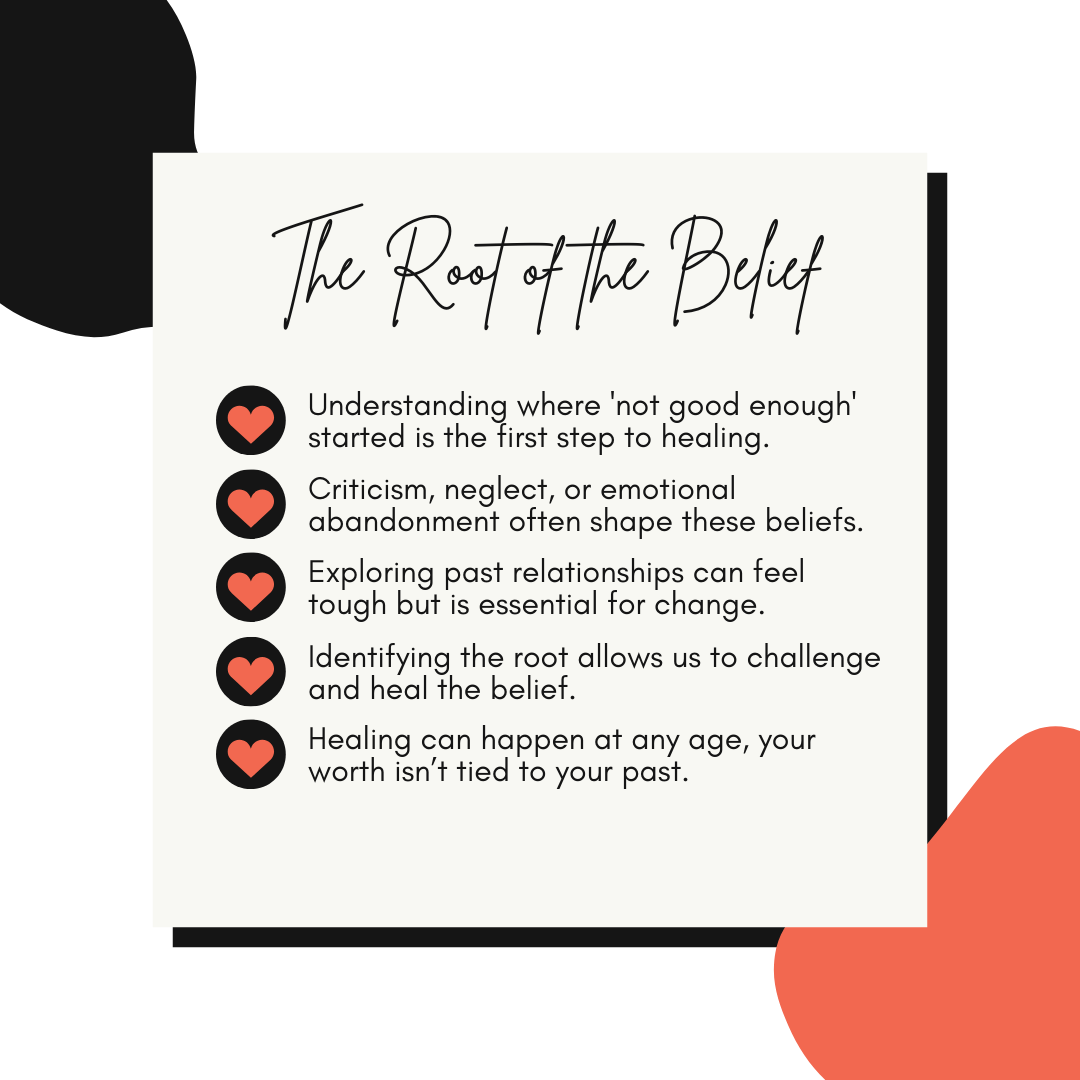
The first step is to understand where the belief that you’re “not good enough” came from. In many cases, this belief started in your childhood or past trauma (and yes, most of my clients are unaware of this or argue they had a great childhood). Things like criticism, neglect, or emotional abandonment you experienced from caregivers or significant others reinforced this belief through experiences. In sessions, I guide clients through an exploration of their early relationships to uncover how these experiences shaped their current beliefs about themselves. Yes, it’s uncomfortable and not fun. But, it’s necessary for deeper healing and change.
For example, in the case of my 60-year-old client, we explored her relationship with her parents and how their emotional distance led her to internalize the belief that she was not worthy of love. Once we identified this root cause, we were able to begin challenging the belief and exploring ways to heal from it.
2. Challenge Negative Thoughts with Compassionate Self-Talk
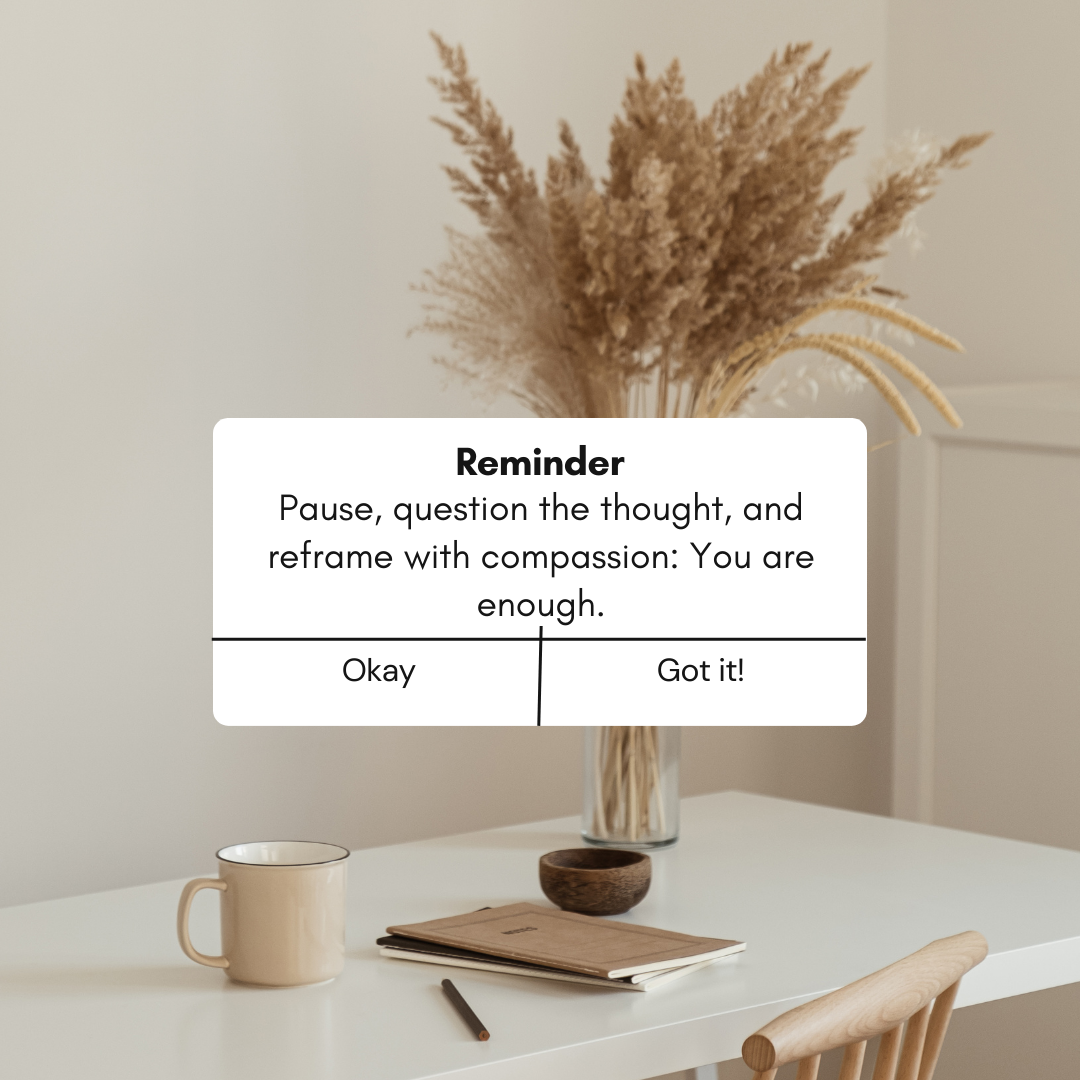
Once you’ve identified the origins of your belief, the next step is to challenge it. This requires shifting your perspective and showing compassion toward yourself. When the thought arises—“I’m not good enough”— ask yourself: “Is this true? Is this thought based on evidence or past experiences that I can let go of?”
I often work with clients to reframe their negative thoughts and replace them with more compassionate, balanced thoughts. For example, instead of thinking, “I’m not good enough for my partner,” try reframing it to: “I am worthy of love and respect, just as I am. I am not perfect, but I am enough.”
3. Create Healthy Boundaries in Relationships
Many people who feel not good enough in relationships struggle with setting healthy boundaries. Without clear boundaries, you may overextend yourself to gain love or approval. This can lead to resentment and burnout. Healthy boundaries are crucial in preventing emotional exhaustion and building healthier relationships.
For instance, a client named Rachel worked with me to create boundaries in her relationship where she felt comfortable expressing her needs without feeling guilty. She learned that setting boundaries didn’t make her “selfish” or “unworthy”—it made her more emotionally available and healthier in the long run.
4. Seek Support from a Therapist Who Specializes in These Issues
Sometimes, working through deep-seated beliefs requires professional guidance. A therapist specializing in trauma, relationships, and self-worth can help you unpack these patterns and work through your emotional pain in a safe, supportive space. With the right tools and guidance, you can begin to unravel the negative beliefs that are holding you back and replace them with healthier, more empowering ones.
Working with a therapist like me, who specializes in trauma-informed care and relationship dynamics, can provide the personalized support you need to heal from the inside out. Therapy can help you explore why you’ve tolerated these beliefs for so long and how to create a healthier narrative in your relationships.
What Growth Looks Like and What It Doesn’t
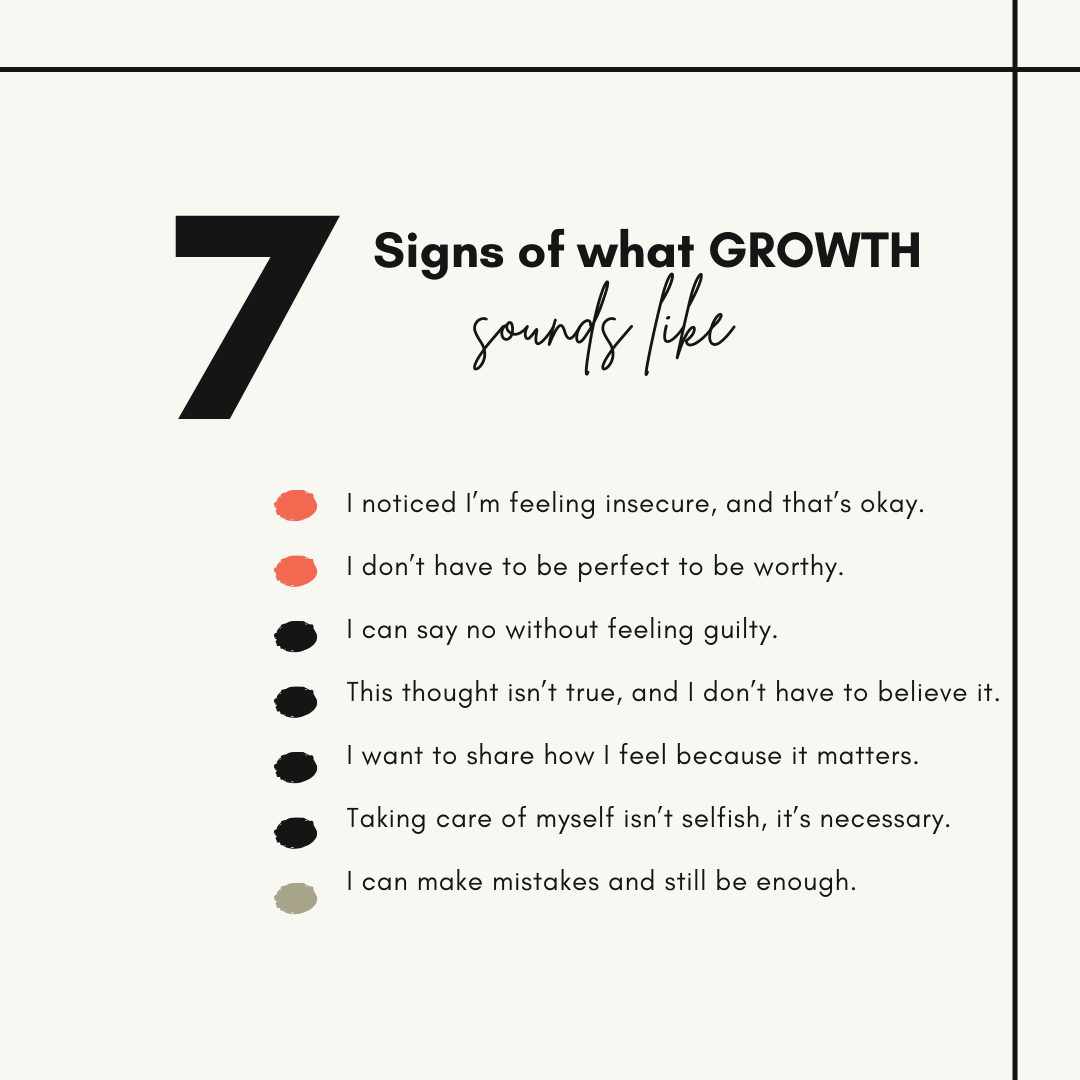
It’s important to remember that growth isn’t about becoming “perfect” or achieving constant validation from others. Instead, growth is about becoming more self-aware, compassionate, and aligned with your authentic self. It's about understanding that you are enough, just as you are.
Growth doesn’t mean you will never struggle with feelings of inadequacy, but it does mean that you’ll have the tools to challenge those thoughts when they arise and not let them dictate your relationships. You’ll learn how to create meaningful connections, set boundaries, and practice self-compassion in a way that supports your well-being.
FREQUENTLY ASKED QUESTIONS
1. What causes me to feel like I’m never good enough in relationships?
Feeling like you’re never good enough in relationships is often from negative core beliefs developed in childhood or early life experiences. It may stem from criticism, neglect, or emotional abandonment from significant figures such as parents or caregivers. These early experiences can lead to internalized beliefs like “I’m not worthy of love or respect,”which then affect how you interact in adult relationships.
2. How can therapy help me stop feeling like I’m not good enough?
Therapy helps by providing a safe space to explore this belief. A trauma-informed therapist can guide you in identifying where these feelings stem from and help you challenge them with healthier, more realistic thoughts. Therapy also teaches you coping mechanisms, such as self-compassion and boundary-setting, to help break the cycle of seeking validation from others. This means learning how to become your authentic self.
3. Why does feeling not good enough affect my relationships so much?
When you feel like you’re never enough, it often leads to unhealthy relationship dynamics such as seeking constant validation, overcompensating, or avoiding vulnerability. These behaviors can cause strain, misunderstandings, and emotional exhaustion. The belief that you're not good enough can make it difficult to trust your partner or set boundaries, which ultimately doesn’t allow for intimacy and genuine connection.
4. How do I challenge the “I’m not good enough” belief?
Start by acknowledging that this belief is not a reflection of reality but rather a learned pattern from past experiences. Replace negative self-talk with affirmations like, “I am enough as I am,” and examine past actions or circumstances in therapy that actually support the belief that you’re unworthy. Therapy can help you build new, healthier thought patterns and increase self-awareness so that you can challenge these beliefs in a productive, compassionate way.
5. Is it normal to struggle with feeling not good enough even after therapy?
Yes, totally normal! Your human and you can expect to experience setbacks when working through deep-seated beliefs like “I’m not good enough.” Healing takes time and requires consistent effort. However, therapy provides you with the tools to manage and challenge these feelings when they show up for you. Over time, with practice and support, you’ll be able to recognize these thoughts and replace them with healthier, more empowering beliefs that support your emotional growth and relationships.
Take the First Step Toward Healing
How to stop feeling never good enough in relationships may seem like something that may never happen for you, but with the right support, it is entirely possible. It starts with understanding your beliefs about yourself and challenging it with compassion. Therapy can help you move through the story you have been telling yourself your whole life so you can build healthier, more fulfilling relationships.
If you’re tired of feeling like you’re not enough, consider working with a therapist who specializes in trauma-informed care and relationship healing (like me!). Together, we can work through your beliefs and help you build a future where you feel worthy, loved, and enough in all of your relationships.

I offer focused therapy intensives for adults who are still functioning but feel worn down by constant pressure, anxiety, or patterns that no longer work. This work is designed for people who want depth, clarity, and relief without labels or long-term weekly therapy. If you’re in North Carolina, South Carolina, or Pennsylvania and curious whether an intensive format could be supportive, you’re welcome to learn more.
Join me on Instagram, Pinterest and TikTok for more educational tips, trauma recovery insights, and updates on therapy intensives in Pennsylvania, North Carolina, and South Carolina.
Disclaimer
The content shared here is for educational and informational purposes only. It is not a substitute for psychotherapy, medical care, or individualized mental health treatment. Reading this blog or engaging with my content does not establish a therapeutic relationship.
If you are experiencing significant distress or feel you need personalized support, I encourage you to seek care from a licensed mental health professional in your state. Therapy is deeply personal, and the right support should be tailored to your specific needs, pace, and circumstances.
For adults located in North Carolina, South Carolina, or Pennsylvania who are seeking focused, confidential support, I offer customized therapy intensives designed to address chronic stress, internal pressure, and patterns that no longer work. Information about these services can be found throughout this site.
About the Author
Mariah Zur, LPC is a licensed therapist who works with high-achieving adults navigating chronic stress, internal pressure, and the quiet unraveling that can happen beneath outward success. Her work is especially suited for individuals who are highly functional, deeply self-aware, and exhausted from holding everything together.
Mariah offers therapy intensives for adults seeking focused, contained support without labels, long-term weekly therapy, or unnecessary exposure. Her approach is grounded, relational, and nervous-system informed, helping clients slow the internal spiral, regain a sense of control, and move forward with clarity and steadiness.
She provides intensive therapy services online across North Carolina, South Carolina, and Pennsylvania, with in-person options available in Raleigh, NC.
Credentials
Mariah J. Zur, MS, LPC
Licensed Professional Counselor
Doctoral Student, Counselor Education and Supervision
