Boundaries With Emotionally Immature Parents: Scripts That Actually Work
When Your Parent Still Treats You Like a Child
It’s the same every holiday.
Your mom dismisses your feelings.
Your dad makes you the problem.
Or both guilt you for needing space.
You tell yourself, Next time I’ll handle it better. But you end up leaving drained, resentful, and ashamed.
Here’s the hard truth: you can’t make emotionally immature parents suddenly grow up. But you can stop letting their behavior dictate your peace. That’s what boundaries are for.
Boundaries aren’t cruelty. They’re clarity. And they’re one of the most powerful ways to break generational trauma cycles.
Why Emotionally Immature Parents Resist Boundaries
Emotionally immature parents often see boundaries as rejection or disloyalty. Instead of respecting limits, they may:
Lash out (“You’re so selfish”).
Guilt-trip (“After everything I’ve done for you…”).
Ignore your request altogether.
Why? Because boundaries threaten the old family system. The system where you, the “strong one,” carried the weight so no one else had to.
Common Boundary Mistakes (And Why They Backfire)
Over-explaining
You write a whole essay to justify your boundary. They don’t care about the logic—they’re just listening for a loophole.Negotiating
You set a limit, they push back, you bend. The cycle continues.Collapsing into guilt
You hold the line at first… but then feel “mean,” so you backtrack.
None of these make you weak. They’re survival patterns you learned to keep the peace.
3 Boundary Scripts That Actually Work
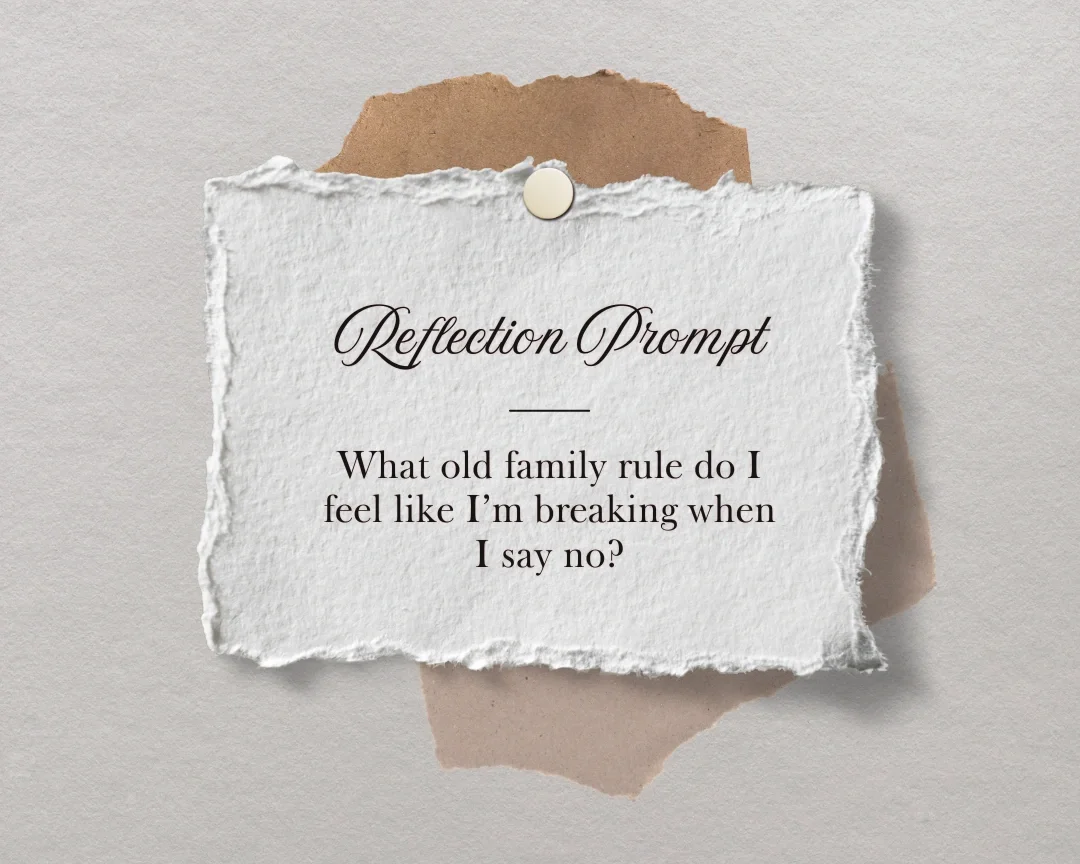
Here are therapist-approved, trauma-informed scripts you can borrow and adapt:
Script 1: The Clear Limit
“That doesn’t work for me. I can do [X] instead.”
Example: “I can’t host this year. I’m happy to bring dessert.”
Script 2: The Exit Plan
“If yelling starts, I’ll leave and we can try again another day.”
Example: “I love spending time together. If the conversation turns to yelling, I’ll step out and we’ll reconnect later.”
Script 3: The Relationship Frame
“I want a relationship, but only if respect is part of it.”
Example: “I care about us. To keep talking, I need us to stay respectful.”
Pro tip: Practice these out loud into your phone notes before you try them live. Your body needs the rehearsal.
How to Follow Through Without Guilt
Ground yourself: Before a family interaction, do a somatic reset (wall push, orienting, or humming).
Repeat once: State your boundary clearly. If they push, don’t argue—just repeat.
Exit calmly: If they ignore your limit, follow through. Leaving is the boundary in action.
Reframe guilt: Guilt is not proof you’re wrong. It’s your nervous system detoxing old rules.
Personal Perspective
In my 30s, I realized my exhaustion wasn’t just from work, it was from being the “strong one” with my family. Every interaction with my parent felt like a test I couldn’t win.
Boundaries felt cruel at first, like I was betraying them. But the truth was, I was betraying myself by saying yes when my body was screaming no.
When I started practicing clear, short scripts, something shifted. The pushback didn’t stop, but my shame did. Boundaries gave me space to breathe. And from that space, I finally began to heal.
Why Boundaries Break Generational Cycles
Generational trauma thrives on unspoken rules:
Don’t talk.
Don’t feel.
Don’t need.
Every boundary you set is a new rule:
“I can speak.”
“I can feel.”
“I can need.”
Boundaries don’t just protect you, they model something new for anyone watching (your kids, nieces, nephews, siblings). You’re showing them what respect looks like.
FAQs About Boundaries With Emotionally Immature Parents
Why are boundaries with parents so hard?
Because your nervous system learned early that love = compliance. Setting limits feels like risking abandonment, even if you’re an adult now.
What is an emotionally immature parent?
An emotionally immature parent struggles with empathy, avoids accountability, and often makes their child responsible for their feelings or stability.
How do I set boundaries without feeling guilty?
Start with short, clear statements. Practice them out loud. Remember that guilt is an old survival signal, not proof you’re wrong. Guilt fades as your nervous system adapts.
What if my parent won’t respect my boundary?
Then the boundary becomes about your action, not their agreement. If yelling starts, you leave. If respect isn’t given, you pause contact. Boundaries are what you do, not what they approve.
Can boundaries really heal generational trauma?
Yes. Boundaries stop old cycles of silence, overfunctioning, and emotional chaos from continuing. They create the safety needed for healing—and they model new possibilities for future generations.
Ready to get started?
If you’r searching for burnout recovery therapy in Philadelphia, a trauma therapist in Pittsburgh, or virtual trauma therapy across North Carolina and South Carolina, you don’t have to keep surviving in exhaustion.

I offer focused therapy intensives for adults who are still functioning but feel worn down by constant pressure, anxiety, or patterns that no longer work. This work is designed for people who want depth, clarity, and relief without labels or long-term weekly therapy. If you’re in North Carolina, South Carolina, or Pennsylvania and curious whether an intensive format could be supportive, you’re welcome to learn more.
Join me on Instagram, Pinterest and TikTok for more educational tips, trauma recovery insights, and updates on therapy intensives in Pennsylvania, North Carolina, and South Carolina.
Disclaimer
The content shared here is for educational and informational purposes only. It is not a substitute for psychotherapy, medical care, or individualized mental health treatment. Reading this blog or engaging with my content does not establish a therapeutic relationship.
If you are experiencing significant distress or feel you need personalized support, I encourage you to seek care from a licensed mental health professional in your state. Therapy is deeply personal, and the right support should be tailored to your specific needs, pace, and circumstances.
For adults located in North Carolina, South Carolina, or Pennsylvania who are seeking focused, confidential support, I offer customized therapy intensives designed to address chronic stress, internal pressure, and patterns that no longer work. Information about these services can be found throughout this site.
About the Author
Mariah Zur, LPC is a licensed therapist who works with high-achieving adults navigating chronic stress, internal pressure, and the quiet unraveling that can happen beneath outward success. Her work is especially suited for individuals who are highly functional, deeply self-aware, and exhausted from holding everything together.
Mariah offers therapy intensives for adults seeking focused, contained support without labels, long-term weekly therapy, or unnecessary exposure. Her approach is grounded, relational, and nervous-system informed, helping clients slow the internal spiral, regain a sense of control, and move forward with clarity and steadiness.
She provides intensive therapy services online across North Carolina, South Carolina, and Pennsylvania, with in-person options available in Raleigh, NC.
Credentials
Mariah J. Zur, MS, LPC
Licensed Professional Counselor
Doctoral Student, Counselor Education and Supervision
